2025-10-14: Kata’ib Hezbollah Publishes Unseen Video of Qasem Soleimani

Based on an analysis of 522 X / Twitter posts trending in Iraq on October 14, 2025, Miqrab AI identified several key narratives dominating online conversations. The Sharm El-Sheikh summit and Prime Minister Al-Sudani’s interactions with former US President Trump were a central point of contention, sparking heated debates about Iraqi sovereignty, foreign policy, and the legacy of US actions in the country. Concurrently, a newly released video of Qasem Soleimani praising Kata’ib Hezbollah circulated widely, reinforcing narratives about the power and influence of armed factions amidst increasing US pressure. Domestic issues were also prominent, with significant public disappointment and anger directed at the Iraqi national football team’s performance in the World Cup qualifiers, alongside ongoing sectarian tensions and controversies surrounding political figures ahead of the upcoming elections.
Table Of Content
- 1. Kata’ib Hezbollah Publishes Unseen Video of Qasem Soleimani
- 2. Analysts Discuss Sharm El-Sheikh Summit’s Goal to Isolate Iran
- 3. Widespread Criticism of PM Al-Sudani’s Conduct and Interaction with Trump
- 4. Sectarian Video of Altercation Gains Massive Traction
- 5. Disappointment with Iraqi National Football Team After World Cup Qualifier
- 6. Controversy Over Hala Al-Obaidi’s Pre-Match Statement
- 7. Political Leaders Conduct Campaign Activities in Babil Province
- 8. Scrutiny of Wealthy Businessmen Running for Parliament
- 9. Former PM Adel Abdul Mahdi’s Remarks on Tishreen Protests Resurface
- 10. Sadrist Movement Denies Rumors of October 25 Protests
Today’s Top 10 X (Twitter) Trends in Iraq:
1. Kata’ib Hezbollah Publishes Unseen Video of Qasem Soleimani
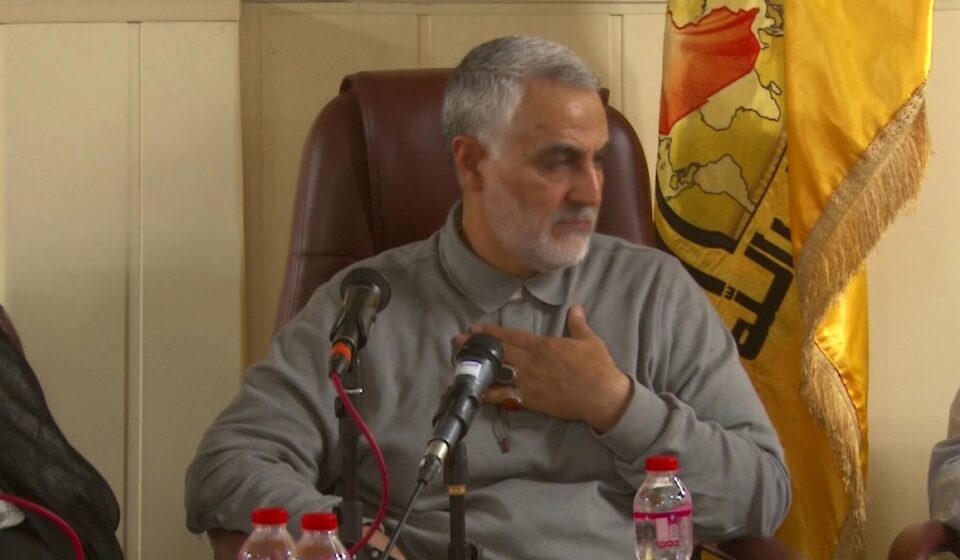
A previously unreleased video showing the late Iranian General Qasem Soleimani praising Kata’ib Hezbollah and warning against any attempts to weaken the group has become a major topic of discussion. Accounts like Sabereen news (Post Impact: 22%) and Steven Nabil (Post Impact: 12%) shared the clip, highlighting a specific “will” from Soleimani that states, “It is forbidden to weaken the blessed formation of Kata’ib Hezbollah.” Nabil frames the video’s release as a response to escalating US sanctions and pressure, suggesting it places Shiite political elites in a difficult position where they must either distance themselves from the group or face consequences. Sabereen News presents the video as a significant testament to Soleimani’s legacy and his support for the faction.
2. Analysts Discuss Sharm El-Sheikh Summit’s Goal to Isolate Iran
Several political commentators and analysts have characterized the international summit in Sharm El-Sheikh as a strategic move to isolate Iran and diminish its influence in the region. Faig Alsheakh Ali (Post Impact: 16%) argues that it is a “major political and media mistake” to expect such conferences to announce military action, stating their purpose is to draw international policy. He asserts, “The Sharm El-Sheikh conference is a conference to isolate Iran, remove it from the conflict equation, and prevent its interference in the region’s countries.” Similarly, Ahmad Abdulsada (Post Impact: 9%) praises Iran for refusing to participate, viewing the summit as a “ridiculous theatrical show” designed for submission to Israel and led by former US President Trump, whom he calls the “head of aggression and crime.”
3. Widespread Criticism of PM Al-Sudani’s Conduct and Interaction with Trump
Prime Minister Mohammed Shia’ Al-Sudani’s participation in the Sharm El-Sheikh summit and his interactions with former US President Donald Trump have drawn sharp criticism and ridicule from various accounts. Nazar Haidar (Post Impact: 13%) condemned what he called Al-Sudani’s “childish move,” questioning who is responsible for this “insult to Iraq” and describing the Prime Minister’s attendance as an “electoral advertisement” that backfired. Other users like Najeh Abbas Al-Mizan (Post Impact: 7%) sarcastically noted the irony of Al-Sudani’s supporters boasting about the photo with Trump, who ordered the killing of Soleimani and Al-Muhandis. In response to Trump’s comments about Iraq’s oil wealth, Mazin Al-Eshaiker (Post Impact: 11%) penned an open letter to the former US President, agreeing with his assessment and blaming decades of “corrupt politicians” for mismanaging the country’s resources. Meanwhile, Ahmad Abdulsada (Post Impact: 10%) criticized those celebrating the photo, reaffirming his loyalty to the “path of the martyred leaders” and stating he could never be pleased by a picture of an Iraqi official with the “international terrorist Trump.”
4. Sectarian Video of Altercation Gains Massive Traction
A video depicting a heated verbal altercation between an individual identified as Shiite and another as Salafi has achieved exceptionally high engagement. The post by Wasan Al-Shaikhli (Post Impact: 100%), titled “A brave Shiite takes down a Salafi,” shows a confrontation where religious and sectarian differences are the central point of conflict. The video’s virality highlights the continued sensitivity and volatility of sectarian identities in public and online spaces in Iraq, with the strong language and confrontational nature of the clip resonating widely and sparking intense reactions across the platform.
5. Disappointment with Iraqi National Football Team After World Cup Qualifier
There is widespread frustration and anger among Iraqi social media users following the national football team’s draw against Saudi Arabia, which officially ended their chances of direct qualification for the 2026 World Cup. Omar Al-Janabi (Post Impact: 13%) directly blamed the coach, stating, “You alone bear responsibility for this team. No spirit, no football… you should be held accountable for wasting public money.” This sentiment was echoed by Hayder (Post Impact: 8%), who called for a complete restructuring of the team and the Iraqi Football Association to address “repeated failure and lack of planning.” In a call for accountability, Qusai Mahbouba (Post Impact: 6%) urged Adnan Dirjal, the head of the association, to resign, telling him to “respect your sporting history and not turn into a failed administrator.”
6. Controversy Over Hala Al-Obaidi’s Pre-Match Statement
A statement attributed to personality Hala Al-Obaidi has sparked controversy and mockery online. A post by Wasan Al-Shaikhli (Post Impact: 13%) quoted Al-Obaidi as saying, “If the Iraqi team wins, I will make half the youth of Adhamiyah marry me through misyar marriage.” This comment was picked up by other accounts, such as Sheikh Mohammed Al-Basri (Post Impact: 3%), who used it to criticize what he perceives as a hypocritical and exclusionary attitude from some Baghdad residents toward Iraqis from other provinces, whom they label as “lfou” (outsiders). The discussion reflects underlying social and regional tensions being expressed through the lens of a viral, provocative statement.
7. Political Leaders Conduct Campaign Activities in Babil Province
As elections approach, several political leaders are actively campaigning in Babil province. Ammar Al-Hakim (Post Impact: 9%), leader of the National State Forces Alliance, reported on his visit to the province, where he met with candidates and gatherings of tribal elders and dignitaries from the Juhaysh and Bani Muslim tribes in the Kifl district. Similarly, Adnan Fihan Al-Dulaimi (Post Impact: 5%) shared a video of his meeting with constituents in Kifl, emphasizing that Babil is witnessing strategic projects and is moving towards a future “worthy of it and its people.” These posts highlight the focus of political outreach on tribal and local communities in key provinces ahead of the elections.
8. Scrutiny of Wealthy Businessmen Running for Parliament
The parliamentary candidacies of wealthy businessmen are facing scrutiny and skepticism from some social media users. Yasser Eljuboori (Post Impact: 8%) questioned the motivations of Faras Mjaysar, a financially successful businessman in the dairy industry running in Baghdad, asking, “What will he benefit?! Is it conceivable that he will leave his projects and sit in parliament?!” Another candidate, Muthanna al-Samarrai, was the subject of a post by Hiba Al-Nnayib (Post Impact: 7%), who shared a video clip of an apparent slip of the tongue where al-Samarrai seemed to be looking for a drink, prompting derisive commentary. These posts reflect a broader public suspicion about the intentions of affluent individuals entering the political arena.
9. Former PM Adel Abdul Mahdi’s Remarks on Tishreen Protests Resurface
Comments made by former Prime Minister Adel Abdul Mahdi regarding the Tishreen protests have resurfaced, prompting renewed debate. In a widely shared clip posted by accounts like Ahmad Alwishah (Post Impact: 7%), Abdul Mahdi is heard describing the demonstrations as 99% peaceful and legitimate, while also denying that the protests were a primary reason for canceling the Chinese agreement. Alwishah questioned the official narrative, asking, “If 99% were peaceful, legitimate, and rightful… why were there 800 martyrs and 25,000 wounded?” The account Naji Assal (Post Impact: 5%) also shared the clip, sarcastically questioning the previous accusations that the protestors were “sons of embassies” trying to sabotage the Chinese deal, given the former Prime Minister’s contrasting statements.
10. Sadrist Movement Denies Rumors of October 25 Protests
Rumors about planned protests by the Sadrist movement have been circulating and were subsequently denied. Hayder (Post Impact: 6%) initially reported on a story from the Emirati Al-Ain News agency, which claimed that the Sadrist Movement was preparing for a wave of protests on October 25 in the capital and southern provinces to object to the parliamentary elections. However, in a follow-up post, Hayder (Post Impact: 3%) shared a denial from Muqtada al-Sadr regarding the news published by the agency. This sequence of posts highlights the close monitoring of the Sadrist movement’s potential actions and their significant impact on the political climate.