2025-10-22: Muqtada al-Sadr Issues High-Impact Political Statement

Based on an analysis of 485 X / Twitter posts trending on October 22, 2025, Miqrab AI identified several key narratives dominating online discourse in Iraq. The most significant development was a high-impact statement from influential cleric Muqtada al-Sadr, signaling a potential shift in the political landscape. Widespread public discontent was evident in response to a new government mandate requiring proof of utility bill payments for all state transactions, a move seen by many as an unfair burden on citizens. Concurrently, there was intense discussion surrounding US-Iraq relations, spurred by the appointment of a new American special envoy and high-level diplomatic calls, which analysts interpreted as a renewed push for US influence and the disarmament of militias. Finally, sectarian tensions resurfaced in debates over the assassination of a Baghdad provincial council member and in the political rhetoric of prominent Shia leaders warning against the return of former rivals.
Table Of Content
- 1. Muqtada al-Sadr Issues High-Impact Political Statement
- 2. Widespread Debate Over Government Mandate Linking Services to Utility Bills
- 3. Renewed Focus on US-Iraq Relations and New Special Envoy
- 4. Controversy Over the Assassination of Safaa al-Mashhadani
- 5. Allegations and Defenses Concerning CMC Head Nofal Abu Ragheef
- 6. Promotion of New Book on the Popular Mobilization Forces (PMF)
- 7. Kurdish Regional Government Development Projects and Political Rhetoric
- 8. Iranian Warnings and Influence in Iraq
- 9. Government Economic Policies Criticized Ahead of Elections
- 10. Sectarian Political Rhetoric from Shia Leaders
Today’s Top 10 X (Twitter) Trends in Iraq:
1. Muqtada al-Sadr Issues High-Impact Political Statement
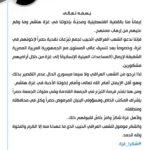
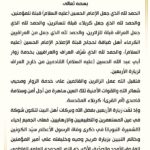
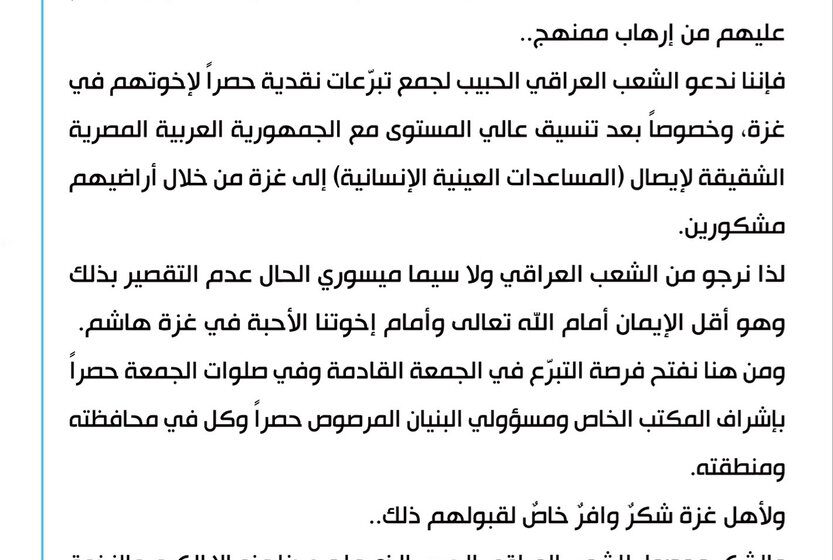
The most impactful story of the day was a statement released by influential cleric Muqtada al-Sadr. The post from his official account, Muqtada Sayyid Muhammad al-Sadr (Post Impact: 100%), consisted solely of an image containing a detailed written message. The statement outlined a series of conditions and demands, heavily influencing the political conversation across Iraq and signaling a significant development from the Sadrist movement, which has a massive following and a history of shaping the country’s political direction. The post’s 100% impact rate indicates its complete dominance of the Iraqi social media landscape, sparking widespread speculation and analysis about al-Sadr’s future political intentions.
2. Widespread Debate Over Government Mandate Linking Services to Utility Bills
A new decision by the Council of Ministers requiring citizens to provide proof of payment for water, electricity, phone, and sewage bills before processing any government transaction sparked a major online debate. Supporters like Rusly Al-Maliki (Post Impact: 8%) called the decision “necessary and positive,” arguing that state services must be paid for and noting that Iraq collects only a fraction of the cost of services like electricity. However, the move faced intense criticism from others who viewed it as a burden on ordinary citizens. Dr. Qusay Shafiq (Post Impact: 7%) predicted the decision would cause “complete paralysis” in state departments, while Salam Al-Husseini (Post Impact: 4%) questioned why the government targets citizens’ pockets instead of cutting the salaries of high-ranking officials to cover its debts. Adding a regional dimension, Imad Al Musafir (Post Impact: 5%) suggested the mandate might only be enforced in central and southern Iraq, while the Kurdistan Region would remain exempt, highlighting a “clear flaw in the concept of financial justice.”
3. Renewed Focus on US-Iraq Relations and New Special Envoy
Discussions about US-Iraq relations intensified following reports of a new US Special Envoy, Mark Savaya, and high-level communications between the two countries. The Prime Minister’s Office account, IraqiPMO (Post Impact: 3%), shared details of a phone call between Prime Minister Mohammed Shia’ Al Sudani and US Secretary of State Marco Rubio, which focused on enhancing bilateral ties. Analyst Liqaa Maki (Post Impact: 2%) interpreted these developments as part of a serious American push to expand economic ties and disarm militias, which he described as essential for securing US investment. This narrative was reinforced by a post from Raad Hashim (Post Impact: 6%), which reported that the head of Iran’s Armed Forces warned Iraqi National Security Advisor Qasim al-Araji of an American plan to “occupy Iraq.” Other accounts, such as Ghaith Altamimi (Post Impact: 7%), shared video clips of the new envoy.
4. Controversy Over the Assassination of Safaa al-Mashhadani
The assassination of Baghdad provincial council member Safaa al-Mashhadani generated significant controversy, with differing narratives about the perpetrators’ identities and affiliations. Accounts like Ahmad Abdulsada (Post Impact: 4%) and Issam Hussein (Post Impact: 4%) emphasized that the arrested suspects were all Sunni and belonged to the “Tarmiyah Tribal PMF,” a local Sunni formation. They argued this “refutes the misleading Sunni media narrative” that had initially blamed Shia resistance factions. Conversely, other commentators suggested a more complex situation. Salim Aljomaili (Post Impact: 3%) stated that regardless of the killers’ sectarian identity, their “unifying identity is the PMF,” and claimed that local residents accuse the Nujaba Movement, a powerful Shia faction controlling the area, of being behind the operation. Bahaa khaleel (Post Impact: 2%) similarly questioned why reports didn’t mention that the Tarmiyah PMF operates under the command of a Shia militia.
5. Allegations and Defenses Concerning CMC Head Nofal Abu Ragheef
Dr. Nofal Abu Ragheef, the head of Iraq’s Communications and Media Commission (CMC), was the subject of a social media controversy involving leaked materials and accusations. In his own defense, Dr. Nofal Aburgeif (Post Impact: 5%) dismissed the campaign against him as “cheap fabrications and hired pages,” vowing to continue protecting Iraq’s digital space. His supporters, such as Dr. Haydar Al-Barzanji (Post Impact: 3%), described him as a man of integrity and claimed the “smear campaign” was led by corrupt individuals affected by the CMC’s recent reforms. On the other side, critics used the leaks to attack his credibility. Bahaa khaleel (Post Impact: 4%) shared a video of Abu Ragheef and sarcastically commented, “Imagine this person is the head of the Communications and Media Commission!! This is the one leading a campaign to close accounts.” Hiba Alnnayib (Post Impact: 2%) posted alleged quotes attributed to Abu Ragheef from the leaks.
6. Promotion of New Book on the Popular Mobilization Forces (PMF)
Accounts affiliated with the Sadiqoun Movement promoted a new book by Dr. Laith al-Khazali titled “The Popular Mobilization Forces Institution and the Iraqi Political System.” Jaafar Al-Aboudi (Post Impact: 6%) described the book as a tribute to the PMF that “immortalizes the journey of men who wrote the meaning of sovereignty and dignity with their blood.” Similarly, Mahmoud Al-Rubaie (Post Impact: 3%) shared quotes from the author at a book signing event, highlighting the necessity of preserving the PMF’s independence and using its model to develop the security doctrine of other institutions. The coordinated posts frame the book as an important academic effort to solidify the PMF’s official and historical standing within the Iraqi state.
7. Kurdish Regional Government Development Projects and Political Rhetoric
Kurdistan Region Prime Minister Masrour Barzani actively promoted development projects in the region, while facing criticism for his political rhetoric. On his official account, Masrour Barzani (Post Impact: 4%) posted about the restoration of the Beri-Hajeri Hotel to boost tourism and the opening of the new Shorash-Hetit Hospital, which he stated was a “promise we have delivered for our people” despite attempts to slow progress. In contrast, Haydar (Post Impact: 2%) criticized Barzani’s recent electoral speeches, where he allegedly claimed that “Iraqis are asking for our help and we are ready to help them.” The post pointed out the irony of this statement, given that Barzani and his family receive their salaries from the central government in Baghdad.
8. Iranian Warnings and Influence in Iraq
The theme of Iranian influence and its strategic concerns regarding Iraq was prominent in several high-engagement posts. Raad Hashim (Post Impact: 6%) reported on a meeting between Iran’s Chief of Staff of the Armed Forces and Iraq’s National Security Advisor, Qasim al-Araji. During the meeting, the Iranian official allegedly warned of a US plan to “occupy Iraq,” reflecting Tehran’s deep-seated suspicion of American intentions in the region. Another post by Hanan Abdullatif (Post Impact: 5%) cited former Iraqi intelligence chief Mohammed al-Shahwani, who claimed that former Iraqi President Jalal Talabani used to meet with IRGC Quds Force commander Qasem Soleimani at the border “like an obedient servant.” Together, these posts paint a picture of enduring and high-level Iranian influence over Iraqi security and political affairs.
9. Government Economic Policies Criticized Ahead of Elections
Recent economic decisions by the Iraqi government have drawn sharp criticism, with some commentators linking them to the upcoming elections. Dr. Ghaleb Al-Da’ami (Post Impact: 5%) identified three “fatal decisions” that he believes will harm the Prime Minister’s electoral campaign: a proposal to reduce beneficiaries of the ration card system, a leaked Central Bank report on Iraqi debt, and the new mandate requiring utility bill payments for government services. This sentiment was echoed by others like Ahmad Abdulsada (Post Impact: 3%), who called the utility bill rule an “innovation in punishing and torturing the citizen.” The posts suggest a growing narrative that the government’s fiscal policies are increasingly unpopular and could have negative political repercussions for the ruling coalition.
10. Sectarian Political Rhetoric from Shia Leaders
Political rhetoric from prominent Shia figures focused on mobilizing supporters by invoking past conflicts and sectarian identities. Wesam Aziz (Post Impact: 8%) praised the achievements of the post-2003 “Shia rule,” contrasting it with the era of Saddam Hussein, and urged people to vote in the upcoming elections to “preserve the Shia rule for the majority.” In a similar vein, Shaho Al-Qaradaghi (Post Impact: 4%) shared a statement from former Prime Minister Nouri al-Maliki, who declared, “We will not allow the Ba’athist cliques to return again through any outlet they try to infiltrate.” Al-Qaradaghi noted that this represents a shift for Maliki, who had recently claimed the Ba’ath party was a thing of the past. These posts highlight a trend of using historical grievances and sectarian warnings as a tool in the current political climate.