2025-10-25: Discussions Surround Trump’s New Envoy to Iraq, Mark Savaya

Based on an analysis of 482 X / Twitter posts trending on October 25, 2025, Miqrab AI identified several key narratives and themes dominating online conversations in Iraq. The most prominent discussions revolved around the future of U.S. policy in Iraq, sparked by comments from Donald Trump’s new envoy, and reflections on the past, particularly former UK Prime Minister Boris Johnson’s resurfaced admission about the lack of planning for the 2003 invasion. Domestically, conversations focused on the upcoming elections, with satirical critiques of candidates and campaigns, as well as the commemoration of the Tishreen protest anniversary, which continues to be a potent symbol of anti-corruption sentiment. Other key topics included praise for a new oil refinery opened by Prime Minister Al-Sudani, debates over social freedoms sparked by comparisons between Baghdad and Tehran, and remembrance of key figures assassinated during the protest era.
Table Of Content
- 1. Discussions Surround Trump’s New Envoy to Iraq, Mark Savaya
- 2. Comparison of Tehran Nightlife to Baghdad Sparks Debate on Social Freedoms
- 3. Commemoration of the Tishreen Protest Anniversary
- 4. Former UK PM Boris Johnson’s 2003 Iraq Invasion Comments Resurface
- 5. Satirical Program “Albasheer Show” Targets Politicians and Election Campaigns
- 6. Inauguration of New Basra Oil Refinery Receives Praise and Prompts Debate Over Credit
- 7. Post Honoring Aisha, Wife of the Prophet Muhammad, Drives Significant Engagement
- 8. Accounts Commemorate Assassination of PMF Commander Wissam al-Olayawi
- 9. Trump’s Meeting with Qatari Leadership Aboard Air Force One Draws Commentary
- 10. Sectarian Language at Asa’ib Ahl al-Haq Election Event Condemned Online
Today’s Top 10 X (Twitter) Trends in Iraq:
1. Discussions Surround Trump’s New Envoy to Iraq, Mark Savaya
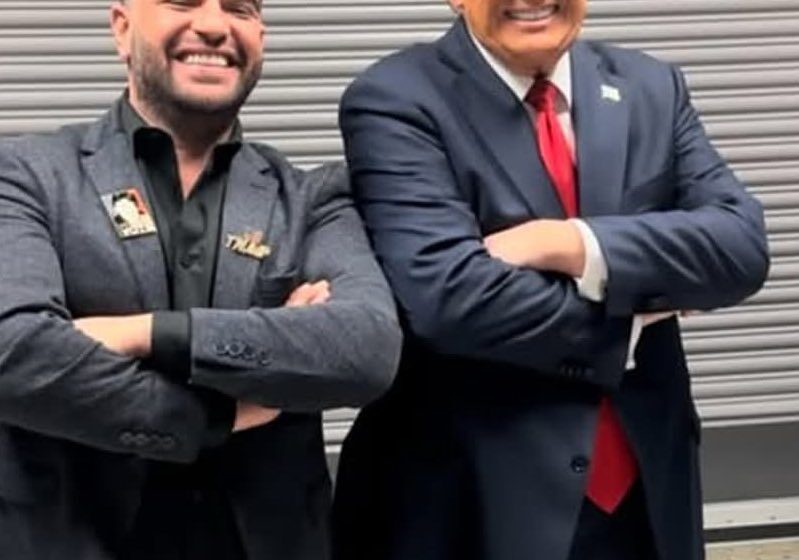
The appointment of Mark Savaya as Donald Trump’s envoy to Iraq has become a major topic of discussion, generating both anticipation and skepticism. Steven Nabil (Post Impact: 34%) shared a picture of Savaya with his quote, *”I want to make Iraq great again.“* Adding a more concrete policy dimension, Mahdi Majeed (Post Impact: 21%) reported on an upcoming exclusive interview where Savaya allegedly states that *”dissolving the pro-Iranian militias in Iraq is a priority of our tasks.“* However, this potential new approach was met with cynicism by some. Raad Hashim (Post Impact: 23%) quoted Iraqi journalist Hadir Al-Rubaie’s response to Savaya: *”You won’t be able to. You’re heading into a nest of vipers. Those who rule Iraq are professional thieves and treacherous agents… They will rush to win your favor… to make you their partner.“*
2. Comparison of Tehran Nightlife to Baghdad Sparks Debate on Social Freedoms
A video depicting nightlife in Tehran, Iran, has ignited a debate about social hypocrisy and religious conservatism in Iraq. Shaho Al-Qaradaghi (Post Impact: 51%) shared the clip, remarking, *”If the scene was in Baghdad, the extremists would have given us a headache, but since it is in Tehran, they choose silence or justification only.“* This sentiment was echoed by Tamara Alkhazraji 🍓 (Post Impact: 11%), who contrasted the “fun nights in Tehran” with the situation in Iraq, where she claims clerics still view *”playing the violin as shaking sanctity, the Christmas tree as contrary to public morals, and a marathon for veiled women as infidelity, immorality, and debauchery.“* The posts collectively criticize what they perceive as a double standard among religious hardliners in Iraq who condemn social freedoms locally while ignoring them in Iran.
3. Commemoration of the Tishreen Protest Anniversary
On the anniversary of the October 25th wave of the Tishreen uprising, multiple accounts commemorated the protests and honored their participants. Raad Hashim (Post Impact: 13%) shared a video of a gathering in Baghdad’s Nisour Square to mark the anniversary. Faiq Al-Sheikh Ali/My Word for History (Post Impact: 19%) reminded followers that the movement was not limited to one or two cities but took place in “all the rebelling provinces.” The tone was also somber, with Rusly Al-Maliki 🇮🇶 (Post Impact: 22%) posting a photo of a cleric he accuses of having *”issued a fatwa to kill the unarmed youth.“* Others, like Naji Assall (Post Impact: 10%), praised the protesters as *”the cream of the crop of the people, for they are the ones who rejected injustice, corruption, sectarianism, partisanship, cronyism, and dependency.“*
4. Former UK PM Boris Johnson’s 2003 Iraq Invasion Comments Resurface
A statement from former British Prime Minister Boris Johnson regarding the 2003 invasion of Iraq is being widely circulated, sparking renewed criticism of the intervention. Shaho Al-Qaradaghi (Post Impact: 100%) shared a post quoting Johnson as saying: *”In 2003 we invaded Iraq with America and we destroyed the institutions, and we completely removed the ruling party and the ruling elites… and we had no clear plan or project for what came after!“* The account framed this admission as evidence that Western powers treat other nations like *”laboratory test rats“* before moralizing about human rights and freedoms, highlighting the profound and lasting negative impact of the invasion on Iraq.
5. Satirical Program “Albasheer Show” Targets Politicians and Election Campaigns
The popular satirical program “Albasheer Show” is actively shaping online discourse around the upcoming elections by criticizing politicians and their campaign tactics. The show’s official account, Jamhuriyat Al-Basheer (Post Impact: 23%), posted a clip sending a “message” to politician Faleh al-Khazali for his involvement with a content creator convicted of killing his daughter. The show also mocked an electoral event for Naim al-Aboudi, a candidate from the Asa’ib Ahl al-Haq militia. Commentators praised the program’s impact, with Salam Al-Husseini (Post Impact: 11%) stating that the show offered a *”wonderful and smooth summary of the dialectic of Iraqi elections and their integrity.“* Meanwhile, Tech 4 Peace (Post Impact: 11%) engaged with the show’s content by fact-checking a humorous claim made by host Ahmed Al-Basheer.
6. Inauguration of New Basra Oil Refinery Receives Praise and Prompts Debate Over Credit
The official opening of a new oil refining unit in Basra by Prime Minister Mohammed Shia’ Al-Sudani has been highlighted as a significant economic achievement, though it has also led to a debate over which administration deserves credit. Rusly Al-Maliki 🇮🇶 (Post Impact: 25%) celebrated the event, noting the refinery will produce 107,000 barrels per day, save the country a billion dollars annually, and bring Iraq closer to self-sufficiency in petroleum products. Similarly, Haidar (Post Impact: 5%) shared details of the strategic FCC project. However, Emad Bajalan (Post Impact: 12%) provided a contrasting view, pointing out that former Prime Minister Mustafa Al-Kadhimi laid the foundation stone for the project in April 2021 and criticized the current government for opening the project *”without any mention of the efforts of the previous government.“*
7. Post Honoring Aisha, Wife of the Prophet Muhammad, Drives Significant Engagement
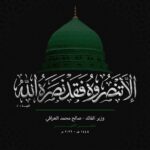
A post expressing reverence for Aisha, the wife of the Prophet Muhammad, garnered significant attention, reflecting the continued importance of foundational religious figures in online discourse. The account Jqlmba (Post Impact: 52%) shared an image bearing the name “Aisha bint Abi Bakr” and captioned it simply, *”My mother and the mother of a billion and a half Muslims. ‘Aisha bint Abi Bakr,’ may Allah be pleased with her and her father.“* This straightforward declaration of faith and respect for a key historical and religious personality resonated widely, achieving a high impact rate through its direct appeal to the religious identity of many users.
8. Accounts Commemorate Assassination of PMF Commander Wissam al-Olayawi
On the anniversary of his death, several accounts paid tribute to Wissam al-Olayawi, a commander in Asa’ib Ahl al-Haq who was killed along with his brother during the Tishreen protests in 2019. Jaafar Al-Aboudi (Post Impact: 13%) remembered al-Olayawi as a martyr who defended Iraq against both the occupation and ISIS, stating his last words were a call for unity before he was killed by “hired hands.” A different and more specific accusation was made by Dr. Hussein Al-Safi (Post Impact: 14%), who claimed that while al-Olayawi fought ISIS successfully, he was ultimately killed in an ambulance by *”Mossad agents.“* These posts highlight his continued significance as a symbol of sacrifice for his supporters.
9. Trump’s Meeting with Qatari Leadership Aboard Air Force One Draws Commentary
Former U.S. President Donald Trump’s brief stopover in Doha and his meeting with Qatar’s leadership aboard the presidential aircraft has drawn analysis and commentary. Journalist ZaidBenjamin (Post Impact: 11%) shared video of the meeting, quoting Trump as he praised the Emir of Qatar, Sheikh Tamim bin Hamad Al Thani, as *”one of the greatest rulers in the world“* and commended his and his Prime Minister’s role in achieving *”peace in the Middle East.“* Offering a more cynical interpretation, Sufian Al-Samarrai (Post Impact: 9%) characterized the event differently, suggesting Trump *”summoned him to the plane and made him pay even for the fuel for the presidential plane in exchange for the compliment ‘you are a beloved person’.“*
10. Sectarian Language at Asa’ib Ahl al-Haq Election Event Condemned Online
A video from an electoral gathering for the Asa’ib Ahl al-Haq militia has drawn criticism for featuring sectarian rhetoric targeting a Sunni political rival. Both Yasser Eljuboori – Yasir Al-Jabouri (Post Impact: 10%) and Mujahid Al-Taee (Post Impact: 6%) shared a clip showing Babil Governor Adnan Fayhan laughing and applauding a poet who used *”sectarian words“* to criticize Mohammed al-Halbousi. The accounts condemned the incident as evidence of persistent sectarianism in politics. Mujahid Al-Taee questioned what this public display implied about private conversations, asking, *”This is what they say in public.. so what do they say in secret?“* The posts highlight the ongoing tensions between political blocs and the use of sectarianism as a tool in election campaigns.