2025-10-29: Allegations of Iranian Control Over Iraq’s Internet Infrastructure

“`xml
Table Of Content
- 1. Allegations of Iranian Control Over Iraq’s Internet Infrastructure
- 2. Condemnation of TV Interview with Allegedly Intoxicated Guest
- 3. UAE’s Alleged Role in Arming Militias and Fueling the Sudanese Conflict
- 4. Controversy Surrounding Yazan Mashaan al-Jibouri’s Campaign
- 5. Criticism of Pro-Iran Loyalists in Iraq
- 6. Photos from Uday Hussein’s Private Room Spark Discussion on Past Regime’s Extravagance
- 7. Debates Over Disqualification of Election Candidates
- 8. Remembering the Tishreen Uprising
- 9. Praise and Commentary on Syrian First Lady Asma al-Assad’s Appearance
- 10. Religious Commentary and Criticism
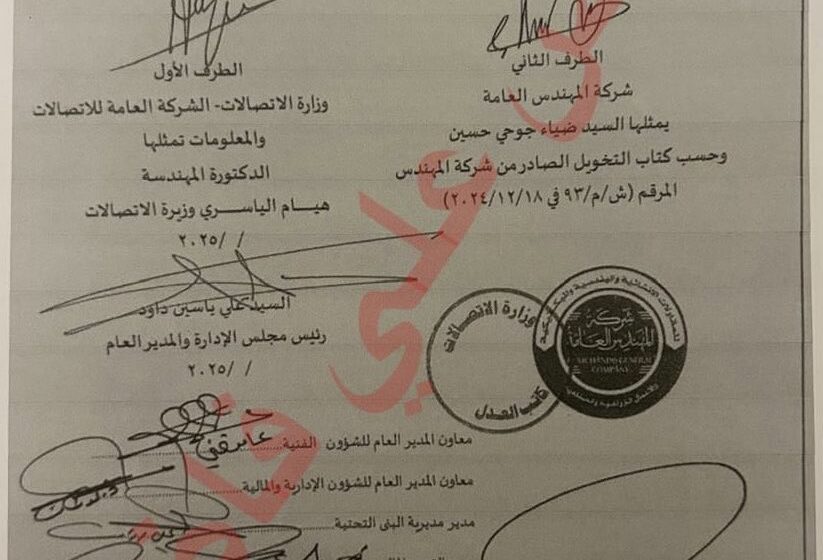
Based on an analysis of 501 X / Twitter posts by Miqrab AI on October 29, 2025, the primary narrative circulating in Iraq revolves around allegations of increased Iranian influence over the country’s critical infrastructure. A major story alleges that the government, under Prime Minister Mohammed Shia’ Al Sudani, has handed control of the national fiber optic network to Al-Muhandis General Company, which is linked to the Popular Mobilization Forces (PMF), sparking fears of Iranian surveillance over all government institutions. Other significant conversations include widespread condemnation of a televised interview with an allegedly intoxicated political candidate, which many viewed as a professional failure by the host and a reflection of the country’s degraded political scene. Additionally, there is considerable discussion about the ongoing conflict in Sudan, with many posts highlighting the humanitarian crisis and accusing the UAE of arming the Rapid Support Forces (RSF), thereby prolonging the war. The upcoming elections also feature prominently, with debates surrounding candidate disqualifications, campaign tactics, and criticism of political figures.
Today’s Top 10 X (Twitter) Trends in Iraq:
1. Allegations of Iranian Control Over Iraq’s Internet Infrastructure
A significant story gaining traction alleges that Prime Minister Mohammed Shia’ Al Sudani, Minister of Communications Hiyam Al-Yasiri, and Faleh al-Fayyad have handed over control of the national fiber optic cable network to Al-Muhandis General Company, which is described as being linked to the Popular Mobilization Forces (PMF) and, by extension, Iran. The prominent account Ali Fadhil _ علي فاضل (Post Impact: 100%) claims this move effectively grants Iran the ability to spy on all Iraqi government institutions, stating, “Al Sudani has granted Iran the right to spy, eavesdrop, and monitor all government institutions.” The account promises more details and documents in an upcoming episode of “The Green Zone.” This sentiment is echoed by Rusly Al-Maliki 🇮🇶 رسلي المالكي (Post Impact: 30%), who cites an article from *The Atlantic* magazine stating that the Iraqi Minister of Communications fulfilled Iran’s long-held desire to control Iraq’s communications network. Similarly, Entifadh Qanbar 🇮🇶🇺🇸 انتفاض قنبر (Post Impact: 16%) and Othman Al-Mukhtar (Post Impact: 10%) both referenced *The Atlantic* article, highlighting that the no-bid contracts give the PMF control over Iraq’s data network, raising major security concerns about surveillance capabilities for the militias and their patrons in Tehran.
2. Condemnation of TV Interview with Allegedly Intoxicated Guest
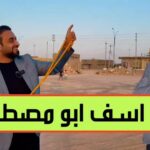
A televised interview featuring an allegedly intoxicated guest sparked widespread criticism and debate. Faiq Al-Sheikh Ali/Kalimati Lil Tarikh (Post Impact: 79%) described the host, Sahar, as a “capable and successful media personality” but criticized her for continuing the interview with a guest who was “drunk, unconscious, and intoxicated.” He argued she should have ended the interview and apologized to viewers, calling her decision a “professional lapse.” Other accounts, like Abdulrazzaq Al-Hayali (Post Impact: 19%), labeled the interview a “farce on air,” noting the guest spoke in a “filthy sectarian language” and behaved as if in a bar. The post questioned the current state of Iraq’s political scene, asking, “Is this what the political scene in Iraq has become? Drunkenness, sectarianism, and a lack of respect for a people tired of ruin?” Tamara Alkhazraji 🍓 (Post Impact: 16%) also shared a clip from the interview with the caption, “What is happening on Iraqi channels, guys? 🤣”.
3. UAE’s Alleged Role in Arming Militias and Fueling the Sudanese Conflict
Multiple accounts shared and discussed a *Wall Street Journal* report alleging that the United Arab Emirates is supplying weapons to the Rapid Support Forces (RSF) militia in Sudan, thereby strengthening the group and intensifying the conflict. ZaidBenjamin زيد بنيامين (Post Impact: 67%) posted a detailed summary of the article, which claims that U.S. intelligence agencies have observed an increased flow of military equipment, including advanced Chinese drones, from the UAE to the RSF. The report suggests this support has allowed the militia, accused of genocide, to regain momentum after suffering setbacks. The conversation was amplified by Rusly Al-Maliki 🇮🇶 رسلي المالكي (Post Impact: 31%), who lamented the perpetual state of conflict in Africa and highlighted the humanitarian crisis in Sudan, blaming external hands for supporting warring factions over the bodies of suffering Sudanese civilians. Issam Hussein (Post Impact: 19%) compared the mass killings in Sudan to similar events in Sinjar and Tikrit, attributing the violence to a “brand of killing” fueled by “Gulf money.”
4. Controversy Surrounding Yazan Mashaan al-Jibouri’s Campaign
Political figure Yazan Mashaan al-Jibouri and his father, Mashaan al-Jibouri, are defending him against what they describe as a “systematic and funded” smear campaign. Yazan Mashaan Al-Jibouri (Post Impact: 38%) posted a video claiming the campaign against him is managed from “behind screens and borders” using “paid digital campaigns and fake accounts.” He asserted that “free speech is stronger than armies of buttons and belief in a project cannot be defeated by noise.” His father, Mashaan Al-Jibouri (Post Impact: 34%), defended a video clip being used against Yazan, questioning where the offense lies in his son’s offer to cover half of a woman’s medical expenses. He promised to reveal “dangerous information and shocking facts” about the woman who was allegedly defended by the head of the Taqaddum party. In contrast, Mullah Aboud Al-Karkhi (Post Impact: 15%) heavily criticized Yazan, calling him “vile” and praising another individual, Abu Mazen, for stepping in to cover the full cost of the woman’s treatment.
5. Criticism of Pro-Iran Loyalists in Iraq
Political commentator Faiq Al-Sheikh Ali/Kalimati Lil Tarikh (Post Impact: 36%) criticized what he calls a “strange phenomenon” among Iraqi Shia loyal to Iran. He states that whenever someone expresses an opinion, these loyalists claim it is “against the sect.” He questions why such accusations were not common under previous regimes, sarcastically asking if people didn’t insult the sect back then or if they were just “beaten with a shoe while remaining silent.” This theme of Iranian influence is also present in posts like that from Alawiya Um Zainab (Post Impact: 22%), who posted an image of Donald Trump and urged him to “save the Iraqi people from the hegemony of the Iranian regime in Iraq.” Rusly Al-Maliki 🇮🇶 رسلي المالكي (Post Impact: 15%) amplified this narrative by sharing a screenshot from *The Atlantic* that described Iraq as “Iran’s last ally in the Middle East.”
6. Photos from Uday Hussein’s Private Room Spark Discussion on Past Regime’s Extravagance
A post by Haidar (Post Impact: 42%) shared photos reportedly found in Uday Hussein’s private room on April 21, 2003, and published by the *Washington Times*. The post, citing the page “Iraq Archive,” notes that the photos were taken during the years of international sanctions, a time of severe economic hardship for ordinary Iraqis. It contrasts the suffering of the general population with the “extravagance and secrecy” surrounding the lives of the elite. The images prompted users like Huruf Sumeria (Post Impact: 15%) to post campaign-style images with captions like “Your vote angers the sons of the female comrades,” followed by the hashtag #They_want_us_to_return_to_dictatorship, linking the past regime’s excesses to contemporary political discourse.
7. Debates Over Disqualification of Election Candidates
The disqualification of several candidates from the upcoming elections has become a topic of discussion. Ali Farhan ali farhan (Post Impact: 22%) expressed bewilderment over the disqualification of a sitting member of parliament for a forged university degree, asking how he was able to run in the 2021 elections and serve in parliament. This raised a broader question: “How many people today have forged their certificates and have been legislating laws and monitoring the work of state departments for years?” Emad Bajalan (Post Impact: 18%) sarcastically commented on the disqualification of Hussein Arab, noting that while Iraq enjoys “real democratic atmospheres,” armed factions remain, and warned, “the ending will be dark and grim, God willing.” The account Haidar (Post Impact: 24%) reported on the disqualification of candidate Hala Al-Obeidi after she described the majority of Baghdad’s population as “drifters.”
8. Remembering the Tishreen Uprising
Faiq Al-Sheikh Ali/Kalimati Lil Tarikh (Post Impact: 26%) published a series of posts under the title “Why am I a soldier in the Tishreen Revolution?” reflecting on the 2019 protests. In one post, he states his role was to guide protesters through the media, advising them to avoid confrontations with armed forces to preserve their lives. He notes that despite these efforts, around 700 protesters were killed and 25,000 were injured “at the hands of their own countrymen.” In other posts, he describes the protesters as unarmed youth facing heavily armed militias and security forces, calling them “heroes, as if God had never created anyone like them before.” He also alleges that armed elements from ruling parties and security services infiltrated the protests to attack demonstrators from within.
9. Praise and Commentary on Syrian First Lady Asma al-Assad’s Appearance
A photo of Syrian President Bashar al-Assad and his wife, Asma al-Assad, prompted commentary on social media. Tamara Alkhazraji 🍓 (Post Impact: 36%) shared the image with a caption praising Asma al-Assad’s appearance, specifically her purple outfit, and stating, “May the mauve never fade 💜 Bashar and Asma are a sacrifice for this look.” The post generated engagement from users who either agreed with the sentiment or criticized the praise for the Syrian regime figures. This type of post, focusing on the aesthetics of political figures, often serves as a point of entry for broader political discussions and expressions of allegiance or opposition.
10. Religious Commentary and Criticism
Religious figures and interpretations were a source of debate. An unnamed account (Post Impact: 50%) shared a video criticizing Sunni cleric Othman al-Khamis for his interpretation of the Shia supplication Dua Kumayl, asking, “Does the so-called Othman al-Khamis not understand Dua Kumayl, are the words of the supplication that difficult for him?” In a different context, Safaa Al-Asadi (Post Impact: 29%) shared a video of another religious figure and questioned the logic being presented, exclaiming, “What religion is this? What logic is that? And how can something be accepted that neither reason nor law accepts?!” These posts highlight ongoing sectarian and theological debates within Iraq’s social media landscape, often using clips of clerics to either support or challenge particular viewpoints.
“`