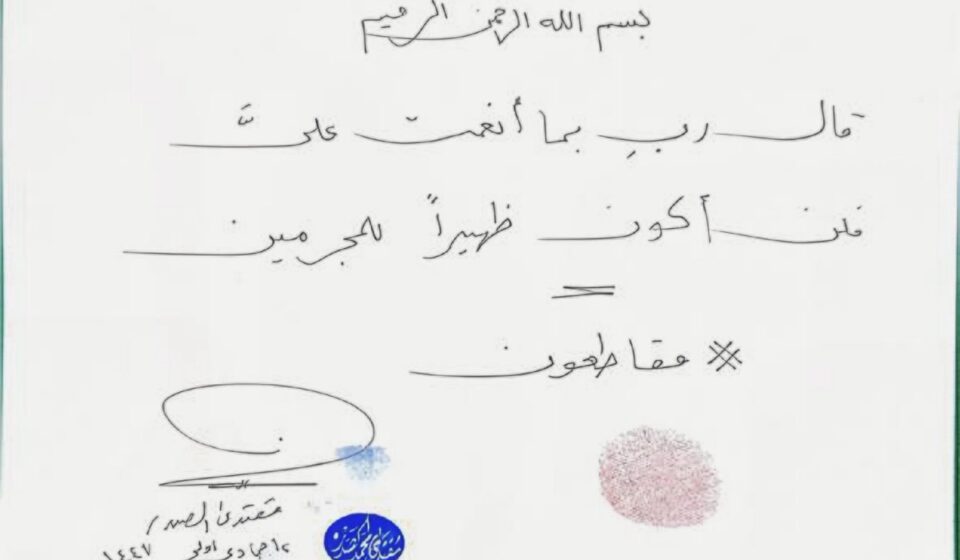
2025-11-04: Sadrist Movement Endorses Election Boycott with Symbolic Fingerprint

Based on a Miqrab AI analysis of 525 X / Twitter posts trending in Iraq on November 4, 2025, the social media landscape was dominated by political discourse surrounding the upcoming elections, with a powerful and highly visible campaign to boycott the vote gaining significant traction. This was amplified by a symbolic endorsement from the Sadrist movement, alongside sustained calls from other political figures citing widespread corruption. A major security incident, an explosion at a Popular Mobilization Forces (PMF) headquarters south of Baghdad, also drove considerable conversation, with speculation about its cause ranging from an accidental detonation to a targeted airstrike. Other prominent narratives included reactions to the death of former U.S. Vice President Dick Cheney, debates over the legacy of Iraqi politician Ahmed Chalabi, and discussions on the performance of the current government, reflecting a dynamic and often contentious public sphere.
Table Of Content
- 1. Sadrist Movement Endorses Election Boycott with Symbolic Fingerprint
- 2. Explosion at PMF Headquarters Sparks Speculation of Airstrike
- 3. Politicians and Activists Lead Widespread Calls to Boycott Elections
- 4. Reactions to the Death of Former U.S. Vice President Dick Cheney
- 5. Sectarian Arguments over Governance and Political History Resurface
- 6. Commemorating the Contested Legacy of Politician Ahmed Chalabi
- 7. Defending Saudi Arabia Against Perceived Online Campaigns
- 8. Debates on the Sudanese Government’s Performance
- 9. Allegations of Election Manipulation and Misuse of State Resources
- 10. Sunni Political Figures Praise Khamis al-Khanjar
Today’s Top 10 X (Twitter) Trends in Iraq:
1. Sadrist Movement Endorses Election Boycott with Symbolic Fingerprint
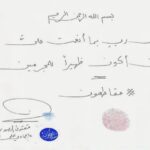
The most impactful story of the day was the Sadrist movement’s clear endorsement of the upcoming election boycott. The influential account Salih Muhammad al-Iraqi (Post Impact: 100%), associated with Muqtada al-Sadr, shared a powerful image of a thumbprint on a document bearing the hashtag #مقاطعون (Boycotters), with the caption “With his blessed fingerprint..”. This simple but potent message was widely interpreted as Sadr’s official instruction to his followers to abstain from voting. The image and hashtag were quickly adopted and shared by numerous other accounts, signifying a unified campaign. Safaa Al-Asadi (Post Impact: 7%) highlighted Sadr’s praise for the people of Adhamiyah for their support of the boycott, quoting him as saying, “May God bless the people of Adhamiyah, they have accustomed us to their heroic national stances… My greetings to them.” Other accounts like Dr. Ali Mohsen Al-Tamimi (Post Impact: 7%) and Ali Farhan (Post Impact: 3%) also shared the symbolic fingerprint image, reinforcing the widespread nature of the boycott call within Sadrist circles.
2. Explosion at PMF Headquarters Sparks Speculation of Airstrike
A significant explosion at a Popular Mobilization Forces (PMF) headquarters in the Jurf al-Naddaf area, south of Baghdad, generated intense discussion and conflicting narratives. HIBA Alnnayib (Post Impact: 32%) shared a video of the blast, reporting that military sources suspect it was an airstrike, while pro-militia media were suggesting ISIS was responsible. The PMF officially stated the incident was an “accidental explosion” caused by leftover ISIS explosives, a statement shared by accounts like Haidar (Post Impact: 6%). However, speculation of a foreign attack, possibly by Israel, was widespread. Steven Nabil (Post Impact: 11%) directly questioned, “Did the Israelis air strike the PMF factions in Iraq today?” Analyst David Yassin (Post Impact: 8%) argued the event was not accidental but part of a “quietly managed field operational campaign” designed to test responses and gather intelligence. Meanwhile, Dr. Hussein Al-Safi (Post Impact: 14%) mourned a PMF member killed in the explosion, asking for prayers for the martyr.
3. Politicians and Activists Lead Widespread Calls to Boycott Elections
Beyond the Sadrist movement, a broader campaign urging Iraqis to boycott the upcoming elections gained momentum, led prominently by former MP Faiq Al-Sheikh Ali. In a series of highly engaged posts, Faiq Al-Sheikh Ali/My word for history (Post Impact: 19%) declared his allegiance to the Tishreen protest movement and its martyrs, using the hashtag #قاطعوا_الانتخابات (Boycott the elections). He argued that all ruling party leaders are corrupt, asking, “Where is the flaw? With the corrupt or with the voters?” in another post by Faiq Al-Sheikh Ali/My word for history (Post Impact: 15%). He also offered advice to those who sold their voter cards on how to invalidate their ballots. Other political figures joined the call, including Sabah Al-Saadi (Post Impact: 11%), who posted a graphic with the hashtag #مقاطعون (Boycotters) and a Quranic verse implying he will not support criminals. The hashtag was also shared by accounts like Alaa Alabadi (Post Impact: 10%) and Haidar Al-Haddad Al-Khafaji (Post Impact: 10%), indicating a cross-cutting movement of political opposition.
4. Reactions to the Death of Former U.S. Vice President Dick Cheney
The death of former U.S. Vice President Dick Cheney, a key architect of the 2003 invasion of Iraq, elicited strong reactions from Iraqi commentators. Liqaa Maki (Post Impact: 19%) stated that Cheney lived to see Americans curse his role in the war and the deception used to justify it, adding it was “important and fair that Cheney witnessed his disgrace before his death.” Similarly, Othman Al-Mokhtar (Post Impact: 8%) expressed satisfaction at his passing, describing him as the “engineer of the occupation of Iraq and the slaughter of its people” and concluding, “Dick Cheney perished, and Fallujah remained.” Rafid Jaboori (Post Impact: 5%) reported on the death, noting Cheney’s pivotal role in pushing for the invasion despite the controversy over weapons of mass destruction.
5. Sectarian Arguments over Governance and Political History Resurface
Sharp sectarian political discourse featured prominently, particularly in a detailed post by Dr. Hussein Al-Safi (Post Impact: 15%). He argued forcefully that Shia are better rulers than Sunnis, claiming that 1400 years of Sunni rule led Iraq “from ruin to ruin,” whereas under Shia leadership, other components like Kurds and Sunnis receive their rights. He defended the post-2003 political order, asserting, “The Shia have succeeded with all the external and internal attempts to thwart their rule.” This narrative was contrasted by Mashaan al-Jubouri (Post Impact: 4%), who defended an old speech in which he called the election of Ibrahim al-Jaafari a “black day in the history of Iraq where the Safavids were able to rule Baghdad,” claiming his words were taken out of context by “pro-Iran loyalists” to incite against him. This highlights the continued presence of deeply rooted sectarian framing in Iraqi political debates.
6. Commemorating the Contested Legacy of Politician Ahmed Chalabi
The anniversary of the death of politician Ahmed Chalabi prompted a polarized discussion about his legacy as a key figure in the overthrow of Saddam Hussein’s regime. Accounts like GHAITH ALTAMIMI (Post Impact: 10%) praised him, stating, “Thanks to America who overthrew this tyrant and his gang. Thanks to the great Chalabi who convinced America to do it.” In another post, GHAITH ALTAMIMI (Post Impact: 9%) defended Chalabi against critics, whom he labeled “orphans of the Saddam regime gangs.” Similarly, Haidar (Post Impact: 9%) shared a historic photo of Chalabi with a captured Saddam Hussein, quoting Chalabi’s warning to “new tyrants.” In stark contrast, the account {Iraq Platform} (Post Impact: 4%) attacked those praising Chalabi, calling him a “symbol of betrayal and collaboration” who brought the occupation and its tragedies to Iraq.
7. Defending Saudi Arabia Against Perceived Online Campaigns
A narrative defending Saudi Arabia against what were described as coordinated online incitement campaigns was pushed by several accounts. Sufian Al-Samarrai (Post Impact: 20%) criticized individuals who allegedly film incidents near the Kaaba to discredit the Saudi government, only to complain of oppression when arrested by security forces, calling their campaign “exposed.” In another post, Sufian Al-Samarrai (Post Impact: 5%) accused “platforms and accounts supported by Qatar” of inciting against Saudi Arabia and targeting the holy sites. This theme of regional rivalry extended to Iran, with Dr. Hussein Al-Moayad (Post Impact: 3%) lambasting the Iranian Foreign Minister for describing decades of Iranian hostility toward the Kingdom as a simple “misunderstanding,” arguing that Iran’s “machine of conspiracy, terrorism, and media campaigns” against Saudi Arabia continues unabated.
8. Debates on the Sudanese Government’s Performance
The performance of Prime Minister Mohammed Shia’ Al Sudani’s government was a topic of both praise and sharp criticism as it prepared to transition into a caretaker role. Haidar (Post Impact: 9%) noted that the cabinet held its last session and asked his followers to evaluate its performance. On the positive side, Shaho Al-Qaradaghi (Post Impact: 5%) celebrated Sudani’s decision to halt the import of gasoline, gas, and white oil and to direct the export of the surplus, a move seen as a first in many years. Conversely, criticism was also prevalent. Muna Sami (Post Impact: 8%) compared Sudani’s announcement on exporting gasoline to a famously unfulfilled promise by former official Hussein al-Shahristani to export electricity, calling them both “#Immortal_Quotes.” Ali Farhan (Post Impact: 10%) sarcastically commented on a statement by the Minister of Higher Education, Naeem Al-Aboudi, who claimed his achievements were unprecedented in the ministry’s history.
9. Allegations of Election Manipulation and Misuse of State Resources
Ahead of the elections, specific allegations of manipulation and the misuse of state resources for campaigning surfaced on social media. Ahmad Alwishah (Post Impact: 10%) accused a Badr Organization candidate, Abu Turab al-Tamimi, of deploying 4,500 fighters from the 3rd Brigade of the PMF to work on his campaign by collecting voter cards and creating fake social media accounts to attack his critics. This accusation suggests the exploitation of state-funded security forces for political gain. Echoing concerns about election integrity, Faiq Al-Sheikh Ali/My word for history (Post Impact: 10%) called on the government and the election commission to prevent party representatives and voter cellphones from entering polling stations, asserting that without such measures, “By God, none of them would win!”
10. Sunni Political Figures Praise Khamis al-Khanjar
Sunni politician Khamis al-Khanjar received notable praise from fellow political figure Mashaan al-Jubouri. In a video clip shared by Salim Al-Jumaili (Post Impact: 6%), Jubouri describes al-Khanjar as “the most fiercely loyal defender of the Sunni component” and a principled man willing to sacrifice his life to preserve its identity. Another account, Haidar (Post Impact: 3%), shared a similar clip, quoting Jubouri calling al-Khanjar “one of the most honorable Iraqi politicians ever.” These posts highlight ongoing dynamics and alliance-building within the Sunni political landscape, positioning al-Khanjar as a key leader and defender of his community’s interests.