2025-11-07: Absence of Actors at Mohamed Ramadan’s Father’s Funeral Sparks Debate

Based on Miqrab AI’s analysis of 521 trending X / Twitter posts in Iraq on November 7, 2025, the social media landscape is dominated by discourse surrounding the upcoming elections. Key narratives include intense political rivalries, particularly between Sunni leader Mohammed al-Halbousi and Kurdish parties, as well as internal Sunni disputes. Factions like the Sadiqoun movement are actively campaigning for participation, while a counter-narrative calls for a widespread boycott, citing disillusionment with the democratic process. Discussions around foreign policy also feature prominently, with users sharing and reacting to statements by former U.S. President Donald Trump regarding his policies toward Iran and Syria. Amidst the political fervor, a high-engagement post about the personal life of Egyptian actor Mohamed Ramadan highlights a strong parallel interest in regional celebrity news and cultural commentary.
Table Of Content
- 1. Absence of Actors at Mohamed Ramadan’s Father’s Funeral Sparks Debate
- 2. Political Tensions Erupt Between Mohammed al-Halbousi and Kurdish Parties
- 3. Donald Trump’s Past Foreign Policy Statements Resurface
- 4. Calls to Boycott Elections Amid Critiques of Democracy
- 5. Sadiqoun Movement Rallies Supporters for Elections
- 6. Debates on Nouri al-Maliki’s Potential Return to Power
- 7. Campaigning for Sunni Candidates Nasser Al-Ghannam and Sajjad Salem
- 8. Masoud Barzani’s Statements on the Constitution and Kirkuk
- 9. Ammar al-Hakim’s Campaign Faces Accusations of Sectarianism
- 10. Statements by Qais Khazali on Politics, Security, and Shi’a Influence
Today’s Top 10 X (Twitter) Trends in Iraq:
1. Absence of Actors at Mohamed Ramadan’s Father’s Funeral Sparks Debate
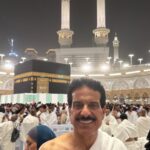
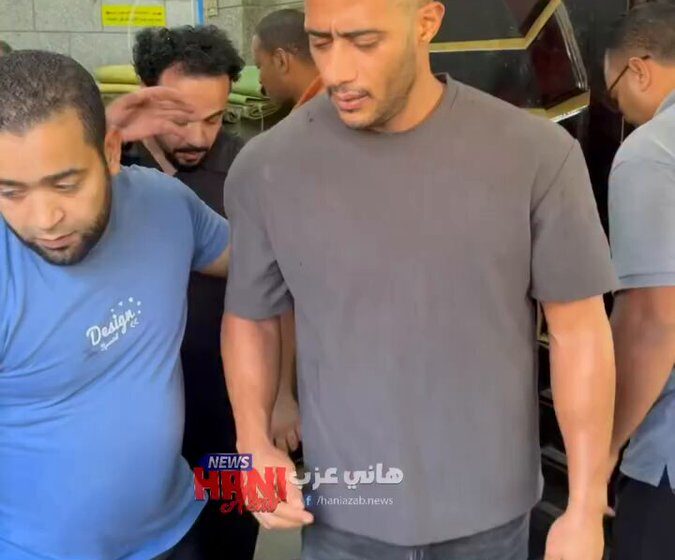
A video from the funeral of Egyptian actor Mohamed Ramadan’s father circulated widely, prompting commentary on the actor’s relationships within the entertainment industry. Bahaa khaleel Bahaa khaleel (Post Impact: 100%) shared the clip, noting, “No actor appeared at the funeral of Mohamed Ramadan’s father ‼️” The post frames the low attendance as a moral lesson, adding, “This is a lesson for every arrogant person and for anyone who sees himself as better than others.” The high impact of this single post suggests a significant interest among Iraqi social media users in regional celebrity news and the personal conduct of public figures.
2. Political Tensions Erupt Between Mohammed al-Halbousi and Kurdish Parties
Mohammed al-Halbousi, leader of the Taqaddum party, has ignited controversy with statements criticizing Masoud Barzani and the Kurdistan Democratic Party (KDP). Haider (Post Impact: 4%) summarizes al-Halbousi’s remarks, where he asserts that Barzani is a Kurdish, not a Sunni, leader and accuses the KDP of treating Sunni parties as followers. This has drawn sharp rebukes from Kurdish political figures. Hoshyar Zebari (Post Impact: 4%) describes al-Halbousi as an example of those who “came by chance” and are “strengthened by their militia alliances and huge corruption funds.” Similarly, Mulla Aboud Al-Karkhi (Post Impact: 4%) contrasts Barzani’s long history as a “fighter since the sixties” with al-Halbousi’s more recent political emergence. Accounts like Shaho Al-Qaradaghi (Post Impact: 2%) amplified Zebari’s criticism, while Essam Hussein (Post Impact: 2%) analyzed the underlying Sunni-Sunni and Sunni-Kurdish power struggles.
3. Donald Trump’s Past Foreign Policy Statements Resurface
Statements by former U.S. President Donald Trump regarding his Middle East policies are being shared and analyzed. Najah Mohammed Ali (Post Impact: 8%) shares a clip of Trump claiming responsibility for an Israeli attack on Iran, calling it a “great day for (Israel)!” The account interprets this as evidence that Trump deceived Iran and that “negotiations were just a trap and a play,” concluding that a man who uses war and deception cannot be trusted. In another video shared by Haider (Post Impact: 6%), Trump states that he lifted sanctions on Syria at the request of Turkey and Israel, adding another layer to the discussion around his transactional approach to foreign policy.
4. Calls to Boycott Elections Amid Critiques of Democracy
A significant narrative on Iraqi X/Twitter involves calls to boycott the upcoming elections, coupled with critiques of the democratic process in Iraq. Rusly Al-Maliki (Post Impact: 7%) shares a video of academic Dr. Khazal Al-Majidi, stating, “Democracy in a backward society is a catastrophe.” This sentiment is echoed in another post by Al-Maliki (Post Impact: 3%) with the simple message, “Be smart and boycott.” Mulla Aboud Al-Karkhi (Post Impact: 4%) ends a post criticizing a politician with the hashtag #قاطعوا_الانتخابات (#Boycott_the_elections). In another post, Al-Karkhi (Post Impact: 1%) explicitly calls on the people of Baghdad to boycott the elections to punish the political class for “years of treason, conspiracies, theft, and loyalty to Iran.”
5. Sadiqoun Movement Rallies Supporters for Elections
The Sadiqoun movement, the political wing of Asa’ib Ahl al-Haq, is actively campaigning for voter turnout. Naeem Al-Aboudi (Post Impact: 5%), a prominent figure, writes that before the electoral silence, voters will turn to those with clear positions who have proven their ability to handle responsibility. Jafar Al-Aboudi (Post Impact: 5%) echoes this with a post declaring he will vote for the sake of Iraq, his children’s future, and the preservation of the state, using the hashtag #Participating_by_order_of_the_Marjaiya. As’ad Al-Basri (Post Impact: 2%) penned a lengthy praise of Qais Khazali and Sadiqoun, arguing they are “the future with optimism” and have successfully transitioned from jihad to political action. Dr. Hussein Al-Safi (Post Impact: 2%) also encourages voting for Sadiqoun, stating that “supporting a successful person is a moral issue.”
6. Debates on Nouri al-Maliki’s Potential Return to Power
The possibility of former Prime Minister Nouri al-Maliki returning to a leadership role is a topic of discussion. Wasan Al-Shaikhli (Post Impact: 7%) posted a direct poll asking followers, “Do you support the return of Al-Maliki to the post of Prime Minister?” This generated significant engagement, indicating public interest in the matter. Meanwhile, Haider (Post Impact: 1%) shared an image of al-Maliki with a quote highlighting his role in signing what he called “the biggest thing that can be signed between two countries” with the United States, reminding followers of his past tenure.
7. Campaigning for Sunni Candidates Nasser Al-Ghannam and Sajjad Salem
There is a focused campaign effort to promote specific Sunni political candidates ahead of the election. Najeh Abbas Al-Mizan (Post Impact: 6%) urges voters to elect Nasser Al-Ghannam “in revenge for the blood of the martyr Safaa Al-Mashhadani at the hands of the militias.” In another post, Al-Mizan (Post Impact: 4%) states that electing Sajjad Salem is “proof of your authentic Arabism.” The support for Sajjad Salem is reinforced by Falah Al-Mashal (Post Impact: 2%), who praises Salem as a “brave young politician” and the “highest national figure in confronting corruption, foreign agendas, and militias,” urging the people of Wasit to vote for him.
8. Masoud Barzani’s Statements on the Constitution and Kirkuk
Speeches and statements by Kurdistan Democratic Party (KDP) leader Masoud Barzani are circulating, focusing on Kurdish rights and relations with Baghdad. Shaho Al-Qaradaghi (Post Impact: 3%) quotes Barzani vowing, “(I will not give up the constitution),” highlighting his efforts in drafting it and calling it one of the best in the region. Dr. Nayif Kurdistani (Post Impact: 4%) shares a clip of Barzani remembering a Christian village that was a victim of the Anfal campaign. In contrast, Haider (Post Impact: 2%) provides a critical summary of Barzani’s remarks, describing them as “separatist, racist, and nationalist,” and quoting him as saying “Kirkuk is an occupied city, its identity is Kurdistan, and this matter is not negotiable.”
9. Ammar al-Hakim’s Campaign Faces Accusations of Sectarianism
The election campaign of Ammar al-Hakim and his Al-Hikma National Movement is drawing criticism for allegedly using sectarian rhetoric. While Ammar Al-Hakim | عمار الحكيم (Post Impact: 2%) urges voters not to “choose silence” so that “the corrupt do not expand in state institutions,” using the slogan #لاتضيعوها (Don’t waste it), critics are using the same slogan against him. Othman Al-Mukhtar (Post Impact: 2%) states that “the dirtiest, most sectarian, poisonous, and vile electoral speech was that of Ammar al-Hakim.” Similarly, Hiba Alnnaayib HIBA Alnnayib (Post Impact: 2%) accuses Al-Furrat TV, which is affiliated with al-Hakim, of broadcasting “sectarian poison” by describing Sunnis as criminals involved in the Speicher massacre as part of their election propaganda.
10. Statements by Qais Khazali on Politics, Security, and Shi’a Influence
Recent statements by Qais Khazali, the leader of Asa’ib Ahl al-Haq, have been widely shared, covering topics from political alliances to his faction’s role. Ahmed Abdul Sada (Post Impact: 2%) quoted a military spokesman for Kata’ib Hezbollah who asserted, “Shi’as have full guardianship over Iraq, whether some like it or not,” and that “our weapon is the weapon of the Shi’a and will remain in our hands.” In a different tone, Yasser Eljuboori – ياسر الجبوري (Post Impact: 3%) shares a clip of Khazali stating there is “no problem with the entry of American corporate investments.” Haider (Post Impact: 2%) summarizes an interview where Khazali discusses the Coordination Framework becoming a decision-making institution, his strong stance on Kirkuk being Iraqi, and his criticism of a Sunni politician for using sectarian rhetoric.