2025-11-17: Coordination Framework Declares Itself “Largest Bloc”

Based on an analysis of 463 Facebook posts trending on November 17, 2025, Miqrab AI has identified that the primary narrative in Iraq revolves around post-election political maneuvering and government formation. The most dominant story is the Shiite Coordination Framework’s formal declaration of itself as the largest parliamentary bloc, initiating the process of selecting a new prime minister. This has fueled widespread speculation about potential candidates, with names like Haider al-Abadi and Abdul Amir al-Shammari circulating prominently. Concurrently, the Federal Supreme Court’s decision to dissolve the previous parliament and transition the current government to a caretaker role has finalized the election’s outcome and set the stage for these negotiations. Alongside these political developments, discussions also include reactions to election results, commentary on a potential shift in US foreign policy under a new Trump administration, and public expressions of frustration with the political class.
Table Of Content
- 1. Coordination Framework Declares Itself “Largest Bloc”
- 2. TV Personality Raaed Al-Maliki Breaks Down on Air
- 3. Haider al-Abadi Tipped as Consensus PM Candidate
- 4. Federal Court Dissolves Parliament, Govt Becomes Caretaker
- 5. Post-Election Victories and Celebrations
- 6. Anticipated Shift in US Foreign Policy Under Trump
- 7. Nouri al-Maliki Holds Post-Election Consultations
- 8. Public Critique of Post-Election Political Alliances
- 9. General Abdul Amir al-Shammari Emerges as PM Contender
- 10. Muqtada al-Sadr Continues Organizational Activities
Today’s Top 10 Facebook Trends in Iraq:
1. Coordination Framework Declares Itself “Largest Bloc”
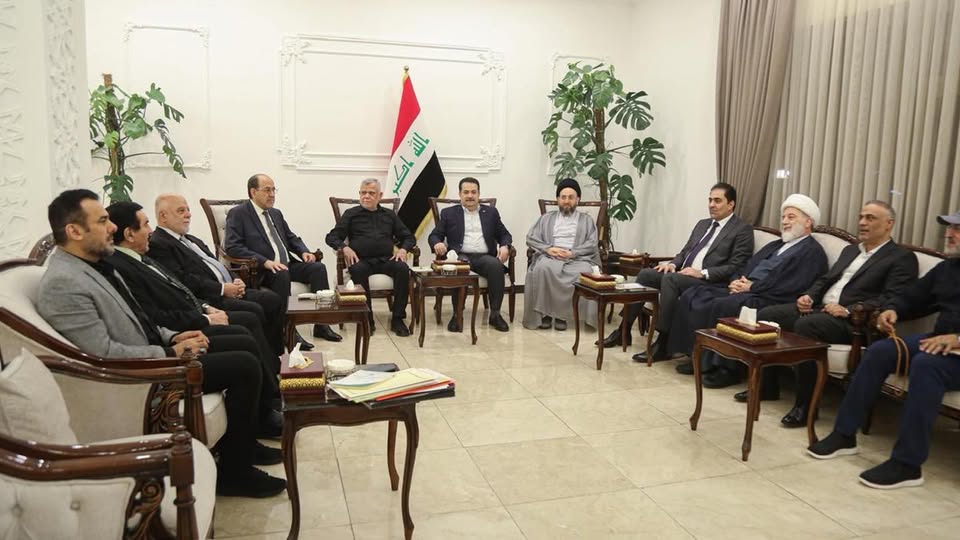
The most engaging story on Iraqi Facebook is the Shiite Coordination Framework’s official move to form the next government. Multiple pages, led by Al-Khuwa al-Nathifa (Post Impact: 100%), reported that the Framework’s parties have signed a document declaring themselves the “largest bloc.” This page adds that two committees have been formed, one of which will be responsible for interviewing candidates for the prime minister position. Other outlets like Al-Qasr al-Hukumi (Post Impact: 20%), Steven Nabil (Post Impact: 16%), and Baghdad (Post Impact: 7%) confirmed the news, noting that the bloc includes all of its constituent entities, including the “Emaar and Tanmiya” coalition led by incumbent Prime Minister Mohammed Shia’ Al Sudani. This development formalizes the Framework’s intention to lead the government formation process.
2. TV Personality Raaed Al-Maliki Breaks Down on Air
A video clip of political analyst Raaed Al-Maliki crying during a live television interview generated significant discussion. Mohammed Al-Khazai (Post Impact: 59%) shared a reel of the moment from his show “Zero Distance” on Al-Rabiaa TV, simply stating that Al-Maliki “breaks down in tears on air.” Pages like Wikileaks Iraq (Post Impact: 14%) and Mohammed Nasser Khalif (Post Impact: 7%) also shared the emotional clip. In a separate segment from the same interview, also posted by Mohammed Al-Khazai (Post Impact: 11%), Al-Maliki explained his feelings about the election, stating that his loss was better than joining a political party and claiming some candidates had distributed even “underwear” to win votes. The posts captured a moment of raw emotion regarding the political process and election outcomes.
3. Haider al-Abadi Tipped as Consensus PM Candidate
Amid discussions about the formation of a new government, a report suggesting a consensus on former Prime Minister Dr. Haider al-Abadi as the next premier gained significant traction. The page Al-Iraqi al-Aseel (Post Impact: 54%) posted that “news indicates the agreement of most of the Framework’s forces on Dr. Haider al-Abadi as prime minister.” This high-impact post suggests that Abadi is emerging as a leading candidate within the Coordination Framework, which has declared itself the largest bloc responsible for selecting the head of government. This narrative positions Abadi as a potential compromise figure capable of uniting the various factions within the ruling coalition.
4. Federal Court Dissolves Parliament, Govt Becomes Caretaker
Several pages reported on the Federal Supreme Court’s decision to officially end the term of the current Council of Representatives and transition the government into a caretaker role. Al-Khuwa al-Nathifa (Post Impact: 22%) stated that the court “decided to end the work of the Council of Representatives and turn the government into a ‘caretaker government’,” while noting the President of the Republic will continue his duties. Muna Sami (Post Impact: 11%) echoed this, explaining that Prime Minister Mohammed Shia’ Al Sudani is now “term-expired” and his government can only manage daily affairs, while the parliament has lost its legislative and oversight powers. Celebrating the news, the page La Manie Maa Dr. Qusai Shafiq (Post Impact: 33%) called it a “historic decision to protect public funds.”
5. Post-Election Victories and Celebrations
Following the finalization of election results, several pages highlighted the victories and celebrations of various political parties and candidates. The page of Mohammed Al-Halbousi (Post Impact: 34%) shared photos from a “central ceremony” attended by party leaders to mark the Taqaddum Party’s success in the parliamentary elections. In a different political camp, the victory of Adila Hammoud from the State of Law coalition was widely covered. Steven Nabil (Post Impact: 42%) posted a photo of Hammoud thanking the Iraqi people, security forces, and the Hashd for her election. Her win was also announced by pages such as Wikileaks Iraq (Post Impact: 14%). These posts reflect the concluding phase of the electoral process as winning parties and individuals publicly acknowledge their success.
6. Anticipated Shift in US Foreign Policy Under Trump
A narrative is circulating about a potential significant shift in U.S. foreign policy in the Middle East under President Trump, with implications for Iraq. Rusly Al-Maliki (Post Impact: 25%) claimed that “Syria has begun to replace Iraq in strategic importance for Washington,” alleging that Trump plans to visit Syria, sign security and economic agreements, and withdraw U.S. forces from SDF-controlled areas. This aligns with a video shared by Mohammed Jabbar (Post Impact: 34%) from his show “Bewodouh,” titled “Trump does not want to see Sudani again.” These posts collectively suggest a belief among some commentators that the new U.S. administration will pivot towards Damascus and away from the current leadership in Baghdad.
7. Nouri al-Maliki Holds Post-Election Consultations
Nouri al-Maliki, head of the State of Law Coalition, has been actively engaged in post-election meetings with various political figures, as documented on his official Facebook page. He met with Hussein Mounis, head of the Harakat Huqooq movement, to discuss the urgency of forming a capable government, as reported by Nouri Al-Maliki (Post Impact: 25%). In separate meetings, Al-Maliki also received political leaders from Salah al-Din province and delegations from the Al-Nahj Al-Watani Alliance and the Patriotic Union of Kurdistan (PUK), as shown in posts with impacts of 23% and 15% respectively. The meetings focused on congratulating each other on the election’s success and discussing the ongoing dialogues between national forces to expedite the formation of the next government.
8. Public Critique of Post-Election Political Alliances
Alongside official political news, there is a strong current of public frustration and satirical critique aimed at the political class for their post-election realignments. The page Thezelma (Post Impact: 23%) shared a parable about a repeatedly fooled goldsmith, concluding, “Now the Iraqi people remind me of this goldsmith… for twenty years they have been sniffing and wiping with the same towel!” Similarly, journalist Muna Sami (Post Impact: 20%) critically questioned the new alliances, asking, “Before the elections, weren’t they called the leaders of failure and corruption??” This sentiment of cynicism towards political maneuvering is a recurring theme, reflecting a deep-seated public distrust of the political process.
9. General Abdul Amir al-Shammari Emerges as PM Contender
Another name being floated as a potential candidate for prime minister is General Abdul Amir al-Shammari, with reports suggesting he has significant regional backing. The page Ahmed Al-Hamdani (Post Impact: 21%) reported on “old and new efforts” to push al-Shammari to the forefront, claiming there is a “Saudi-Iranian-American-Turkish-Kuwaiti-Emirati-Qatari consensus” on his candidacy. This narrative was also shared by Maraya (Post Impact: 7%), which noted that political discussions about al-Shammari are increasing and that the “file is still in the consultation stage.” These posts introduce a second major contender into the public discussion about who will lead the next Iraqi government.
10. Muqtada al-Sadr Continues Organizational Activities
Despite his movement’s formal withdrawal from the elections, Muqtada al-Sadr continues to engage with his followers and manage his organization’s affairs. His official private office page, Private Office of Sayyid Muqtada al-Sadr (Post Impact: 21%), shared details of al-Sadr reviewing the weekly activities of his representative in Babil province. The post highlighted directives from al-Sadr regarding a blood donation campaign for children with leukemia and the reopening of registration for the “Al-Bunyan Al-Marsous” project. Another post with an equal impact of 21% announced that al-Sadr had issued authorizations to establish “Al-Sadr Family Guesthouses” in several other countries. These updates demonstrate al-Sadr’s continued influence and activity at the grassroots and organizational level.