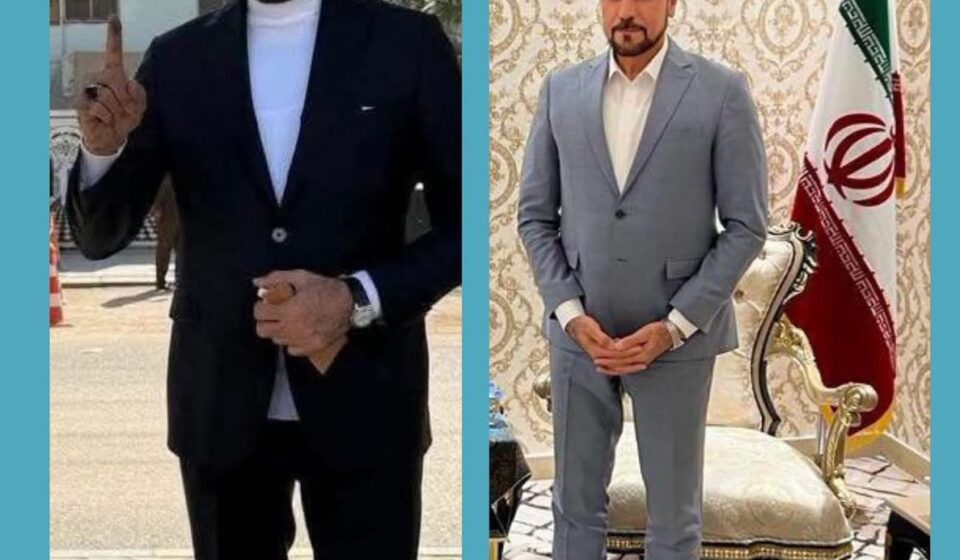
2025-11-29: Iranian Diplomat Amir Mousawi’s Identity and Warnings to Iraqi Politicians

Based on an analysis of 413 X / Twitter posts trending in Iraq on November 29, 2025, Miqrab AI identified several key narratives dominating online conversations. The foremost themes revolve around foreign influence on Iraqi sovereignty and government formation, with intense speculation about the hardline policies of an incoming US administration under Donald Trump and direct threats from Iranian figures against Iraqi politicians who might pivot away from Tehran. Domestically, the results of a new population census have ignited a sensitive debate over the country’s sectarian demographics, challenging long-held assumptions. Significant security incidents, including a drone attack on the Kormor gas field and deadly tribal clashes in Erbil, underscore ongoing instability, while discussions on regional conflicts in Syria and Venezuela reflect Iraq’s position within a volatile geopolitical landscape.
Table Of Content
- 1. Iranian Diplomat Amir Mousawi’s Identity and Warnings to Iraqi Politicians
- 2. Anticipation of Trump Administration’s Hardline Stance on Iraq
- 3. US Military Escalation in Venezuela
- 4. Syria Signals Shift in Military Strategy Against Israel
- 5. Concern Over Foreign Funding for Iraqis to Study in Saudi Salafi Schools
- 6. Population Census Results Spark Debate on Iraq’s Sectarian Makeup
- 7. Sadrist Leader Muqtada al-Sadr Issues Statement via “Wazir al-Qaid”
- 8. Criticism of Using Latmiya During School Flag-Raising Ceremonies
- 9. Iranian-Made Drone Implicated in Attack on Kormor Gas Field
- 10. Deadly Tribal Clashes Erupt with Security Forces in Erbil Governorate
Today’s Top 10 X (Twitter) Trends in Iraq:
1. Iranian Diplomat Amir Mousawi’s Identity and Warnings to Iraqi Politicians
A prominent topic involved discussions around Amir Mousawi, who is described as presenting himself as a former Iranian diplomat while also appearing as an Iraqi citizen during elections. Accounts such as Shaho Al-Qaradaghi (Post Impact: 29%) highlighted this perceived duality. The conversation intensified around a warning Mousawi allegedly issued to Iraqi politicians. According to Ali Farhan ali farhan (Post Impact: 19%) and Shaho Al-Qaradaghi (Post Impact: 14%), Mousawi cautioned the Coordination Framework that if they were to abandon Iran for the “Arab fold” and the Americans, they would “face the same fate as Bashar al-Assad.” These users interpreted the statement as a sign of Iran’s growing fear and a clear threat, noting that such warnings are sometimes delivered through words and other times through drones and Katyusha rockets.
2. Anticipation of Trump Administration’s Hardline Stance on Iraq
There is significant speculation across X / Twitter about the potential impact of a new Trump administration on Iraqi politics. Faig Alsheakh/Kalimati Lil Tarikh (Post Impact: 49%) claims that President Trump wants to appoint a prime minister who is an “enemy” of Iran and will impose his choices by force, asserting that militias must either comply or “their fate will be slaughter!” This narrative is reinforced by posts discussing statements from Trump’s envoy, Mark Savaya. Ali Farhan ali farhan (Post Impact: 13%) and Rafid Jaboori Rafid Jabburi (Post Impact: 7%) both reference Savaya, who reportedly stated that “major changes are coming to Iraq” and that the country is at a critical juncture, reiterating the American demand to restrict all weapons to the hands of the state.
3. US Military Escalation in Venezuela
Iraqi accounts closely followed reports of escalating US military actions directed at Venezuela. Sufian Al-Samarrai (Post Impact: 25%) posted that US forces have begun to forcibly close Venezuelan airspace, using warning shots against both civilian and drug-trafficking aircraft. This claim was supported by Rafid Jaboori Rafid Jabburi (Post Impact: 10%), who noted that a US military operation in Venezuela “seems to have gotten closer.” Adding a critical perspective, Cliff Captain (Post Impact: 33%) shared a video of Venezuelan forces in a military exercise, sarcastically commenting that the generals seem to think they are preparing for the Normandy landings of World War II.
4. Syria Signals Shift in Military Strategy Against Israel
A shift in Syria’s military policy towards Israel is being widely discussed. Raad Hashim (Post Impact: 28%), citing Joshua Landis from the University of Oklahoma via Al Jazeera, reported that Syrian President Ahmed al-Shara plans to “raise the cost of Israeli incursions into Syria” and establish “real deterrence” following a recent Israeli attack that caused serious injuries to Israeli soldiers. In a related post, Haydar (Post Impact: 8%) shared a statement from the Syrian Minister of Information acknowledging that Syria is not in a position of strength but has been provoked by over 500 Israeli ground incursions and 1,000 airstrikes.
5. Concern Over Foreign Funding for Iraqis to Study in Saudi Salafi Schools
A narrative expressing alarm over foreign-funded programs sending Iraqi students to Salafi religious schools in Saudi Arabia gained traction. Both Haydar (Post Impact: 26%) and Wasan Al-Shaikhli (Post Impact: 6%) reported that “unknown parties” are continuing to finance these initiatives. The posts highlight the paradox of this trend, given that Iraq is historically the home of two of the four major Sunni schools of thought and possesses its own extensive system of moderate religious schools that attract thousands of students. This development is framed as a serious effort to influence the religious landscape in Iraq.
6. Population Census Results Spark Debate on Iraq’s Sectarian Makeup
The recently released results of a population census by Iraq’s Ministry of Planning have ignited a contentious debate about the country’s demographic composition. Accounts like Dr. Zainab Al-Dulaimi (Post Impact: 15%) presented figures suggesting that Sunni-majority provinces have a larger population (18.5 million, or 40.2%) than Shia-majority provinces (17.8 million, or 38.6%), concluding that the notion of a Shia majority was “just an illusion.” Similarly, Dr. Hussein Al-Muayed (Post Impact: 15%) declared that the “truth” proven by the census is that “#Sunnis_are_the_majority_in_Iraq.” He called on activists to highlight these numbers to address what he described as the underrepresentation of Sunnis in the Iraqi parliament.
7. Sadrist Leader Muqtada al-Sadr Issues Statement via “Wazir al-Qaid”
Garnering the highest engagement of the day, a post from the account Wazir al-Qaid – Saleh Mohammed al-Iraqi (Post Impact: 100%), widely recognized as the official voice of Sadrist leader Muqtada al-Sadr, signaled a major political development. The tweet contained only a link to an image of al-Sadr overlaid with the word “بيان” (Statement). While the post itself did not elaborate on the statement’s content, its massive impact indicates that a significant announcement from the Sadrist movement was made, capturing immediate and widespread attention from followers and political observers across Iraq.
8. Criticism of Using Latmiya During School Flag-Raising Ceremonies
A cultural controversy emerged from two posts by Rusly Al-Maliki (Post Impact: 18%) criticizing the use of “Latmiya,” or Shia mourning chants, during flag-raising ceremonies in elementary schools. The user lamented this practice as a departure from the proud tradition of singing the national anthem, describing the current scene as a “pathetic farce” where students perform chest-beating rituals to a “miserable dirge that inspires gloom and submission.” In his posts, including a follow-up here (Post Impact: 14%), he argues this ritual degrades national identity and the concept of the state, concluding with the harsh condemnation, “Damn you, on the level of how damned you are in all of history.”
9. Iranian-Made Drone Implicated in Attack on Kormor Gas Field
Following a disruptive attack on the Kormor gas field in the Kurdistan Region, multiple accounts pointed to the involvement of an Iranian-made drone. Shaho Al-Qaradaghi (Post Impact: 6%), citing security sources, identified the drone as a “Meraj 532” and reported that it was launched by an armed group near Tuz Khurmatu. This information was also shared by Ali Farhan ali farhan (Post Impact: 8%). In the aftermath of the attack, Kurdistan Prime Minister Masrour Barzani (Post Impact: 7%) issued a statement thanking citizens for their patience and announcing an agreement with Dana Gas to resume production and restore electricity after the “terrorist attack.”
10. Deadly Tribal Clashes Erupt with Security Forces in Erbil Governorate
Reports of a severe security breakdown and violent clashes in the Khabat district of Erbil governorate circulated widely. Haydar (Post Impact: 5%) reported that armed confrontations broke out between local residents and “Barzani gangs” after a citizen was killed during a protest demanding employment, leading to major tribal tensions. Later updates from accounts like Wasan Al-Shaikhli (Post Impact: 5%), citing Kurdish media, indicated that the death toll from the ongoing clashes between the Herki tribe and the Peshmerga had risen to six, with 15 others injured.