2025-12-20: Factions Call for Disarmament Amid US Pressure

Based on an analysis of 601 X / Twitter posts trending in Iraq on December 20, 2025, Miqrab AI identified a dominant narrative surrounding the sudden wave of announcements from several Iran-aligned armed factions calling to confine their weapons to state control. This news was met with widespread skepticism and mockery from users who attributed the move to direct pressure from the United States, citing the recent arrival of a senior US security official in Baghdad and reported Israeli threats of airstrikes. While pro-faction accounts framed the decision as a sign of strength and a patriotic step to empower the Iraqi state, critics viewed it as a hypocritical capitulation. This conversation was further complicated by reports that key groups like Kata’ib Hezbollah and Harakat al-Nujaba rejected the disarmament calls, signaling a potential schism. A secondary, but related, topic was the arrest of militia leader Wathiq al-Battat by PMF security, which was interpreted as an internal power struggle and a reflection of the factions’ intolerance for criticism directed at Iran.
Table Of Content
- 1. Factions Call for Disarmament Amid US Pressure
- 2. Speculation on US and Israeli Threats
- 3. Arrest of Militia Leader Wathiq al-Battat
- 4. Some Factions Refuse to Disarm
- 5. Judicial Council Welcomes Factions’ Disarmament Calls
- 6. Kata’ib Sayyid al-Shuhada Announces Transition to Politics
- 7. Pro-Faction Accounts Justify Confining Weapons
- 8. US Military Conducts Major Airstrikes in Syria
- 9. Analysis of True Meaning of Disarmament
- 10. Leaders Criticized for Reversing Previous Pledges
Today’s Top 10 X (Twitter) Trends in Iraq:
1. Factions Call for Disarmament Amid US Pressure
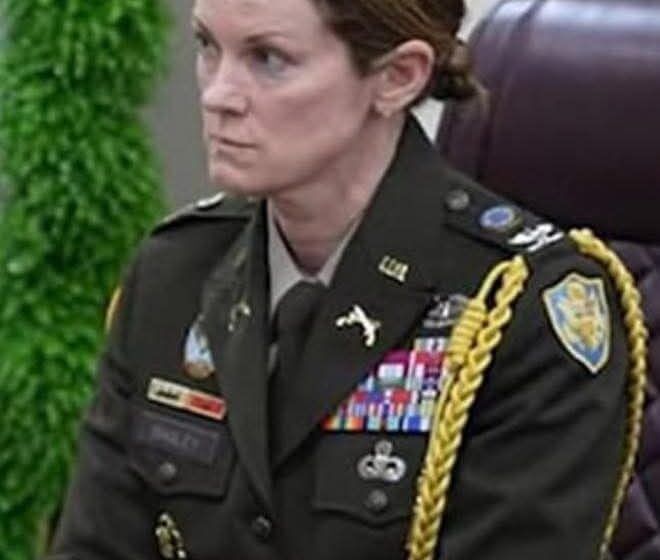
The most dominant story on Iraqi X/Twitter centered on the surprising and coordinated calls by several prominent armed faction leaders to confine all weapons to state control. Many users linked this directly to American pressure, sarcastically crediting the arrival of Colonel Stefana Paglia, the new Director of the U.S. Office of Security Cooperation, for the sudden shift. Rusly Al-Maliki (Post Impact: 82%) posted a picture of the colonel, stating, “This is the one who, as soon as she set foot in the Green Zone, they all disarmed.” Similarly, Othman Al-Mukhtar (Post Impact: 91%) derided the factions for capitulating after a single “tweet from Safaya” (a reference to US influence), contrasting it with Fallujah’s resistance to American forces. In contrast, Dr. Hussein Al-Safi (Post Impact: 81%) presented the move as a sign of strength, arguing that with the PMF politically powerful, it is now time to consolidate weapons under the state to create an unparalleled regional force, but stressed it should be done on “the Iraqi way, not the American way.” Faiq Al-Sheikh Ali (Post Impact: 100%) dismissed the statements as deceptive, asserting that US policy demands a government with ties only to Washington, not Tehran.
2. Speculation on US and Israeli Threats
Several accounts amplified reports of severe external pressure being the primary driver for the factions’ disarmament announcements. Rusly Al-Maliki (Post Impact: 54%), citing the Asharq Al-Awsat newspaper, reported that Baghdad received an Arab and a Western message warning that Israel was planning a wave of strikes on Iraqi factions and had provided a large file of targets. This report was linked to the arrival of US Colonel Stefana Paglia. Omar Abdul Sattar Mahmoud (Post Impact: 46%) detailed what he claimed were explicit US demands, including a “complete purge of the judiciary from Iranian influence,” the removal of all Iran-linked figures like Nouri al-Maliki from government, and the formation of a government completely free of Iranian influence. Adding to this, Steven Nabil (Post Impact: 35%) cited a senior source who told him that “an Israeli message arrived in Iraq via Greece two days ago regarding the missiles, drones, and weapons of the factions.”
3. Arrest of Militia Leader Wathiq al-Battat
The arrest of Wathiq al-Battat, leader of the “Mukhtar Army,” by the PMF’s security apparatus generated significant discussion, framed as an example of hypocrisy and internal power struggles. Ahmed Albasheer (Post Impact: 75%) commented sarcastically that al-Battat, who claims to have founded the PMF, will now learn his “mistake” about freedom of expression while under interrogation by “professional” PMF security investigators. Aayad Al Twfan (Post Impact: 56%) shared a video of al-Battat, noting that the man who threatened to destroy Israel and fight with Iran against Iraq was arrested and is now under investigation. Shaho Al-Qaradaghi (Post Impact: 24%) highlighted the perceived double standard, quoting a user who pointed out that PMF security arrested al-Battat for criticizing Iran’s policies in Iraq, but not when he previously said he would side with Iran in a war against Iraq.
4. Some Factions Refuse to Disarm
Amid the wave of calls for confining weapons to the state, some prominent Iran-backed factions publicly refused, indicating a split within the “axis of resistance.” Steven Nabil (Post Impact: 46%) reported that Kata’ib Hezbollah and Harakat al-Nujaba were refusing to surrender their weapons and were “choosing confrontation.” He later posted a summary of a Kata’ib Hezbollah statement which stipulated conditions for disarmament, including the exit of all US, NATO, and Turkish forces, and ensuring holy sites are safe from threats by “al-Jolani and the Peshmerga.” Haidar (Post Impact: 20%) shared the statement from Kata’ib Hezbollah, which declared that resistance is a right and its weapons will remain in the hands of its fighters. The refusal from these key groups was seen by users like Yasser Eljuboori (Post Impact: 14%) as predictable, stating that while other factions would surrender their arms, Kata’ib Hezbollah and al-Nujaba “will never surrender their weapons.”
5. Judicial Council Welcomes Factions’ Disarmament Calls
The formal Iraqi state appeared to weigh in on the disarmament trend, with Iraq’s Supreme Judicial Council issuing a statement welcoming the move. Both Dr. Hayder Al-Barzenjy (Post Impact: 56%) and Rusly Al-Maliki (Post Impact: 39%) posted the official statement, in which the head of the council, Faiq Zidan, thanked “the brother leaders of the factions for responding to his advice” on cooperating to impose the rule of law, confine weapons to the state, and transition to political work now that “the national need for military action has ceased.” This was interpreted by many as an attempt by state institutions to officially sanction and co-opt the factions’ sudden shift in policy, presenting it as an internal Iraqi decision rather than a response to foreign pressure.
6. Kata’ib Sayyid al-Shuhada Announces Transition to Politics
One of the first and most specific announcements came from Abu Alaa al-Walai, the leader of the Kata’ib Sayyid al-Shuhada militia. Rusly Al-Maliki (Post Impact: 69%) reported on al-Walai’s declaration that his group “is moving towards political work and abandoning its weapons,” adding the comment, “Next.” This was widely shared and seen as a key domino to fall in the wave of disarmament declarations. The move was met with derision by critics, such as Ali Fadhil (Post Impact: 42%), who referred to al-Walai (Abu Turab) as “the first of the disarmers” and posted a video mocking his previous rhetoric, using the hashtag #انزع_برضاتك (“Disarm willingly”). The announcement was framed as a clear sign that even hardline groups were capitulating to new political realities.
7. Pro-Faction Accounts Justify Confining Weapons
Supporters of the Popular Mobilization Forces (PMF) and affiliated factions presented a counter-narrative, arguing that the call to confine weapons to the state is a strategic move from a position of strength, not weakness. Haidar (Post Impact: 38%) posted a lengthy justification, asking why Shia weapons should remain outside a Shia-dominated state that controls the military, judiciary, and government, concluding that the calls should be “met with support, not ridicule.” Similarly, Dr. Hussein Al-Safi (Post Impact: 28%) clarified, “We are not surrendering our weapons to America; rather, we are calling for confining weapons to the state,” framing it as a move toward discipline and enhancing the state’s prestige. Essam Hussein (Post Impact: 45%) suggested that Sunni mockery of the decision hides their “clear oppression” because they believed the factions’ weapons would trigger a war between Shia groups and America that would benefit them.
8. US Military Conducts Major Airstrikes in Syria
A secondary but significant news item was the report of large-scale US military operations against ISIS in Syria. Steven Nabil (Post Impact: 34%) described F-15s, A-10s, Apaches, and artillery striking terrorist targets, calling the US response “terrifying tonight” and noting that Jordan was also participating in the operations. Rusly Al-Maliki (Post Impact: 33%) framed the American strikes as a “military party on ISIS,” suggesting the US would “clean it of terrorism” before turning its attention to the SDF and handing Syria over to the legitimate government. These posts contextualized the broader regional military posture of the US, which was seen as relevant to the developments in Iraq.
9. Analysis of True Meaning of Disarmament
Several analysts on X/Twitter delved into what the slogan “confining weapons to the state” actually means in practice, expressing skepticism that it signals a genuine relinquishing of power. Ahmad Abdulsada (Post Impact: 30%) questioned whether the factions meant handing their weapons to the Ministries of Defense and Interior or simply placing their forces under the command of the PMF, which they consider a state institution. He argued against dissolving the PMF’s “ideological component.” In a more critical analysis, David Yassin (Post Impact: 32%) asserted that the public statements are a mere facade, and that the real US demand is a “complete exit from the circle of decision-making, not a repositioning within it.” He described the presence of militia leaders in parliament and the state as a “non-negotiable structural threat” that must be eliminated.
10. Leaders Criticized for Reversing Previous Pledges
Users widely circulated past statements from faction leaders who had vowed never to give up their arms, contrasting them with their current calls for disarmament. Rusly Al-Maliki (Post Impact: 40%) mocked figures like Qais al-Khazali and Ammar al-Hakim for abandoning their previous pledge to “only hand over weapons to the awaited Mahdi,” asking sarcastically, “What about the Mahdi?” Yasser Eljuboori (Post Impact: 15%) also referenced the “we won’t hand over weapons until the Mahdi appears” slogan, remarking on the hypocrisy of leaders now calling for disarmament out of fear of losing their palaces and private jets. The reversal was seen as proof that their “resistance” rhetoric was hollow and self-serving.