2025-12-24: Sako’s “Normalization” Speech and Al-Sadr’s Rebuke

Based on Miqrab AI’s analysis of 418 X/Twitter posts trending on December 24, 2025, the primary narrative in Iraq revolves around a major controversy sparked by Cardinal Louis Sako’s call for “normalization,” which was widely interpreted as referring to Israel and drew a swift, forceful condemnation from cleric Muqtada al-Sadr. Other significant conversations include reports on the assassination of a militia leader in Basra accused of killing activists, ongoing political debates about disarming militias and the future of the Popular Mobilization Units, and discussions around Christmas celebrations that highlighted both messages of coexistence from political leaders and reports of sectarian intolerance. Additionally, topics such as the leak of private conversations involving public figures, the perceived military and economic weaknesses of neighboring Iran, and criticism of judicial decisions also gained considerable traction.
Table Of Content
- 1. Sako’s “Normalization” Speech and Al-Sadr’s Rebuke
- 2. Assassination of Militia Leader Ahmed Twaisa in Basra
- 3. Hadi al-Amiri on Disarmament and the PMU’s Future
- 4. Christmas Celebrations and Reports of Intolerance
- 5. Leaked Audio Sparks Arrest Warrant for Businessman
- 6. Criticism of Iranian Military and Economic Conditions
- 7. Judiciary’s Release of Ali Naeem Questioned
- 8. Calls to Protect Privacy Amidst Leaked Recordings
- 9. Debate Over Law Criminalizing Fighting Abroad
- 10. Disarmament and Historical Justifications Criticized
Today’s Top 10 X (Twitter) Trends in Iraq:
1. Sako’s “Normalization” Speech and Al-Sadr’s Rebuke
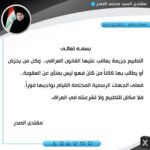
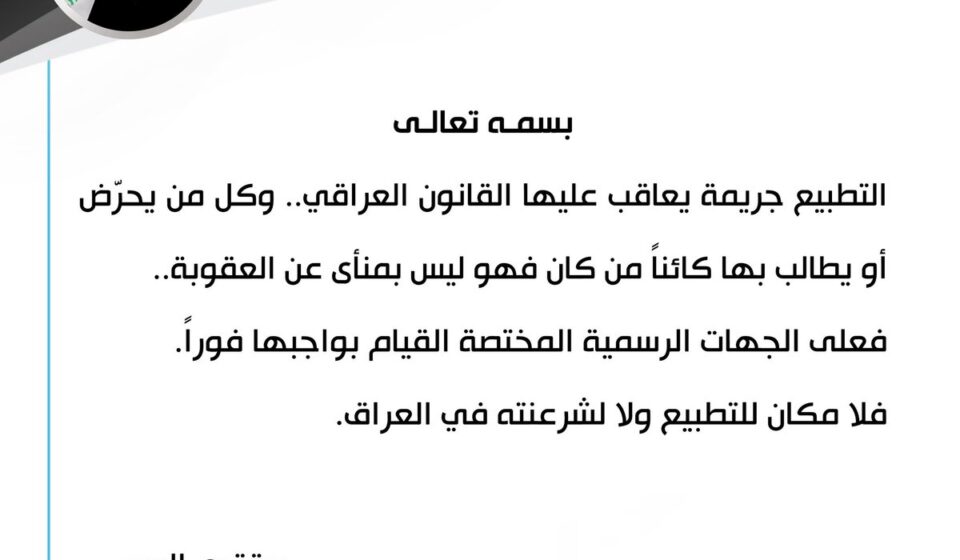
A speech by Chaldean Catholic Patriarch Cardinal Louis Sako during a Christmas mass attended by the Prime Minister ignited a major political firestorm. Accounts including Haydar (Post Impact: 8%) and Yasser Eljuboori (Post Impact: 2%) shared a clip of Sako calling for normalization, which was widely interpreted as a call to establish relations with Israel. The backlash was immediate and led by cleric Muqtada al-Sadr, who, in a highly engaged post from his account Muqtada Sayyid Muhammad al-Sadr (Post Impact: 100%), declared that there is “no place for normalization in Iraq, nor for its legitimization.” Posts from Salam Al-Husseini (Post Impact: 2%) and Haydar (Post Impact: 2%) amplified al-Sadr’s statement, which asserted normalization is a crime under Iraqi law and that anyone advocating for it would not be immune from punishment. A contrasting view was offered by Ali Farhan (Post Impact: 5%), who argued Sako’s words were taken out of context and referred to internal reconciliation within Iraq, not normalization with Israel.
2. Assassination of Militia Leader Ahmed Twaisa in Basra
Several accounts reported the killing of Ahmed Twaisa, identified as a militia leader in Basra. Steven Nabil (Post Impact: 9%) broke the initial news, stating Twaisa’s body was found near the Shalamcheh border crossing with four gunshot wounds. Other users, like Ahmed Alwishah (Post Impact: 6%) and Radhy Al-Ardhhalji (Post Impact: 2%), provided more context, accusing Twaisa of leading a “death squad” responsible for assassinating activists during the Tishreen protests, including journalist Ahmed Abdul Samad. They noted that he had been previously arrested but was later released, allegedly under orders from the Iranian Revolutionary Guard.
3. Hadi al-Amiri on Disarmament and the PMU’s Future
Statements by Hadi al-Amiri, the leader of the Badr Organization, on the topic of armed groups were widely circulated. Accounts like Dr. Hussein Al-Safi (Post Impact: 3%) and Haydar (Post Impact: 2%) quoted al-Amiri stating that the religious authority (Marja’iyya) emphasizes confining weapons to the state, a principle he claims to believe in. He also linked disarmament to ending the international coalition’s mission and achieving full national sovereignty. However, a separate post by Shaho Al-Qaradaghi (Post Impact: 4%) highlighted a more defiant tone from al-Amiri, quoting him as saying that talk of dissolving the Popular Mobilization Units (Hashd) is just “rumors and we will not accept it,” and warning those who suggest it to “respect yourself.”
4. Christmas Celebrations and Reports of Intolerance
As Iraqi leaders and citizens marked Christmas, social media reflected both messages of unity and accounts of sectarian tension. Political figures like Ammar Al-Hakim (Post Impact: 6%) and Masrour Barzani (Post Impact: 4%) shared greetings and photos from church visits, reaffirming commitments to coexistence. However, this was contrasted with reports of intolerance abroad that resonated with Iraqi users. Haydar (Post Impact: 9%) posted a video allegedly showing a Christmas tree being burned in a Christian area in rural Damascus, Syria. In response to such acts, Sufian Al-Samarrai (Post Impact: 6%) questioned why some Muslims seek to prevent the rituals and holidays of other faiths in their countries, while their own holidays are respected in non-Muslim nations.
5. Leaked Audio Sparks Arrest Warrant for Businessman
A leaked audio recording attributed to businessman Hussein Al-Ankouchi became a significant topic of conversation. The account Hiba Alnnayib (Post Impact: 4%) shared the clip, alleging it contained insults against top religious and political figures, including Grand Ayatollah Ali al-Sistani, Muqtada al-Sadr, Abu Mahdi al-Muhandis, and Supreme Judicial Council President Faiq Zidan. The fallout from the leak was swift, with Yasser Eljuboori (Post Impact: 1%) later reporting that an arrest warrant had been issued against Al-Ankouchi for “insulting religious symbols.” The incident prompted broader commentary on privacy, with figures like Faig Alsheakh Ali (Post Impact: 7%) calling for a campaign to condemn the non-consensual sharing of private conversations.
6. Criticism of Iranian Military and Economic Conditions
Users on X shared posts critical of the military and economic situation in neighboring Iran. Rusly Al-Maliki (Post Impact: 7%) posted a photo of the Iranian Chief of Staff inspecting a military helicopter, sarcastically pointing out rust on the aircraft. In another post, Rusly Al-Maliki (Post Impact: 5%) highlighted a “new historic decline” in Iran’s currency, reporting that 100 US dollars had neared the 14 million toman mark. This was corroborated by Dr. Zaid Abdulwahab Al-Adhami (Post Impact: 1%), who also commented on the Iranian currency’s “free fall” and its exchange rate against the dollar.
7. Judiciary’s Release of Ali Naeem Questioned
The release of an individual named Ali Naeem on bail has generated anger and criticism online. Ali Farhan (Post Impact: 3%) was among those who reported on the court’s decision. Commentators such as Mustafa Al-Dulaimi (Post Impact: 3%) and Zaidon Samir (Post Impact: 3%) expressed frustration, claiming that Naeem had been accused of insulting companions of the Prophet Muhammad and a major segment of Iraqi society. They criticized the fact that he was released on bail under the lesser charge of producing “low-quality content,” questioning the principles of justice and peaceful coexistence.
8. Calls to Protect Privacy Amidst Leaked Recordings
Politician Faig Alsheakh Ali led a discussion on the ethics of sharing private conversations without consent. In two separate posts, Faig Alsheakh Ali (Post Impact: 7%) called for a social media awareness campaign to “denounce, condemn, and deplore” those who publish private audio or video recordings of people without their knowledge. He described the practice as “a shameful and disgraceful matter.” In a subsequent post, Faig Alsheakh Ali (Post Impact: 6%) commented on a specific case, correcting the legal description of an offense from public insult to private slander, highlighting the secrecy under which such recordings are made and disseminated.
9. Debate Over Law Criminalizing Fighting Abroad
The topic of Iraqis fighting in foreign conflicts has become a point of legal and political debate. Steven Nabil (Post Impact: 2%) described a judicial move to prosecute Iraqis fighting abroad without government approval as an “important step.” He argued this law could be applied retroactively to hold accountable members of militias like Asa’ib Ahl al-Haq and Kata’ib Hezbollah who fought in Syria. Conversely, Othman Al-Mukhtar (Post Impact: 4%) viewed the recent announcement of this law as hypocritical, pointing out that militias have been openly recruiting and fighting alongside Bashar al-Assad in Syria for 13 years, calling the situation the “farce of a non-state.”
10. Disarmament and Historical Justifications Criticized
The debate over disarming militias intensified with criticism directed at those perceived to be delaying the process. The commentator Ali Fadhil (Post Impact: 8%) launched a campaign with the hashtag #انزع_قشمر (disarm_fool), calling on armed groups to “Take off your weapon and shut up.” He rejected what he sees as excuses for not disarming, such as drawing comparisons to historical Islamic events like the Treaty of Hudaybiyyah or the actions of Imam Hassan. This conversation is linked to statements by Badr Organization leader Hadi al-Amiri, who, as reported by accounts like Dr. Hussein Al-Safi (Post Impact: 3%), has publicly endorsed the principle of confining weapons to the state while also defending the existence of the PMU.