2025-12-29: Haibet al-Halbousi Elected New Parliament Speaker

Based on an analysis of 540 X / Twitter posts trending on December 29, 2025, Miqrab AI identified several key narratives dominating online conversations in Iraq. The most prominent story was the election of Haibet al-Halbousi as the new Speaker of the Iraqi Parliament, an event that drew congratulations from political allies and sharp criticism from opponents, who viewed it as a consolidation of power by certain factions. A second major theme was the widespread coverage of large-scale economic protests across Iran, with many Iraqi accounts sharing videos of demonstrations and anti-regime chants. Other significant topics included public outrage over the placement of an Iranian general’s image on Baghdad’s Martyr’s Monument, the election of Adnan Fayhan of Asa’ib Ahl al-Haq as First Deputy Speaker, and detailed political analysis of how these new appointments will shape Iraq’s future government and its relationship with regional powers.
Table Of Content
- 1. Haibet al-Halbousi Elected New Parliament Speaker
- 2. Widespread Economic Protests Erupt Across Iran
- 3. Outrage Over Iranian General’s Image on Martyr’s Monument
- 4. “Black Box” Program Documents Debunked as Forgeries
- 5. Adnan Fayhan Elected First Deputy Speaker of Parliament
- 6. Syria Devalues Currency by Removing Zeros
- 7. Old Muqtada al-Sadr Murder Allegations Resurface
- 8. Trump Threatens Military Action Against Iran
- 9. Reports of Sectarian Attacks on Alawites in Syria
- 10. Analysis of New Parliament’s Political Implications
Today’s Top 10 X (Twitter) Trends in Iraq:
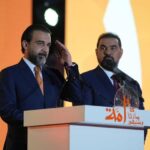
1. Haibet al-Halbousi Elected New Parliament Speaker
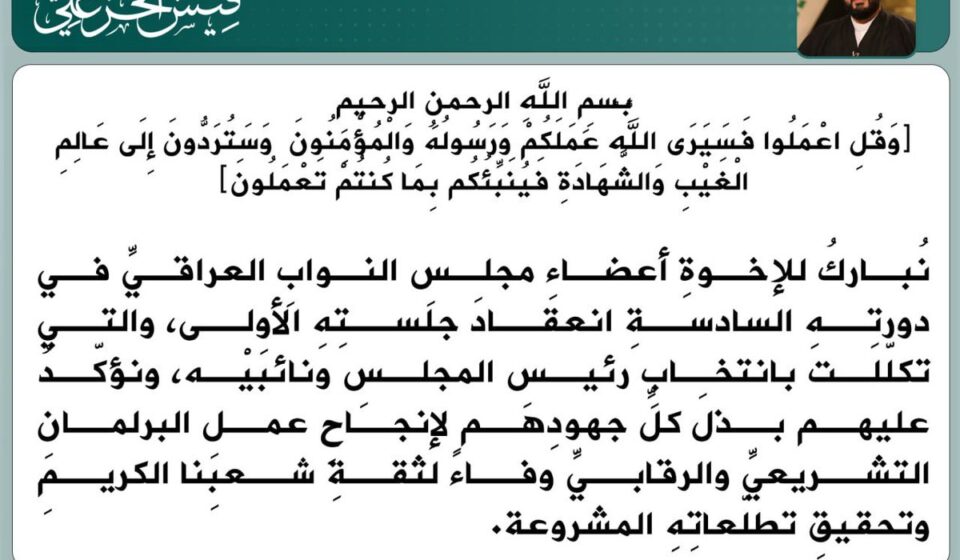
Widespread reaction followed the election of Haibet al-Halbousi as the new Speaker of the Iraqi Parliament for its sixth session, an event that dominated online discourse. His own account, Haibet al-Halbousi (Post Impact: 21%), announced the news, and he later thanked (Post Impact: 14%) political parties for their trust. Political figures like former speaker Mohammed al-Halbousi (Post Impact: 19%) and Ammar Al-Hakim (Post Impact: 14%) offered congratulations. The leader of Asa’ib Ahl al-Haq, Qais al-Khazali (Post Impact: 100%), shared a pointed image suggesting his bloc’s new control over the parliament’s leadership. In contrast, satirist Ahmed Albasheer (Post Impact: 31%) posted a sarcastic message congratulating the Iraqi people. Meanwhile, commentator ahmedmeckya (Post Impact: 32%) provided a detailed and laudatory biography of Halbousi, highlighting his international education and supposed achievements.
2. Widespread Economic Protests Erupt Across Iran
Numerous accounts shared videos and reports of large-scale protests across major Iranian cities, including Tehran, Qeshm, and Ahvaz. The demonstrations are reportedly fueled by the deteriorating economic situation and the collapse of the Iranian currency. Accounts like Rusly Al-Maliki (Post Impact: 26%) and Raad Hashim (Post Impact: 18%) noted that protesters were chanting “Death to Khamenei” and “Death to the dictator.” Sufian al-Samarrai (Post Impact: 26%) observed that the regime’s response appeared weak, suggesting Khamenei fears deploying the Revolutionary Guard. Political analyst Firas Elias (Post Impact: 10%) provided a detailed analysis, stating that protests in Tehran’s Bazaar are a dangerous indicator for the regime as they signify a loss of trust from a traditionally supportive economic base.
3. Outrage Over Iranian General’s Image on Martyr’s Monument
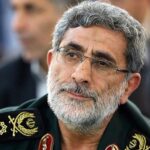
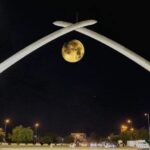
Several commentators expressed outrage over a large image of an Iranian general being displayed on Iraq’s Martyr’s Monument in Baghdad. Steven Nabil (Post Impact: 23%) pointed out the deep irony, stating, “This monument was built to commemorate the martyrs of the Iraq-Iran war,” and noted that the Popular Mobilization Forces covered it with the image of a general who fought against the Iraqi army. Rusly Al-Maliki (Post Impact: 20%) emphasized that the monument’s real name is the “Martyrs of Qadisiyyah Monument” and was dedicated to 300,000 Iraqi martyrs, predicting that such pictures will eventually be trampled while the monument remains. Omar al-Janabi (Post Impact: 6%) called the act a “crime whose perpetrator must be held accountable.”
4. “Black Box” Program Documents Debunked as Forgeries
In a detailed, high-impact post, Salim Aljomaili (Post Impact: 27%) analyzed documents concerning the former Iraqi Intelligence Service and Presidency that were presented by Nawaf al-Zaidan on the TV program “Black Box.” Aljomaili listed ten points of evidence to argue that the documents are forgeries, citing incorrect terminology (e.g., “Iraqi Republic” instead of “Republic of Iraq”), improper formatting and seals, incorrect official names, and procedures that contradict how these state institutions operated. He concluded with certainty, stating, “we assert ‘with a sharp molar’ that the documents are forged in a stupid way,” and criticized the program for a “shocking professional decline” in not verifying their authenticity.
5. Adnan Fayhan Elected First Deputy Speaker of Parliament
Alongside the election of the Speaker, the Iraqi Parliament also voted for Adnan Fayhan al-Dulaimi as the First Deputy Speaker. His official account Adnan Fayhan al-Dulaimi (Post Impact: 5%) announced his win. Jafar al-Aboudi (Post Impact: 15%) celebrated the victory, declaring that “Parliament is officially led by Asa’ib.” In contrast, journalist Steven Nabil (Post Impact: 17%) highlighted Fayhan’s role as a leader in Asa’ib Ahl al-Haq and his connection to the 2007 kidnapping and murder of Americans, describing his nomination by Qais al-Khazali as a clear message that Iranian-backed proxies are not backing down.
6. Syria Devalues Currency by Removing Zeros
Multiple accounts, including Rusly Al-Maliki (Post Impact: 15%) and Hassan Alkaaei (Post Impact: 13%), shared images of new Syrian currency banknotes. The posts explained that the new currency has had two zeros removed from its value, a measure often taken to combat hyperinflation and simplify transactions amid severe economic crisis. The images displayed the redesigned banknotes, illustrating the tangible outcome of Syria’s ongoing economic struggles.
7. Old Muqtada al-Sadr Murder Allegations Resurface
A post from Aayad Al Twfan (Post Impact: 22%) revisited a past statement from cleric Muqtada al-Sadr, questioning its meaning and implications. The post references a claim by Sadr that an unnamed individual “committed the crime of killing 1500 innocent Sunni youths in revenge for the killing of his brother.” The account notes that Sadr claimed to have shouldered the burden of this crime despite having no connection to it and that the accused were defectors from his movement. The post ends by asking followers who Sadr was referring to and the source of that person’s power.
8. Trump Threatens Military Action Against Iran
Reports circulated about former US President Donald Trump’s statements regarding Iran. Ali Farhan (Post Impact: 14%) shared a video clip where Trump was asked if he would allow Netanyahu to strike Iran, to which he replied affirmatively for both ballistic missiles and nuclear facilities. Similarly, Rusly Al-Maliki (Post Impact: 10%) and Rafid Jaboori (Post Impact: 6%) reported on Trump’s declaration that the US would support Israel in striking Iran and that he would strike them again if they attempt to rebuild their nuclear sites. These comments gained attention amidst the ongoing protests and economic instability within Iran.
9. Reports of Sectarian Attacks on Alawites in Syria
Several posts reported on sectarian violence targeting the Alawite community in Syria. The account Haider (Post Impact: 15%) shared a video showing “members of Jolani gangs” attacking an Alawite child carrying bread, trying to force him to renounce his religion. Another post from the same account mentioned (Post Impact: 6%) “major sectarian tensions” after Sunni groups attacked Alawite homes and neighborhoods. Hassan Alkaaei (Post Impact: 7%) posted a condemnation of “Sunni Umayyad Syrians” for attacking “defenseless Alawites.”
10. Analysis of New Parliament’s Political Implications
Political commentators analyzed the implications of the new parliamentary leadership. Ezzat Alshabandar (Post Impact: 13%) argued that the Coordination Framework’s justification for voting for Haibet al-Halbousi—because he was the candidate of the largest Sunni bloc—sets a precedent that will also determine their own candidate for Prime Minister. Issam Hussein (Post Impact: 6%) suggested that the agreement to elect Halbousi effectively ended Prime Minister Mohammed Shia’ al-Sudani’s chances for a second term. Omar Abd al-Sattar Mahmoud (Post Impact: 7%) described the election of Halbousi and Adnan Fayhan as Iran imposing “complete control over the Iraqi parliament.”