2025-12-30: Trump’s Comments on Iraq as a Counterbalance to Iran

Based on a Miqrab AI analysis of 556 X / Twitter posts trending in Iraq on December 30, 2025, the social media landscape was dominated by major regional and international developments with direct implications for Iraq. The most prominent narrative involved a dramatic escalation of tensions between Saudi Arabia and the United Arab Emirates over their conflicting agendas in Yemen, leading to Saudi airstrikes and a subsequent Emirati withdrawal. This was followed by widespread discussion of former US President Donald Trump’s remarks describing the American destruction of Iraq as a mistake that empowered Iran. Concurrently, accounts actively shared footage of escalating anti-government protests across Iran, while domestic discourse focused on the 19th anniversary of Saddam Hussein’s execution, which elicited sharply divided reactions, and the convening of the new Iraqi parliament.
Table Of Content
- 1. Trump’s Comments on Iraq as a Counterbalance to Iran
- 2. Saudi-UAE Tensions Explode Over Yemen Conflict
- 3. Widespread Protests and Unrest Erupt Across Iran
- 4. 19th Anniversary of Saddam’s Execution Divides Opinion
- 5. Geopolitical Analysis of the Saudi-UAE Rift in Yemen
- 6. US Envoy Mark Savaya Signals “Year of Change” for Iraq
- 7. Iraqi Parliament Convenes and Elects New Leadership
- 8. Analysts Predict End of Iranian Regime and Its Proxies
- 9. New Deputy Speaker Criticized for Past Remarks on PMF
- 10. Debates on Past vs. Present Governance in Iraq
Today’s Top 10 X (Twitter) Trends in Iraq:
1. Trump’s Comments on Iraq as a Counterbalance to Iran
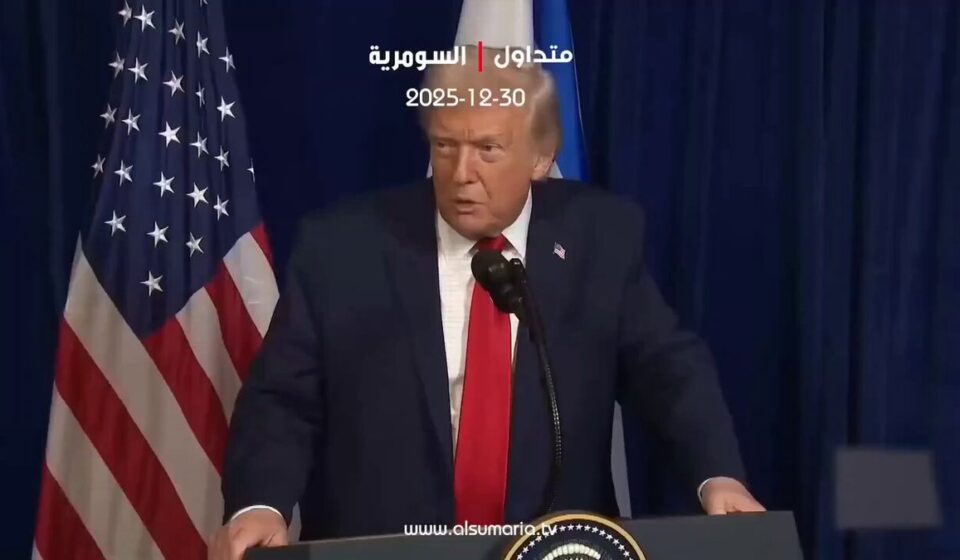
A statement by former US President Donald Trump circulated widely, in which he asserted that Iraq and Iran had fought for millennia and were equally matched until the United States destroyed Iraq, allowing Iran to dominate the region. Rusly Al-Maliki (Post Impact: 100%) interpreted Trump’s words to mean that “Iraq must return to being an equal in strength to Iran.” Asaad Al-Basri (Post Impact: 15%) viewed the comments as dangerous, suggesting they could be a “hint of an Iraq hostile to Iran, and perhaps a new Sunni government.” Similarly, Raad Hashim (Post Impact: 11%) shared the video, noting that Trump has studied history well and understands the geopolitical dynamics of the region.
2. Saudi-UAE Tensions Explode Over Yemen Conflict
A major escalation between Saudi Arabia and the UAE over Yemen dominated discussion, with numerous accounts sharing breaking news and analysis. ZaidBenjamin (Post Impact: 12%), citing CNN, reported that Saudi Arabia accused the UAE of “dangerous” acts after allegedly shipping weapons to southern separatist forces, leading Riyadh to conduct airstrikes on the port of Mukalla. The Saudi Foreign Ministry issued a statement declaring that its national security is a “red line.” In response, the UAE denied the allegations, expressed “deep regret” over the Saudi statement’s “fundamental fallacies,” and announced the withdrawal of its remaining forces from Yemen, as reported by accounts like Haidar (Post Impact: 6%). Sufian Al-Samarrai (Post Impact: 24%) framed the UAE’s withdrawal as a move to preserve brotherhood between the two nations and thwart “terrorist revolutionary gangs” seeking to exploit the rift.
3. Widespread Protests and Unrest Erupt Across Iran
Numerous accounts shared videos and commentary on growing anti-government protests in Tehran and other Iranian cities, reportedly driven by economic hardship and the currency’s collapse. Mujtahid Al-Iraq (Post Impact: 34%) posted footage of what he described as Iranian protesters chasing “Khamenei’s repressive forces” in central Tehran, calling for the regime’s downfall. Shaho Al-Qaradaghi (Post Impact: 9%) shared a video of protesters chanting, “No Gaza, no Lebanon—I will sacrifice for Iran.” Conversely, Amir Al-Mousawi (Post Impact: 19%) claimed that “million-man marches” were held in support of the Islamic Republic to commemorate the anniversary of overcoming the 2009 election “sedition,” framing the protests as mere “class-based objections.”
4. 19th Anniversary of Saddam’s Execution Divides Opinion
The 19th anniversary of the execution of former Iraqi President Saddam Hussein prompted sharply divided reactions. His daughter, Raghad Saddam Hussein (Post Impact: 40%), released a speech to mark the occasion. Supporters like Manasat Al-Iraq (Post Impact: 6%) memorialized him as the “pride of the nation.” In contrast, opponents celebrated his death. Ghaith Al-Tamimi (Post Impact: 7%) called it a “pivotal day” that saw the execution of “one of the filthiest tyrants of the era” and thanked the United States for its role in enabling Iraq to move forward. Wasan Al-Shaikhli (Post Impact: 5%) also posted on the anniversary, while Wesam Aziz (Post Impact: 7%) credited former Prime Minister Nouri al-Maliki with avenging Shiite martyrs by executing Saddam.
5. Geopolitical Analysis of the Saudi-UAE Rift in Yemen
Beyond the immediate news of the Saudi-UAE confrontation, several analysts offered deeper interpretations of the conflict’s significance. Liqaa Maki (Post Impact: 34%) asserted that the events in south Yemen are “part of the arrangement of the new Middle East,” involving the establishment of a “State of South Arabia” allied with Israel, which would pose a threat to Saudi Arabia. In a subsequent post, he added that plans to “change the Middle East” are existential and unlikely to be stopped by objections. ZaidBenjamin (Post Impact: 71%) shared a detailed archival piece from the Wall Street Journal that chronicled the deteriorating relationship between Saudi Crown Prince Mohammed bin Salman and UAE President Mohammed bin Zayed, highlighting their competing ambitions to be the primary leader in the region.
6. US Envoy Mark Savaya Signals “Year of Change” for Iraq
A New Year’s message from US President Trump’s envoy, Mark Savaya, was shared by multiple accounts, with many interpreting his words as a sign of forthcoming political shifts in Iraq. Shaho Al-Qaradaghi (Post Impact: 7%) quoted Savaya stating, “2026 is the year of change.” Rafid Jaboori (Post Impact: 8%) commented that Savaya had “raised the ceiling” with his message, suggesting a significant challenge lies ahead. Other accounts, such as Ali Farhan (Post Impact: 10%) and Mujtahid Al-Iraq (Post Impact: 8%), also circulated the video, highlighting the envoy’s wishes for a year of “goodness and change” for Iraq.
7. Iraqi Parliament Convenes and Elects New Leadership
The first session of the new Iraqi Parliament and the election of its leadership were a key topic of discussion among political figures and commentators. Mustafa Al-Kadhimi (Post Impact: 5%) and Ammar Al-Hakim (Post Impact: 7%) both issued statements congratulating the new Speaker, Haibat Al-Halbousi, and his deputies, Adnan Faihan and Farhad Al-Atroushi, emphasizing that completing the process on time reinforces the democratic path. However, Dr. Hanan Al-Fatlawi (Post Impact: 6%) observed that the Shiite Coordination Framework appeared disunited in the voting process, questioning whether its members could possibly agree unanimously on a prime minister.
8. Analysts Predict End of Iranian Regime and Its Proxies
Commentators linked the protests in Iran and pressure from the Trump administration to a potential collapse of the Iranian regime and its regional influence. Sheikh Thair Al-Bayati (Post Impact: 14%) declared that the “game is over” and it is only a matter of time before the Iranian regime falls, along with its arms in Iraq, Lebanon, and Yemen. He stated the current political class in Iraq consists of “corrupt mercenaries” whose time is up. Rusly Al-Maliki (Post Impact: 13%) connected multiple events—sanctions, Trump giving Israel a “green light” to strike Iran, and widespread protests—and sarcastically asked if these were indicators that the “axis of resistance” was winning.
9. New Deputy Speaker Criticized for Past Remarks on PMF
Following the election of Farhad Al-Atroushi from the Kurdistan Democratic Party (KDP) as Second Deputy Speaker of Parliament, several accounts circulated old videos of him, criticizing his past statements regarding the Popular Mobilization Forces (PMF). Haidar (Post Impact: 6%) shared a video allegedly showing Al-Atroushi insulting the Iraqi armed forces. Hiba Al-Naib (Post Impact: 5%) posted a clip of another individual questioning Fatah Alliance leader Hadi Al-Amiri for supporting Al-Atroushi despite him allegedly calling the PMF “the un-Popular Mobilization militias.” Wesam Aziz (Post Impact: 5%) condemned the Shiite forces that voted for Al-Atroushi, whom he described as “hateful towards the Hashd.”
10. Debates on Past vs. Present Governance in Iraq
A discussion emerged comparing different eras of governance in Iraq and the broader Arab world. The account Haidar (Post Impact: 23%) posted a lengthy critique contrasting the period when Iraq, Egypt, and Syria led the Arab world—which he described as more cohesive—with the current era of Gulf leadership, which he claims has resulted in the destruction and division of countries like Iraq, Libya, Syria, and Yemen. In a separate but related theme of comparing leadership, Dr. Qusay Shafiq (Post Impact: 7%) argued that former Prime Minister Haider al-Abadi’s economic management during the war against ISIS was far superior to that of the current prime minister, noting that Abadi maintained currency stability despite extremely low oil prices and wartime conditions.