2026-01-06: Critique of Venezuelan President Maduro’s Regime

Based on an analysis of 726 X / Twitter posts conducted by Miqrab AI on January 6, 2026, the primary narratives circulating in Iraq centered on critiques of Venezuelan President Nicolás Maduro’s regime, often drawing parallels to regional politics and Iran’s influence. A significant domestic debate erupted over the use of the dialectal word “Ajal” (عجل), with users arguing whether it is a cultural marker or a symbol of the former Ba’athist regime. Concurrently, widespread posts commemorated the 105th anniversary of Iraqi Army Day, featuring diverse perspectives that ranged from nationalistic pride to criticism of current militia influence over the state’s security apparatus. Additionally, numerous accounts closely followed and shared content about escalating anti-government protests and unrest across various cities in Iran, suggesting a potential collapse of the current regime.
Table Of Content
- 1. Critique of Venezuelan President Maduro’s Regime
- 2. The “Ajal” Controversy and Dialectal Identity
- 3. Anti-Government Protests and Unrest in Iran
- 4. Commemorating the 105th Iraqi Army Day
- 5. Violent Assault by Unidentified Men in Basra
- 6. Rare Recording of Saddam Hussein Surfaces
- 7. Advice on Kurdish Presidential Candidacy Strategy
- 8. Defense of Presenter Adnan Al-Taie Amid Attacks
- 9. Reports of US Military Movements on Iraq Border
- 10. Kataib Hezbollah’s Challenge to the Iraqi Judiciary
Today’s Top 10 X (Twitter) Trends in Iraq:
1. Critique of Venezuelan President Maduro’s Regime
A dominant topic on X involved sharp criticism of Venezuelan President Nicolás Maduro and his government, with several high-engagement posts contrasting the lavish lifestyle of the ruling elite with the severe poverty faced by the general population. Sufian Al-Samarrai (Post Impact: 100%) shared a video depicting the extravagance of Maduro’s entourage while Venezuelans were reportedly searching through garbage for food on a $27 monthly salary. Al-Samarrai also posted footage of Maduro arresting his former ally and interior minister, Tareck El Aissami, describing him as a key figure for Syrian, Hezbollah, and Iranian intelligence who competed with Maduro. In a related post, Rusly Al-Maliki (Post Impact: 50%) showed a video of Maduro and his wife attending a Shia mourning council with Iranians prior to his reported arrest. Conversely, Amir Mousawi (Post Impact: 30%) presented a counter-narrative, claiming the Venezuelan people reject “American bullying” and are defending their political system.
2. The “Ajal” Controversy and Dialectal Identity
A heated debate unfolded over the use of the Arabic word “Ajal” (عجل), a dialectal term common in western Iraq, after it was criticized for its association with the Saddam Hussein era. Rusly Al-Maliki (Post Impact: 92%) questioned the outrage, asking rhetorically, “So how are people supposed to change their dialect because your mood is orange?” Ali Farhan (Post Impact: 71%) expressed similar disbelief, asking, “Is the word #Ajal really that scary?!” Muna Sami (Post Impact: 50%) sarcastically questioned the controversy by stating, “So Saddam Hussein said Allahu Akbar… should we become infidels?” Many users, like Mustafa Aldulaimi (Post Impact: 38%) and Issam Hussein (Post Impact: 22%), defended the word as part of Iraq’s rich cultural and linguistic diversity, warning against politicizing dialects and creating divisions.
3. Anti-Government Protests and Unrest in Iran
Multiple accounts reported on escalating anti-government protests across Iran, sharing videos and commentary suggesting significant civil unrest. Mujtahid Iraq (Post Impact: 65%) celebrated what he termed the impending declaration of an “independent Arab state of Ahwaz” and later reported the withdrawal of IRGC units from camps in the region. Rusly Al-Maliki (Post Impact: 43%) claimed that the city of Abdanan was the first to be “fully liberated” from the regime’s control by protesters. Accounts like Shaho Al-Qaradaghi (Post Impact: 29%) and Sufian Al-Samarrai (Post Impact: 39%) shared videos of widespread demonstrations in Tehran and Ilam, with chants calling for regime change. On the other hand, Amir Mousawi (Post Impact: 62%) questioned the joy and gloating over the situation, framing the events as a response to “Zionist-American threats.”
4. Commemorating the 105th Iraqi Army Day
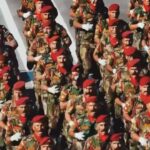
January 6th marked the 105th anniversary of the founding of the Iraqi Army, prompting numerous posts commemorating the occasion. The tone of the posts varied, reflecting different political viewpoints. Faiq Al-Sheikh Ali (Post Impact: 52%) sent greetings to the army and its “heroic martyrs,” while simultaneously wishing “shame and disgrace” upon its enemies, specifically naming Iran, Khamenei, and allied Iraqi militias. Adnan Altia (Post Impact: 56%) shared a clip from UTV with a quote from historian Tariq Harb: “The army is a wall for the nation.” Several users, including Rusly Al-Maliki (Post Impact: 47%) and Aayad Al Twfan (Post Impact: 34%), glorified the army’s history and sacrifices. The U.S. Embassy Baghdad (Post Impact: 28%) also issued a statement applauding the service of the Iraqi Security Forces, including the Peshmerga, in defending Iraq’s sovereignty.
5. Violent Assault by Unidentified Men in Basra
A video showing a violent assault in Basra was shared by Raad Hashim (Post Impact: 68%), who described the incident as “unjustified recklessness and violence.” The post details a fight and attack by a group on a man in the Nargis residential city. The attackers reportedly used a fully tinted Land Cruiser vehicle without license plates, raising concerns about lawlessness and the power of armed groups operating with impunity.
6. Rare Recording of Saddam Hussein Surfaces
A post by Rusly Al-Maliki (Post Impact: 51%) gained significant traction for sharing what was described as a rare audio recording of former Iraqi President Saddam Hussein using profane language. The post, titled “Have you ever heard Saddam Hussein cursing before?”, prompted discussion among users about the late dictator’s persona and leadership style.
7. Advice on Kurdish Presidential Candidacy Strategy
Political commentator Faiq Al-Sheikh Ali (Post Impact: 49%) posted advice to the Kurdistan Democratic Party (KDP) regarding the election for Iraq’s presidency. He suggested the KDP allocate “$100 million” to quietly bribe pro-militia Shia MPs to secure their votes for the KDP’s candidate. In a separate post, he noted that the nomination of two rival candidates by Kurdish parties signals a crisis and urged the KDP to intensify its efforts to promote its candidate against the one he claims is backed by “Iran and Bafel.”
8. Defense of Presenter Adnan Al-Taie Amid Attacks
Iraqi media presenter Adnan Al-Taie became the subject of a cross-border media feud, with several Iraqi accounts defending him against what they described as a coordinated attack by Lebanese media figures affiliated with Hezbollah and Iran. Steven Nabil (Post Impact: 33%) condemned the “smear and transgression” tactics used against Al-Taie, arguing that the attackers were acting as soldiers for Iran’s Wilayat al-Faqih. Ali Farhan (Post Impact: 23%) questioned the motives of the Lebanese media figures and their right to interfere in Iraqi domestic affairs. Shahou Al-Qaradaghi (Post Impact: 18%) also noted that the attacks appeared to be “directed and organized.”
9. Reports of US Military Movements on Iraq Border
Tensions in the region were highlighted by posts reporting on alleged US military movements near Iraq. Ali Farhan (Post Impact: 44%) cited security expert Dr. Ahmed Al-Sharifi, who claimed that “US Delta forces were positioned on the Iraqi border hours ago.” Similarly, Omar Abdulsatar Mahmoud (Post Impact: 17%) quoted Kurdistan 24, reporting that the deployment was in preparation for an “imminent operation” due to Iran-backed militias refusing to disarm. A related post from Farhan cited Reuters, stating that Israel would cease all military activities against Syria following a US initiative.
10. Kataib Hezbollah’s Challenge to the Iraqi Judiciary
A statement by Kataib Hezbollah leader Abu Hussein al-Hamidawi drew strong reactions, with commentators interpreting it as a direct challenge to the Iraqi judiciary. This followed a call by the head of the Supreme Judicial Council, Judge Faiq Zidan, for all weapons to be under state control. Rusly Al-Maliki (Post Impact: 27%) stated that the group’s “offensive statement” against the judge revealed their true nature, as they wish to maintain their power and illicit businesses. Steven Nabil (Post Impact: 17%) described Hamidawi’s statement as a challenge to the judiciary, law, government, and the religious authority, predicting a final confrontation between “the state and the non-state.”