2026-01-08: Mass Protests Against Iranian Regime

Based on a Miqrab AI analysis of 728 X / Twitter posts trending in Iraq on January 8, 2026, the online conversation was overwhelmingly dominated by the widespread anti-government protests erupting across Iran. Iraqi accounts extensively shared videos of demonstrations, discussed the potential collapse of the regime, and debated the implications for Iraq and the region. Another major narrative focused on the escalating rivalry between Saudi Arabia and the UAE, with detailed reports on their proxy conflicts in Yemen and Sudan. Other significant themes included mobilization calls from Sadrist leader Muqtada al-Sadr, growing concerns for the safety of Kurdish and other minority populations in Syria, and domestic discontent in Iraq over new taxes and the perceived hypocrisy of some religious authorities.
Table Of Content
- 1. Mass Protests Against Iranian Regime
- 2. Muqtada al-Sadr Mobilizes Followers
- 3. Saudi-UAE Rivalry Intensifies Over Yemen
- 4. Fears for Minorities in Aleppo, Syria
- 5. Iraqi Voices Call for Iranian Regime Change
- 6. Trump Threatens Iran Amid Protests
- 7. Historical Reflections on Iran-Iraq Relations
- 8. Debate Over Kurdish Alliances and Betrayal
- 9. Public Anger Over New Taxes and Fees in Iraq
- 10. Religious Figures in Basra Criticized
Today’s Top 10 X (Twitter) Trends in Iraq:
1. Mass Protests Against Iranian Regime
The most dominant story was the massive anti-government demonstrations across Iran. While accounts like Abu Azrael – Abu Azrael (Post Impact: 100%) expressed solidarity with the Islamic Republic, the vast majority of posts shared footage of what they described as “million-man” protests in Tehran, Isfahan, Mashhad, and other cities. Accounts such as Steven Nabil (Post Impact: 11%) and Bahaa khaleel Bahaa khaleel (Post Impact: 16%) reported that crowds were growing and that security vehicles were being burned. Videos shared by Sufian Al-Samarrai (Post Impact: 12%) showed protesters chanting slogans like “down with the Khamenei Islamic Republic” and raising the pre-revolution flag. Many users, including Rusly Al-Maliki 🇮🇶 رسلي المالكي (Post Impact: 7%), reported that the Iranian government had responded by cutting off internet and phone services across the country.
2. Muqtada al-Sadr Mobilizes Followers
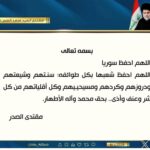
Influential cleric Muqtada al-Sadr generated significant engagement with two posts containing only images, one of which was his personal photo (Muqtada al-Sadr (Post Impact: 77%)) and another of the Kaaba (Muqtada al-Sadr (Post Impact: 63%)). These cryptic posts were followed by a clear directive from his official spokesperson, Saleh Mohammed Al-Iraqi (Post Impact: 35%), who called on residents of Basra, Kut, and Nasiriyah to gather for a “unified peaceful Friday prayer” in Maysan province. The statement also encouraged followers from other provinces to join if they could, signaling a major mobilization effort by the Sadrist movement.
3. Saudi-UAE Rivalry Intensifies Over Yemen
A growing rift between Saudi Arabia and the UAE was a major topic, primarily covered by journalist ZaidBenjamin زيد بنيامين (Post Impact: 46%) citing a detailed Bloomberg report. The report claims that UAE President Sheikh Mohammed bin Zayed (MBZ) personally approved an advance by the Southern Transitional Council (STC) in Yemen as retaliation against Saudi Crown Prince Mohammed bin Salman (MBS) for discussing the UAE’s role in Sudan with US President Donald Trump. The tensions have also led to Saudi airstrikes against UAE-backed forces and a demand for the UAE to withdraw from Yemen. The Associated Press, also cited by ZaidBenjamin, reported that Saudi Arabia accused the UAE of smuggling STC leader Aidarous al-Zubaidi out of the country. Rusly Al-Maliki 🇮🇶 رسلي المالكي (Post Impact: 3%) also reported on the “escape of Aidarous Qassem al-Zubaidi to the UAE,” suggesting that Yemen is uniting under Saudi-backed leadership against the Houthis.
4. Fears for Minorities in Aleppo, Syria
The humanitarian situation in Aleppo, Syria, drew significant concern. Nobel laureate Nadia Murad (Post Impact: 16%) posted an urgent alert, stating, “we are receiving urgent appeals from Yazidis, Christians, and Kurds who fear imminent threats from armed groups and militias aligned with the government in Damascus.” She called for urgent international intervention to prevent a catastrophe. Similarly, Dr. Haider Al-Barzanji (Post Impact: 4%) described the violations against Kurds in Aleppo as a “crime with full legal elements” and condemned the silence of the international community as complicity. Rusly Al-Maliki 🇮🇶 رسلي المالكي (Post Impact: 11%) framed the crisis as another instance of the West abandoning the Kurds after using them, noting that America is now just “watching” as they face attacks.
5. Iraqi Voices Call for Iranian Regime Change
The protests in Iran prompted several prominent Iraqi figures to openly call for the downfall of the Iranian government and its allies in Iraq. Faig Alsheakh Ali (Post Impact: 23%) addressed Iraqi “Tishreen heroes,” urging them to “pounce on power immediately and kill the militia leaders and agents of the Revolutionary Guard” once the regime in Iran falls. Sufian Al-Samarrai (Post Impact: 7%) described the Iranian government as a “satanic clerical Islamist regime” and asserted that Khamenei could not use heavy force against his people due to the fear of a “terrifying” Israeli-American response. Journalist Steven Nabil (Post Impact: 9%) drew parallels between the tactics of Iranian security forces and those seen in Iraq, suggesting shared training and oversight from Tehran.
6. Trump Threatens Iran Amid Protests
US President Donald Trump’s reaction to the Iranian protests was a significant topic. Several accounts, including Rusly Al-Maliki 🇮🇶 رسلي المالكي (Post Impact: 6%) and Ali Farhan ali farhan (Post Impact: 4%), reported Trump’s warning that “If they kill the protesters, we will hit them very hard.” However, a post by Haider (Post Impact: 8%) offered a conflicting account, quoting Trump as saying the deaths were due to a “stampede” and that he could not hold the authorities responsible. The upcoming meeting between Trump and exiled Iranian Crown Prince Reza Pahlavi was also highlighted as a key development by commentators like Rafid Jaboori رافد جبّوري (Post Impact: 3%).
7. Historical Reflections on Iran-Iraq Relations
Amid the current turmoil, users reflected on Iran’s history and its relationship with Iraq. Asaad Al-basri (Post Impact: 20%) shared a video of an Iranian woman who, despite complaining about poor economic conditions, expressed fear that her country would suffer the same fate as Iraq and Libya if the regime were to fall to American and Israeli influence. In contrast, Rusly Al-Maliki 🇮🇶 رسلي المالكي (Post Impact: 17%) posted archival combat footage from the Iran-Iraq War, showing an Iranian Chieftain tank being hit by Iraqi forces. In another post, he commemorated the anniversary of the 1987 “Greatest Harvest” battle near Basra, recalling how Iraqi forces repelled a massive Iranian offensive.
8. Debate Over Kurdish Alliances and Betrayal
A debate emerged regarding the political strategy and alliances of Kurdish groups in the region. Rusly Al-Maliki 🇮🇶 رسلي المالكي (Post Impact: 11%) argued that Kurds “will not learn the lesson” that the West repeatedly uses them for its own interests before abandoning them, citing their current predicament in Syria as the latest example. Dr. Hussein Al-Moyd (Post Impact: 6%) advised Masoud Barzani against intervening in Syria, warning it would have negative repercussions for his family and was not in the interest of Syrian Kurds, stating that “the bet on the SDF is a losing bet.” Conversely, Sufian Al-Samarrai (Post Impact: 6%) praised the “unprecedented heroism of the Kurds” for not bowing to “satanic political Islam gangs” like ISIS and Al-Nusra.
9. Public Anger Over New Taxes and Fees in Iraq
There was significant public discontent regarding the Iraqi government’s economic policies, particularly the imposition of new taxes and customs fees. Najeh Abbas Al-Mizan (Post Impact: 9%) sarcastically linked the timing of the increased fees in Iraq with a handout of six dollars to citizens by Iran’s supreme leader. Zainab Rabee (Post Impact: 4%) posted a lengthy critique, asking what the taxes were for, given the “looting,” dilapidated schools, power cuts, and worthless passport. Similarly, Dr. Qusay Shafiq (Post Impact: 4%) listed government failures, including mismanaging wealth and wasteful election spending, repeatedly asking, “Why should the people pay the bill?”
10. Religious Figures in Basra Criticized
Religious authorities in Basra faced sharp criticism for their priorities. The controversy was sparked by protests against a music concert in the city, which commentators contrasted with their silence on more serious issues. Ahmad Alwishah (Post Impact: 7%) pointed out the hypocrisy of figures who were outraged by a concert but said nothing when a girl in Basra was recently subjected to mass harassment. Shaho Al-Qaradaghi (Post Impact: 3%) shared a video of Khamenei’s representative in Basra warning against concerts, questioning why similar events are held in Iran. Bahaa khaleel Bahaa khaleel (Post Impact: 3%) echoed this sentiment, asking, “Where were you when a child’s honor was being devoured by your rabid dogs?”