2026-01-10: Intense and Polarized Reactions to Mass Protests in Iran

An analysis of 769 X / Twitter posts trending on January 10, 2026, conducted by Miqrab AI, reveals a landscape dominated by the widespread anti-government protests in Iran and the sharply polarized reactions they have provoked within Iraq. Iraqi social media is deeply divided, with numerous accounts celebrating the protests and calling for the regime’s downfall, while a significant and highly engaged pro-Iran contingent expresses unwavering support for the Islamic Republic’s leadership. Another prominent theme is the domestic and foreign policy of US President Donald Trump, with particular focus on his administration’s harsh immigration enforcement and ambitious geopolitical maneuvers. Discussions also centered on shifting alliances in the Yemen conflict, specifically Oman’s new cooperation with Saudi Arabia against UAE-backed forces, and intense speculation regarding a potential third term for Nouri al-Maliki as Iraq’s Prime Minister.
Table Of Content
- 1. Intense and Polarized Reactions to Mass Protests in Iran
- 2. Trump’s Immigration Crackdown Sparks Protests in the US
- 3. Pro-Iran Demonstrations in Basra Spark Outrage
- 4. Oman and Saudi Arabia Cooperate Against UAE Allies in Yemen
- 5. Trump’s Geopolitical Ambitions Raise Alarm
- 6. Rumors of Nouri al-Maliki’s Return as Prime Minister Swirl
- 7. US Threatens Military Intervention in Iran
- 8. Debating the Consequences of a Post-Regime Iran
- 9. Clashing Narratives Emerge Over Conflict in Aleppo, Syria
- 10. Analysis Suggests Iranian Regime is on the Brink of Collapse
Today’s Top 10 X (Twitter) Trends in Iraq:
1. Intense and Polarized Reactions to Mass Protests in Iran
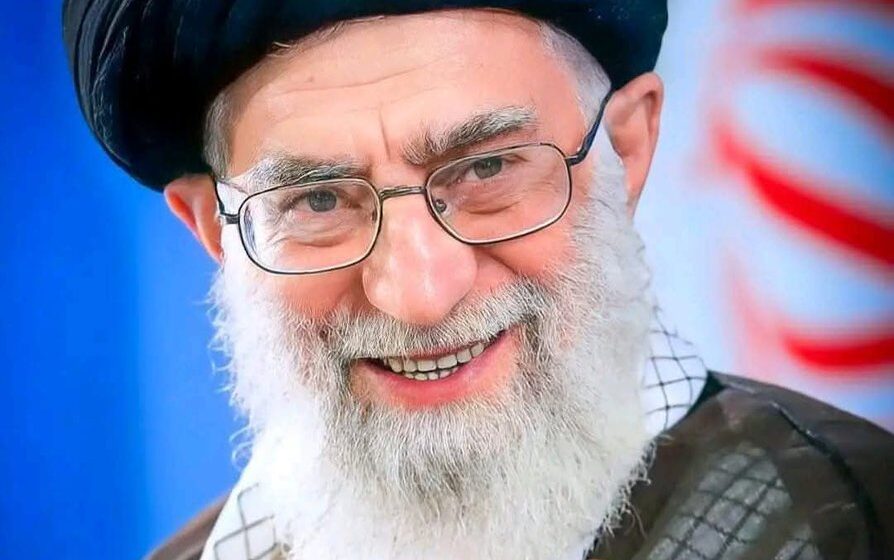
The most dominant topic is the massive anti-government protests sweeping across Iran, which have elicited strong and conflicting reactions on Iraqi social media. Many accounts are actively covering the demonstrations, sharing videos of protesters clashing with security forces and chanting anti-regime slogans. Bahaa khaleel (Post Impact: 14%) reports that over two million Iranians are protesting in 180 cities, while Dr. Zaid Abdulwahab Al-Azami (Post Impact: 13%), citing CNN, reports that “bodies of protesters have piled up in a Tehran hospital.” Conversely, a highly engaged pro-Iran faction is pushing back with messages of support for the current government. Dr. Hussein Al-Safi (Post Impact: 100%) started a thread asking users to post “beautiful pictures of Mr. Khamenei,” while Emad Al Musafir (Post Impact: 57%) posted a picture of the Iranian and Iraqi flags with the caption “Brothers in faith and blood.” This creates a deeply polarized narrative reflecting the divisions within Iraq over its neighbor’s political turmoil.
2. Trump’s Immigration Crackdown Sparks Protests in the US
US domestic politics, particularly the actions of President Donald Trump, are a major point of discussion. Asaad Al-Basri (Post Impact: 70%) posted a detailed account of the operations of the ICE agency, which he describes as a private army for Trump with immunity to deport immigrants and use lethal force, creating “real terror, not a joke.” This narrative is amplified by other accounts sharing footage of protests within the United States. Wesam Aziz (Post Impact: 84%) shared a video with the caption “The American people are rising up against Trump,” and Wasan Al-Sheikhli (Post Impact: 32%) posted footage from a demonstration in front of the White House following the killing of an American citizen by what she terms “Trump’s militias .. Immigration and Customs Enforcement (ICE).”
3. Pro-Iran Demonstrations in Basra Spark Outrage
A demonstration in Basra in support of the Iranian regime has triggered a wave of condemnation from some Iraqi commentators. Hiba Alnnayib (Post Impact: 71%) posted a video of the rally, expressing fury at the participants for supporting a foreign power against its own people. She asks rhetorically, “Has Basra become an Iranian province?” and states that if she had power, she would deport them and revoke their citizenship. This sentiment is part of a wider critique of Iran’s regional influence, as articulated by Steven Nabil (Post Impact: 37%), who rejects the idea that the Iranian regime’s survival is in the Arabs’ interest, arguing that the regime has “violated four Arab capitals, exploited their resources, and spread hatred and sectarianism.”
4. Oman and Saudi Arabia Cooperate Against UAE Allies in Yemen
A detailed report from Middle East Eye, shared by ZaidBenjamin (Post Impact: 55%), reveals a significant shift in regional alliances regarding the conflict in Yemen. According to the article, Oman has moved from its traditional role as a neutral mediator to actively cooperating with Saudi Arabia against the UAE-backed Southern Transitional Council (STC). The report states that Muscat shared intelligence with Riyadh and collaborated on military strikes against the STC in Yemen’s eastern Al-Mahra province. This strategic pivot is presented as a reaction to the STC’s advances, which threatened Omani national security and pushed Muscat and Riyadh closer together. A follow-up post by ZaidBenjamin (Post Impact: 12%), citing The New York Times, adds that an STC delegation in Riyadh has been largely incommunicado, fueling speculation that they were coerced into announcing the dissolution of their movement.
5. Trump’s Geopolitical Ambitions Raise Alarm
Commentator Asaad Al-Basri (Post Impact: 60%) posted an analysis of what he perceives as President Trump’s aggressive geopolitical strategy, describing him as a “monster, not a president.” Al-Basri claims it is “100%” certain that Trump will acquire Greenland, a move that would geographically encircle Canada and turn the United States into a “huge geographical giant.” In a separate post with high engagement, Al-Basri (Post Impact: 43%) shared a video of Trump meeting with American oil executives, calling them the “real leaders of the world,” and reporting that Trump had secured a deal with them to invest around $100 billion in Venezuela.
6. Rumors of Nouri al-Maliki’s Return as Prime Minister Swirl
A major topic in Iraqi political circles is the rumored return of Nouri al-Maliki to the position of Prime Minister. Multiple accounts, including Haider (Post Impact: 16%) and Yasser Eljuboori (Post Impact: 14%), reported that the Shiite Coordination Framework has nominated Maliki as its sole candidate after the current prime minister, Mohammed Shaya Al-Sudani, allegedly withdrew his own candidacy to support him. The news has been met with varied reactions, ranging from a sarcastic post by prominent satirist Ahmed Albasheer (Post Impact: 51%) to analysis from Dr. Ali Al-Jabiri (Post Impact: 21%), who stated, “I am for Maliki taking over the premiership… as this system will not fall without a reckless person like him!”
7. US Threatens Military Intervention in Iran
Amidst the escalating protests in Iran, several accounts highlighted direct threats of military action from the United States. Rusly Al-Maliki (Post Impact: 24%) posted a video of President Trump stating, “we are watching what is happening in Iran closely, if they harm the protesters as they did before, we will hit them hard where it hurts them.” The seriousness of this threat was corroborated by Steven Nabil (Post Impact: 19%), who cited a Wall Street Journal report that the Trump administration has already held preliminary discussions about launching a large-scale air assault on Iranian military targets. Both accounts also shared Trump’s statement that the “United States is ready to help” the Iranian people, signaling a potential shift toward direct intervention.
8. Debating the Consequences of a Post-Regime Iran
Analysts are actively speculating on the regional implications of a potential collapse of the Iranian regime. Rusly Al-Maliki (Post Impact: 23%) suggests that if Reza Pahlavi, son of the last Shah, returns to power, Iran would become a strong US ally and could “gain the upper hand over Iraq once again.” He criticizes Iraq’s current political class for having “wasted a historic opportunity for Iraq” by not becoming a strategic partner to Washington when Iran was weak. Similarly, Haider (Post Impact: 28%) outlines several reasons why Gulf states may fear the current regime’s fall, arguing that a new Iran, open to the West, would transform from an “isolated adversary to a legitimate economic-political competitor,” thereby diminishing the Gulf’s strategic importance and leverage.
9. Clashing Narratives Emerge Over Conflict in Aleppo, Syria
The ongoing conflict in Syria, particularly in Aleppo’s Sheikh Maqsoud neighborhood, is another point of discussion with starkly different perspectives. Dr. Nayif Kurdistani (Post Impact: 26%) shared a video of a tank in the area, stating “History repeats itself,” drawing a parallel to the situation in Raqqa in 2014. From another viewpoint, Sufian Samarrai (Post Impact: 11%) staunchly defended the Kurds, stating they were the first to revolt against Assad’s forces and sheltered Sunni Arab refugees, only to now be attacked by opposition factions. In sharp contrast, Essam Hussein (Post Impact: 21%) condemned what he calls “Sunni terrorist organizations in Syria,” accusing them of attacking minorities while chanting slogans about fighting Jews who are just miles away.
10. Analysis Suggests Iranian Regime is on the Brink of Collapse
A detailed analysis of the Iranian regime’s stability, shared by ZaidBenjamin (Post Impact: 13%) from an article in The Atlantic, suggests that the country is nearing the conditions for a successful revolution. The piece argues that Iran is facing a convergence of five key factors: a severe financial crisis, deep divisions among the elite, widespread popular anger, a compelling anti-regime narrative, and a favorable international environment. The analysis describes the Islamic Republic as a “zombie regime” whose legitimacy, ideology, and economy are “dead or dying,” held together only by lethal force. This view is supported by posts like that of Rusly Al-Maliki (Post Impact: 38%), who predicts that the “fate of Khomeini’s shrine will be similar to the fate of Hafez al-Assad’s shrine… Soon.“