2026-02-10: Govt Formation Crisis, Foreign Influence, and Maliki’s Candidacy

Based on an analysis of 490 X / Twitter posts trending on February 10, 2026, Miqrab AI found that the online conversation in Iraq is dominated by a severe political crisis surrounding government formation, marked by sharp internal divisions and significant foreign influence. Key narratives revolve around the struggle to name a new prime minister, with intense debate over the role of the Shia Coordination Framework, the opposition of Muqtada al-Sadr, and reported interference from Iran and the United States. Concurrently, discussions reflect heightened regional anxiety, focusing on escalating military tensions between the US and Iran, Turkish threats towards northern Iraq, and controversial reports alleging an alliance between Iran and Al-Qaeda. These geopolitical concerns are interspersed with commentary on Iranian domestic politics, Iraqi security operations, and economic policy debates.
Table Of Content
- 1. Govt Formation Crisis, Foreign Influence, and Maliki’s Candidacy
- 2. Allegations of an Iran-Al-Qaeda Alliance
- 3. Turkish FM’s Warnings to Iraq Spark Backlash
- 4. Muqtada al-Sadr Issues Statements on Political Standoff
- 5. Rising Military Tensions Between the US and Iran
- 6. Discussions on Iranian Domestic Affairs
- 7. Key Iraqi Political Leaders Hold Consultative Meetings
- 8. Iraqi Security Forces Announce Major Arrests
- 9. Criticism Over Omission of Kurdish Forces in ISIS Fight
- 10. Debate Over New ‘Asycuda’ Customs System
Today’s Top 10 X (Twitter) Trends in Iraq:
1. Govt Formation Crisis, Foreign Influence, and Maliki’s Candidacy
The primary focus of discussion is the deepening political deadlock over the formation of a new Iraqi government. The Shia Coordination Framework appears central to the crisis, with its leaders holding high-level meetings to maintain unity, as noted by Ammar Al-Hakim (Post Impact: 10%) who met with Sheikh Qais Khazali. Khazali’s recent visit to Iran was a major topic, with some accounts like Naeem Al-Aboudi (Post Impact: 9%) portraying it as securing Iran’s blessing for the Framework’s eventual choice, while critics such as Ghaith Al-Tamimi (Post Impact: 5%) and Mohammad Jabbar (Post Impact: 8%) viewed it as evidence of Iraqi sovereignty being compromised. A significant part of the debate concerns the potential return of Nouri al-Maliki as prime minister, which faces strong US opposition. Raad Hashim (Post Impact: 7%) shared a detailed summary from the *New York Sun* quoting American analysts who called Maliki’s return a “nightmare scenario” and warned that if he becomes prime minister, “Iraq should prepare for bombing.”
2. Allegations of an Iran-Al-Qaeda Alliance
A highly controversial narrative emerged alleging cooperation between Iran and the terrorist group Al-Qaeda. Rusly Al-Maliki (Post Impact: 15%) reported that Al-Qaeda, through its media arm Al-Sahab, issued a statement on February 4 calling for jihad against US forces if they attack Iran. The post further cited intelligence reports claiming Al-Qaeda’s leadership resides in Iran and that a secret 2021 agreement exists between Iran’s Quds Force and the Taliban to provide training areas for Al-Qaeda in Afghanistan in exchange for Iranian funding. This narrative was echoed by Mustafa Al-Dulaimi (Post Impact: 13%), who questioned the implications of this alliance, highlighting the irony that Al-Qaeda, previously seen as a Sunni group that targeted Shiites in Iraq, would now defend Iran.
3. Turkish FM’s Warnings to Iraq Spark Backlash
Statements made by Turkish Foreign Minister Hakan Fidan prompted a wave of angry reactions from Iraqi commentators. According to a report shared by Rusly Al-Maliki (Post Impact: 10%) from CNN Türk, Fidan warned Iraq to “draw lessons from what happened in Syria” and stated that Ankara expects “imminent changes” in the areas of Sinjar, Makhmour, and Qandil to address the presence of the PKK. Fidan claimed that the Popular Mobilization Forces (PMF) surround these areas and could eliminate the PKK in days if they advanced during Turkish airstrikes. This rhetoric was perceived as arrogant and a violation of Iraqi sovereignty. Ahmad Al-Thawaq (Post Impact: 8%) questioned if Iraq had become a subordinate to Turkey, while Dr. Qusay Shafiq (Post Impact: 4%) responded defiantly, reminding Turkey of Iraq’s victory over ISIS and declaring that Iraq is a red line.
4. Muqtada al-Sadr Issues Statements on Political Standoff
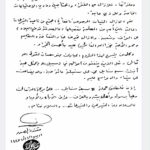
Influential cleric Muqtada al-Sadr dominated the conversation by releasing a series of image-based statements that garnered massive engagement. In three separate posts, Muqtada Sayyid Muhammad al-Sadr (Post Impact: 100%), Muqtada Sayyid Muhammad al-Sadr (Post Impact: 74%), and Muqtada Sayyid Muhammad al-Sadr (Post Impact: 71%) outlined his movement’s definitive stance on the ongoing government formation crisis. While the text was contained within images, the posts were widely understood to be official decrees from al-Sadr concerning the Sadrist Movement’s position relative to the Coordination Framework and its refusal to participate in a consensus government with factions it opposes. The exceptionally high impact of these posts underscores his central role in the political deadlock, with his directives shaping the actions of his followers and the calculations of his political rivals.
5. Rising Military Tensions Between the US and Iran
Fears of a potential military confrontation between the United States and Iran were a prominent theme. Rafid Jaboori (Post Impact: 9%) reported that former President Trump stated he would resort to the “military option” if a deal with Iran is not reached. This was complemented by reports of US military movements in the region. Rusly Al-Maliki (Post Impact: 7%) noted the deployment of F-35A fighter jets to the region, destined for a base in Jordan. Meanwhile, Raad Hashim (Post Impact: 5%) cited a Reuters report that satellite imagery showed US forces placing Patriot missiles on launchpads at Al Udeid Air Base in Qatar. Analyst Steven Nabil (Post Impact: 6%) characterized the coming days as decisive, framing the situation as a choice between negotiation and diplomatic collapse.
6. Discussions on Iranian Domestic Affairs
Events within Iran, particularly around the anniversary of its 1979 Islamic Revolution, attracted significant attention. A viral story shared by Rusly Al-Maliki (Post Impact: 18%) claimed that the singer of the famous pro-regime anthem “Salam Farmandeh” had turned against the government and was now singing for the Shah. In another sign of internal friction, the same account reported that Iranian state TV cut off a live speech by President Masoud Pezeshkian after he began criticizing the broadcaster. While accounts like Haydar (Post Impact: 5%) and Najah Muhammad Ali (Post Impact: 5%) shared videos of official anniversary celebrations with chants of “Allahu Akbar,” Bahaa Khaleel (Post Impact: 4%) posted a contrasting video, claiming that while the regime launched fireworks, citizens were shouting “Death to Khamenei” from their homes.
7. Key Iraqi Political Leaders Hold Consultative Meetings
Amid the government formation deadlock, posts highlighted key meetings between Iraqi political leaders as they worked to consolidate their positions and alliances. Within the Shia bloc, Ammar Al-Hakim (Post Impact: 10%) announced he had met with Sheikh Qais Khazali, Secretary-General of Asa’ib Ahl al-Haq, to discuss political developments and the institutionalization and unity of the Coordination Framework. In a parallel development within the Sunni political sphere, Mishan al-Jubouri (Post Impact: 6%) shared photos of his meeting with Sheikh Khamis al-Khanjar, whom he described as “the Sunni leader who does not compromise on the issues of his people.” These meetings underscore the ongoing consultations within the main political components as they navigate the complex process of forming a new government.
8. Iraqi Security Forces Announce Major Arrests
Iraqi security and intelligence services were praised for two significant security achievements. The account Haydar (Post Impact: 7%) reported that Iraqi security forces had arrested “Abu Ayman al-Rawi,” who held the position of ISIS’s so-called “Wali of Anbar.” In a separate operation, the same account shared news from the Iraqi National Intelligence Service about the dismantling of an international drug trafficking network. Haydar (Post Impact: 6%) stated that the operation, which took place on Syrian territory, resulted in the arrest of five individuals and the seizure of 200,000 Captagon pills that were intended to be smuggled into Iraq.
9. Criticism Over Omission of Kurdish Forces in ISIS Fight
A recent statement by the Global Coalition to Defeat ISIS drew criticism for its failure to acknowledge the contributions of Kurdish forces. Former Iraqi Foreign Minister Hoshyar Zebari (Post Impact: 9%) pointed out that the joint statement from the coalition’s meeting in Riyadh completely omitted any mention of the “pivotal role played by the Peshmerga forces in Iraq and the Kurdish SDF in Syria” in defeating the terrorist organization. Zebari noted that Iraq’s Ministry of Foreign Affairs was represented at the meeting. The official statement itself was shared by the U.S. Embassy Baghdad (Post Impact: 2%), providing context for the critique and highlighting a point of contention regarding the official historical record of the war against ISIS.
10. Debate Over New ‘Asycuda’ Customs System
The Iraqi government’s implementation of a new, unified customs tariff system, known as “Asycuda,” generated considerable debate online. MUNQITH DAGHER (Post Impact: 3%) and Ali Farhan (Post Impact: 3%) both shared explanatory videos about the system and why it was facing opposition. The new policy led to protests by traders, which Dr. Yahya Al-Kubaisi (Post Impact: 2%) noted reflected two issues: a general lack of public knowledge about the authorities’ functions and, more critically, a widespread belief that the head of the judiciary, Faiq Zidan, is the true “godfather of the political system,” leading citizens to appeal to him on all matters.