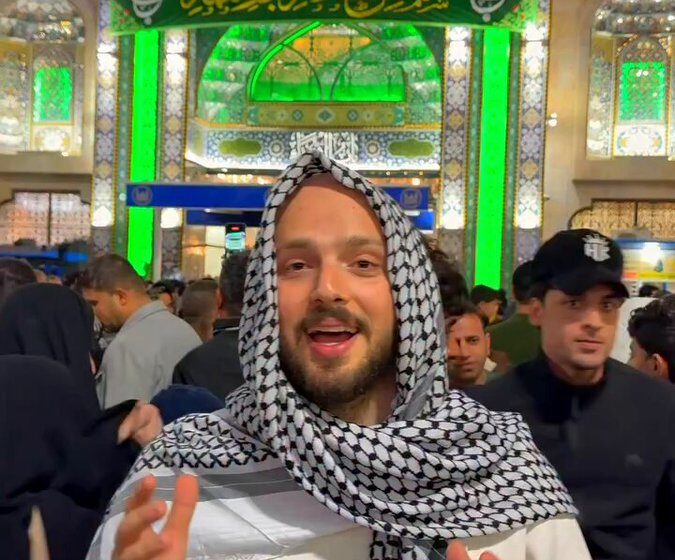
2026-02-15: Jordanian Influencer’s Karbala Visit Sparks Controversy

Based on a Miqrab AI analysis of 436 X / Twitter posts trending in Iraq on February 15, 2026, the online conversation was dominated by regional socio-religious controversies, geopolitical tensions, and domestic political debates. The most prominent narrative involved the backlash against a Jordanian influencer for visiting the holy city of Karbala, which sparked a wider discussion on sectarianism in the Arab world. Another major theme was the heightened tension between the United States and Iran, with users sharing conflicting reports about negotiations, potential military action, and former President Trump’s aggressive stance. Conversations also focused on the future of Syria following a high-profile visit by an Iraqi analyst, domestic issues such as the ongoing influence of militias, the plight of displaced Sunnis, and intense speculation regarding US influence over the formation of the next Iraqi government.
Table Of Content
- 1. Jordanian Influencer’s Karbala Visit Sparks Controversy
- 2. Heightened Tensions and Negotiations Between the US and Iran
- 3. Dr. Liqaa Maki’s Damascus Visit Stirs Debate on Syria’s Future
- 4. Iraq and Iran Exchange Remains of War Victims
- 5. US Influence Over Iraqi Government Formation Debated
- 6. Iraqi Ambassador to Saudi Arabia Faces Backlash
- 7. Displaced Iraqis and Militia Influence Discussed
- 8. TV Series on Saddam Hussein’s Mother Generates Discussion
- 9. Moqtada al-Sadr Visits Father’s Shrine in Najaf
- 10. Accounts Allege Extortion Network Targeting Businessmen
Today’s Top 10 X (Twitter) Trends in Iraq:
1. Jordanian Influencer’s Karbala Visit Sparks Controversy
A significant social media debate erupted after a Jordanian influencer faced what was described as a “fierce attack” following his visit to the holy city of Karbala. The account Haydar (Post Impact: 100%) noted that the influencer had previously visited over 100 countries and various religious sites, including Buddhist and Christian ones, without incident, but was attacked after visiting the shrine of the Prophet’s grandson. In a follow-up post, Haydar (Post Impact: 48%) quoted the influencer stating, “In Iraq, I didn’t see a single person speak of sectarianism… but all the sectarian comments came from Arab countries!” The incident prompted broader discussions on sectarianism, with users like Mahdi Majeed (Post Impact: 24%) asking for clarification on Shia beliefs regarding the visitation of shrines to better understand the issue.
2. Heightened Tensions and Negotiations Between the US and Iran
Discussions surrounding US-Iran relations were prominent, filled with speculation about negotiations and potential military conflict. Several accounts, including Najeh Abbas Al-Mizan (Post Impact: 27%) and Cliff Captain (Post Impact: 15%), amplified statements attributed to former President Trump indicating a hardline approach, with claims that aircraft carriers were in position and special forces were ready for action. The potential failure of diplomatic talks was highlighted by David Yassin (Post Impact: 26%), who stated that “the path of negotiations is no longer on the table for continuation.” In contrast, Aayad Al Twfan (Post Impact: 28%) shared the memoirs of former US negotiator Wendy Sherman, who described the Iranian side as incredibly tough, noting, “I am certain that my negotiations with them were the most difficult in modern history.”
3. Dr. Liqaa Maki’s Damascus Visit Stirs Debate on Syria’s Future
Analyst Dr. Liqaa Maki’s visit to Damascus generated considerable discussion about Syria’s future and its regional implications. After attending the Damascus International Book Fair, Liqaa Maki (Post Impact: 74%) shared his conviction that Syria is the “hope of the Arab Mashriq for recovery,” praising the Syrian people’s resilience despite the destruction caused by the Assad regime. His analysis was further amplified by other accounts, such as Iyad Al-Dulaimi (Post Impact: 14%), who quoted him telling Syrian state media that “Syria will not be divided, but may expand.” This particular statement drew concern from users like Abu Drandesh Al-Askari (Post Impact: 11%), who interpreted it as a suggestion that Syria might annex territories from Iraq.
4. Iraq and Iran Exchange Remains of War Victims
Accounts reported on a formal exchange of remains of soldiers killed during the Iran-Iraq War at the shared border. Rusly Al-Maliki (Post Impact: 31%) stated that Iraq received the remains of 9 of its “martyrs” while Iran received the remains of 79 of its dead. He celebrated their return, saying, “Our martyrs have returned to the soil of the homeland, their souls crowned with the glory of defending the nation.” Similarly, Haydar (Post Impact: 16%) covered the exchange, reporting slightly different figures of 6 Iraqi remains returned. Both posts emphasized the honor and sacrifice of the Iraqi soldiers.
5. US Influence Over Iraqi Government Formation Debated
The role of the United States in the formation of Iraq’s next government was a recurring topic, particularly concerning the potential candidacy of Nouri al-Maliki for prime minister. Raad Hashim (Post Impact: 16%), citing a report from Alsumaria News, claimed that former President Trump’s opposition to Maliki was part of a broader US strategy to install a prime minister who is “hostile” to armed factions. This was echoed by Haydar (Post Impact: 6%), who shared an analysis suggesting the US had warned Iraqi politicians of sanctions if Maliki assumed office. This situation led commentators like Ali Farhan (Post Impact: 14%) to question who the real “embassy sons” are: those who support Maliki’s plan to disarm factions as requested by the US, or those who want an independent prime minister acceptable to the US.
6. Iraqi Ambassador to Saudi Arabia Faces Backlash
Iraq’s ambassador to Saudi Arabia, Safia Al-Suhail, became the subject of controversy following the circulation of a video. According to Haydar (Post Impact: 19%), the Iraqi Parliament instructed the Foreign Ministry to summon the ambassador for questioning within 48 hours. The nature of the controversy prompted criticism of Al-Suhail’s long career in politics, with Wasan Al-Shaikhli (Post Impact: 13%) arguing that she has held various positions since 2003 without any significant accomplishments for Iraq. Meanwhile, Haydar (Post Impact: 15%) also questioned the double standards of her defenders, wondering if their reaction would be the same if a similar incident occurred at the Iraqi embassy in Iran.
7. Displaced Iraqis and Militia Influence Discussed
The plight of displaced Sunni Iraqis and the pervasive influence of armed militias were linked in several posts. Othman Al-Mukhtar (Post Impact: 20%) posted a picture from the “Bzaibiz” camps in Anbar, stating that militias occupy towns like Jurf al-Sakhar and have prevented hundreds of thousands of Sunni residents from returning for 11 years. This theme of militia power was complemented by Dr. Zaid Abdulwahab Al-Adhami (Post Impact: 8%), who argued that “uncontrolled weapons” and the “militarization of society” undermine the state’s authority, provide cover for corruption networks, and have led to estimated financial losses for Iraq between 100 and 150 billion dollars.
8. TV Series on Saddam Hussein’s Mother Generates Discussion
A planned television series focused on Subha, the mother of former Iraqi President Saddam Hussein, sparked online conversation. The account Wesam Aziz (Post Impact: 15%) announced the upcoming series, titled “Subha,” claiming it would reflect the “moral reality of the enemies of the Shia.” The same user later announced a writing contest for a novel about her, suggesting a concerted effort to shape a negative narrative around Saddam Hussein’s family. In a contrasting view, Hamza Jasim (Post Impact: 6%) shared a post arguing that “Iraq had prestige with the presence of Saddam Hussein.”
9. Moqtada al-Sadr Visits Father’s Shrine in Najaf
Several accounts associated with the Sadrist movement shared news of a visit by their leader, Moqtada al-Sadr, to his family’s resting place. The official account of the Martyr Sadr Shrine Foundation (Post Impact: 7%) and supporters like Safaa Al-Asadi (Post Impact: 7%) and Ghadanfar (Post Impact: 5%) posted images and announced that Sadr was at Wadi al-Salam cemetery in Najaf to perform visitation rites for his father, Grand Ayatollah Muhammad al-Sadr, and his two martyred brothers. The posts highlighted the event for his followers, reinforcing his connection to his family’s legacy.
10. Accounts Allege Extortion Network Targeting Businessmen
Allegations of a criminal network involved in extorting Iraqi businessmen circulated on the platform. Posts by Dr. Qusay Shafiq (Post Impact: 10%) and Ahmed Al-Thawaq (Post Impact: 11%) accused an individual named Ismail Musabah Al-Waeli of running an “extortion and fraud” operation. The accounts shared what they claim to be audio recordings of the network’s activities as proof and warned that the operation involves a team based in Turkey. These posts aimed to expose the alleged criminal activities and caution the business community.