2026-02-23: Iraq-Kuwait Maritime Dispute Dominates Online Discourse

Based on an analysis of 316 X / Twitter posts trending on February 23, 2026, Miqrab AI found that the dominant narrative among Iraqi users is the escalating maritime border dispute with Kuwait. This has sparked widespread nationalist sentiment and strong criticism of other Arab nations, particularly Egypt and Jordan, for siding with Kuwait, with many users accusing them of acting against Iraq’s interests for financial gain. A secondary but significant theme is the growing concern over a potential military conflict between the United States and Iran, fueled by reports of US naval movements in the region. Domestically, discussions revolved around the political future of former Prime Minister Nouri al-Maliki, whose recent statements about his candidacy and his stance on armed factions have drawn considerable attention and analysis.
Table Of Content
- 1. Iraq-Kuwait Maritime Dispute Dominates Online Discourse
- 2. Fears of Imminent US-Iran Military Conflict
- 3. Nouri al-Maliki Refuses to Withdraw PM Candidacy
- 4. Historical Claims to Kuwait Resurface
- 5. Calls for Economic Sanctions on Jordan
- 6. Criticism of Iraq’s Diplomatic Response to Kuwait
- 7. US Warship USS Gerald R. Ford Arrives in Crete
- 8. Commemorating “Aziz al-Iraq” Abdul Aziz al-Hakim
- 9. Nationalist Anger Directed at Fellow Arab Nations
- 10. US Envoy Tom Barrack Holds High-Level Meetings in Iraq
Today’s Top 10 X (Twitter) Trends in Iraq:
1. Iraq-Kuwait Maritime Dispute Dominates Online Discourse
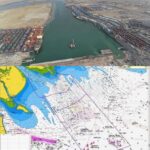
The maritime border dispute between Iraq and Kuwait has ignited intense nationalist sentiment across Iraqi social media, with strong condemnation directed at Kuwait and its Arab allies. User Haidar (Post Impact: 100%) expressed dismay over Egypt’s statement of support for Kuwait, calling it “unfortunate that the positions of the ancient Egyptian state turn into a commodity to be bought and sold by the Gulf people.” Many posts call for national unity, such as one from Mahdi Majeed (Post Impact: 90%), who stated, “I stand with Iraq against the Arab and non-Arab countries that seek to steal its waters and lands and strangle it economically.” The prevailing view is that Gulf states are conspiring to weaken Iraq, with Haidar (Post Impact: 75%) arguing that the sheer volume of “Gulf barking and media and diplomatic mobilization” proves that Iraq’s actions have struck a nerve. Rusly Al-Maliki (Post Impact: 64%) took a more conciliatory tone, suggesting that negotiation is the only way forward as the two countries will eventually need each other.
2. Fears of Imminent US-Iran Military Conflict
Speculation about a potential military conflict between the United States and Iran is rampant, driven by reports of American military preparations and conflicting diplomatic signals. Liqaa Maki (Post Impact: 76%) described the American position as highly “contradictory and uncertain,” suggesting it might be a “huge camouflage operation to put Iran under great pressure.” Other accounts point to more definitive signs of impending war, with Sufian Al-Samarrai (Post Impact: 71%) reporting that the US has completed its military buildup, allocating the “largest budget since the war on Iraq.” This is echoed by Cliff Captain (Post Impact: 41%), who cites a senior Israeli security official telling Channel 14 that the US has “finished all preparations for a possible attack on Iran.” However, offering a counter-narrative, Najah Muhammad Ali (Post Impact: 50%) shared a Jerusalem Post prediction of an “framework agreement between Tehran and Washington” rather than a full-scale conflict.
3. Nouri al-Maliki Refuses to Withdraw PM Candidacy
Former Prime Minister Nouri al-Maliki’s recent interview with Agence France-Presse (AFP) has become a major talking point, in which he firmly stated he would not withdraw his candidacy for the premiership. Steven Nabil (Post Impact: 71%) and Yasser Eljuboori (Post Impact: 17%) both detailed his key declarations, including that “Washington wants the next Iraqi government to be without members of armed factions,” and his call for weapons to be solely “in the hands of the state and under one central authority.” Al-Maliki’s statements were met with some skepticism; Najeh al-Mizan (Post Impact: 70%) commented sarcastically that “Trump with 443 letters in a tweet on Truth Social shot down your candidate Maliki.” Rafid Jaboori (Post Impact: 16%) interpreted the interview as either a last-ditch effort before a US veto or a strategic move to position himself as “the most difficult number in Iraqi politics.”
4. Historical Claims to Kuwait Resurface
Amid the current border tensions, historical Iraqi claims over Kuwait are being recirculated to provide context and bolster nationalist sentiment. A highly engaged post by Haidar (Post Impact: 82%) shares a direct quote from former Iraqi leader Abd al-Karim Qasim, dated June 25, 1961. In the statement, Qasim declared his intention to appoint the Emir of Kuwait as a district administrator for the “district of Kuwait, which is subordinate to the Basra governorate.” The historical quote further asserts that “Kuwait is an indivisible part of Iraq” and warns that if the Sheikh of Kuwait were to misbehave, he would be “held to a strict account and counted among the rebels.” The resurfacing of such historical documents highlights a deep-rooted perspective among some Iraqis regarding Kuwait’s sovereign status.
5. Calls for Economic Sanctions on Jordan
Following Jordan’s statement of support for Kuwait in the maritime dispute, some Iraqi voices are demanding economic retaliation against Amman. Haidar (Post Impact: 83%) shared a recommendation from economist Nabil Al-Marsoumi, who argued that the Iraqi government should respond by canceling economic privileges granted to Jordan. Specifically, Al-Marsoumi proposed that Iraq should “cancel the privilege enjoyed by Jordanian goods exported to Iraq” by re-imposing customs tariffs and revoking the $16 per barrel discount on crude oil sold to Jordan. This sentiment was echoed by Dr. Hussein Al-Safi (Post Impact: 15%), who stated that if Iraq had a government with “an ounce of honor, it would stop selling oil to Jordan.”
6. Criticism of Iraq’s Diplomatic Response to Kuwait
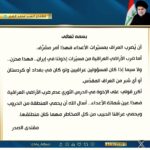
The Iraqi government’s diplomatic handling of the maritime dispute has drawn criticism for appearing passive and reactive. User Haidar (Post Impact: 77%) pointed out that Iraq’s Foreign Minister allegedly failed to proactively engage with other countries to explain Iraq’s position, noting that recent calls with his Jordanian and Omani counterparts were initiated by them. However, a separate post from the same account, citing Al-Ahed channel, indicated that the government has taken some official action. According to this report, Iraq sent a formal seven-point protest memo to Kuwait, reaffirming its sovereignty and rejecting Kuwaiti efforts to achieve border gains. The memo, referenced by Haidar (Post Impact: 72%), also highlighted that Kuwait had deposited its disputed map with the UN in 2014, while Iraq was preoccupied with its war against ISIS.
7. US Warship USS Gerald R. Ford Arrives in Crete
The movements of the US aircraft carrier USS Gerald R. Ford are being closely monitored as a potential indicator of escalating military tensions with Iran. Sufian Al-Samarrai (Post Impact: 71%) noted that the carrier, the “largest nuclear-powered aircraft carrier,” has reached Crete, Greece, and that its arrival signifies the completion of a major US military buildup in the region. Steven Nabil (Post Impact: 34%) confirmed the arrival, describing it as a port visit for resupply before the carrier proceeds to the US Central Command’s area of operations. Providing a different tactical analysis, Mujtahid al-Iraq (Post Impact: 20%) claimed that Crete is the carrier’s final destination and that any military operations against Iran would be launched from this location, as it is over 2,000 km away and “far from Iranian missiles.”
8. Commemorating “Aziz al-Iraq” Abdul Aziz al-Hakim
On the anniversary of his passing, several prominent political figures and commentators commemorated Abdul Aziz al-Hakim, widely known as “Aziz al-Iraq.” Former Prime Minister Mustafa Al-Kadhimi (Post Impact: 47%) remembered him as a “prominent contributor to the political process in very complex circumstances” and reaffirmed a commitment to a “path of moderation.” His son, Ammar Al-Hakim, head of the National Wisdom Movement, posted a video tribute referring to his father as a “project of a nation,” shared by his account Ammar Al-Hakim (Post Impact: 22%). Offering a more critical perspective, Othman Al-Mokhtar (Post Impact: 56%) shared a video of al-Hakim welcoming US Secretary of State Condoleezza Rice after the 2003 invasion, quoting him as saying, “We thank President Bush and my warm greetings to him.”
9. Nationalist Anger Directed at Fellow Arab Nations
The border dispute with Kuwait has triggered a broader current of anger and mistrust toward other Arab countries, which many Iraqis see as hostile to their nation’s interests. Mahdi Majeed (Post Impact: 90%) issued a direct challenge to Iraq’s neighbors, asking, “Iraq after 2003 has not harmed any country, so why are you seeking to destroy and ruin it?” This feeling of betrayal is widespread, with users like Ahmed Khidr (Post Impact: 21%) sarcastically remarking to proponents of pan-Arabism, “Your ‘Arab depth’ wants to rob Iraq of its sovereignty.” The account Jews of Iraq (Post Impact: 65%) posted a very aggressive and explicit message against Arabs, reflecting the high emotional intensity of the online conversation.
10. US Envoy Tom Barrack Holds High-Level Meetings in Iraq
High-level diplomatic activity by the United States in Iraq is drawing attention, particularly the meetings held by US presidential envoy Tom Barrack. The President of the Kurdistan Region, Nechirvan Barzani (Post Impact: 32%), announced on his official account that he had “productive discussions on Iraq–U.S. relations” with Barrack. In Baghdad, Barrack met with Judge Faiq Zidan, the President of the Supreme Judicial Council. According to Ghaith Al-Tamimi (Post Impact: 10%), the envoy praised the Iraqi judiciary’s efforts and affirmed US support for the council’s initiative “aimed at disarming militias and restricting them to the constitutional armed forces,” indicating a focus on security and the rule of law.