2026-03-02: Widespread Missile Attacks Across the Middle East

Based on a Miqrab AI analysis of 471 Facebook posts trending in Iraq on March 2, 2026, the primary topics of discussion centered on a severe and widespread regional military escalation, with numerous high-engagement posts reporting missile and drone attacks on Israel, several Gulf states, and Western military bases. In response to the crisis, Iraqi Prime Minister Mohammed Shia’ Al Sudani’s diplomatic efforts to de-escalate tensions with regional leaders were a prominent theme. Domestically, the assassination of women’s rights activist Yanar Mohammed in Baghdad garnered significant attention and official response. Other key narratives included official warnings from the U.S. government to its citizens, strong criticism of the positions of other Arab nations in the conflict, and calls to maintain Iraq’s internal security and sovereignty amidst the regional chaos.
Table Of Content
- 1. Widespread Missile Attacks Across the Middle East
- 2. PM Sudani’s Diplomatic Calls for Regional De-escalation
- 3. Assassination of Activist Yanar Mohammed in Baghdad
- 4. CA Governor Newsom’s Comments on Child Deaths
- 5. US Government Issues Warnings to Citizens in the Region
- 6. PM Sudani Chairs National Security Council Meeting
- 7. Calls to Maintain Internal Security in Iraq
- 8. Criticism of Arab States’ Position in the Conflict
- 9. Reports of Drones Intercepted Over Iraq
- 10. Iran’s Threat to Close Strait of Hormuz
Today’s Top 10 Facebook Trends in Iraq:
1. Widespread Missile Attacks Across the Middle East
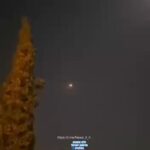
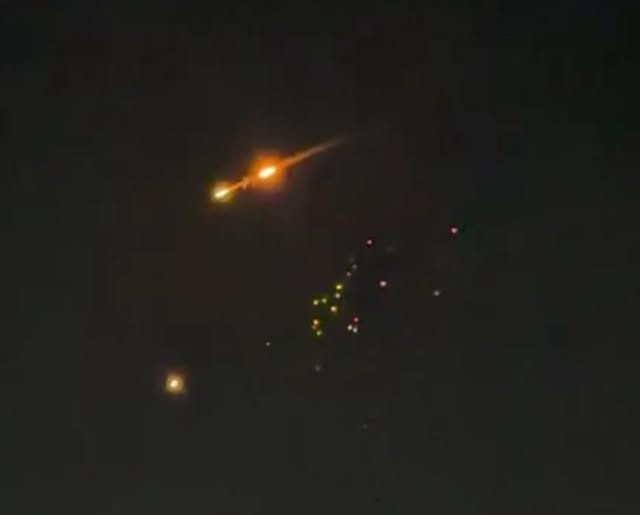
Reports of a major, multi-front military escalation dominated Facebook. Pages shared videos and updates claiming missile attacks on Tel Aviv, with Mustafa Sanad (Post Impact: 82%) posting a video of what he called a “beautiful view of cluster [munitions] falling on Tel Aviv now.” Set Ashwaq Um Al-Qanounia (Post Impact: 51%) reported a “complex attack with missiles and drones,” listing targets including a British military base in Cyprus, and explosions in Qatar, Kuwait, and Bahrain. The Tactical Cell (Post Impact: 13%) also reported that Kuwait, Saudi Arabia, Bahrain, the UAE, and Qatar were being shelled alongside Israel. The attacks were described as ongoing, with Set Ashwaq Um Al-Qanounia (Post Impact: 42%) and Rusly Al-Maliki (Post Impact: 7%) noting that Tel Aviv was being shelled for the “second night in a row.”
2. PM Sudani’s Diplomatic Calls for Regional De-escalation
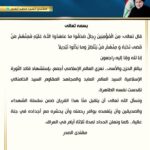
The official page of Iraqi Prime Minister Engineer Mohamed Shia Alsudani (Post Impact: 54%) heavily promoted his diplomatic outreach aimed at calming the escalating regional conflict. He held phone conversations with Kuwait’s Crown Prince, Sheikh Sabah Khaled Al-Hamad Al-Sabah, and Bahrain’s King, Hamad bin Isa Al Khalifa. In both calls, the Prime Minister’s page (Post Impact: 44%) stated there was a shared emphasis on the need for an “immediate halt to military operations” to prevent further escalation. The discussions highlighted the importance of joint Arab coordination and resorting to dialogue as the “optimal way to solve problems,” urging the international community to work towards preventing the region from sliding into greater danger.
3. Assassination of Activist Yanar Mohammed in Baghdad
Multiple pages reported the assassination of prominent Iraqi women’s rights activist Yanar Mohammed, founder of the Organization of Women’s Freedom in Iraq. Iraqi Women Rights (Post Impact: 22%) issued an obituary and condemnation, stating she was killed in a “cowardly armed attack” outside her home in Baghdad. The page framed the killing as part of a “dangerous context of systematic targeting of women activists.” The Iraqi Observatory for Human Rights (Post Impact: 3%) and Khan Jghan (Post Impact: 4%) also reported on the assassination. In response, the Media Office of the Minister of Interior (Post Impact: 3%) announced that Minister Abdul Amir al-Shammari had ordered the formation of a specialized investigation team to uncover the circumstances of the murder and bring the perpetrators to justice.
4. CA Governor Newsom’s Comments on Child Deaths
A video post by Mustafa Sanad (Post Impact: 100%) featuring California Governor Gavin Newsom received extremely high engagement. The post’s text attributes a quote to Newsom, who is identified as an opponent of Trump: “We have to understand why the children, the little girls in the school, were killed.” The post itself is a video reel and does not provide further context on the circumstances of Newsom’s remarks, but its sharing by a prominent Iraqi political figure generated significant traction on the platform.
5. US Government Issues Warnings to Citizens in the Region
Pages focused on security matters reported on official US communications regarding the regional conflict. The Tactical Cell (Post Impact: 11%) stated that the U.S. State Department urged Americans in several Gulf countries, including Iraq, Kuwait, Saudi Arabia, Qatar, Bahrain, the UAE, Yemen, and Oman, to leave immediately. The warning was also said to include Israel, Jordan, and Syria. The page linked this advisory to an anticipated “large-scale US military operation within the next 24 hours.” Al-Khuwa Al-Nadhifa (Post Impact: 7%) shared a statement from the White House to Republican lawmakers, indicating that the US military operation’s goal is to “end the threat of Iran’s proxies.”
6. PM Sudani Chairs National Security Council Meeting
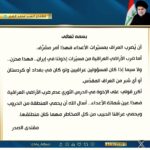
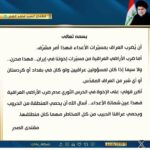
The official pages of Prime Minister Engineer Mohamed Shia Alsudani (Post Impact: 7%) and his office (Post Impact: 3%) reported that he chaired an extraordinary meeting of the Ministerial Council for National Security to discuss the dangerous security escalation in the region. The council renewed orders for security forces to confront any action that would destabilize Iraq and prevent any party from dragging the country into existing conflicts. The statements emphasized that while freedom of expression is guaranteed, the government will not allow diplomatic missions or vital facilities to be targeted, affirming that decisions of war and peace are the “exclusive responsibility of the state and its constitutional institutions.”
7. Calls to Maintain Internal Security in Iraq
Amidst the regional turmoil, some pages focused on Iraq’s internal situation and the role of its security forces. Ahmed Al-Wishah (Post Impact: 29%) posted a video expressing support for security forces in “imposing the law and preventing saboteurs and outlaws from tampering with the security of citizens and dragging Iraq into a regional war.” Conversely, Salifa wa Nus (Post Impact: 27%) shared a clip of a protester describing resistance leaders as an “illusion,” questioning their motives with the phrase, “Is the chair really that sweet?” These posts reflect a domestic conversation about preventing internal chaos and questioning the agendas of various political actors during the crisis.
8. Criticism of Arab States’ Position in the Conflict
A number of commentators and political figures took to Facebook to criticize the stance of Arab governments, particularly those in the Gulf. Dr. Mudhaffar Qasim Hussein (Post Impact: 21%) accused Arab rulers of committing a crime by “making Muslim Iran an enemy and ‘Israel’ a friend,” warning that silent populations would deeply regret it. Similarly, MP Dr. Haider Al-Salami (Post Impact: 19%) accused Gulf rulers and other “clients” of being unaware that the aggression against Iraq, Iran, and Lebanon aims to redraw the region’s map to establish a “Greater Israel from the Nile to the Euphrates.” These posts portray a narrative of betrayal by fellow Arab nations.
9. Reports of Drones Intercepted Over Iraq
Several pages reported on domestic air defense activities within Iraq. Al-Khuwa Al-Nadhifa (Post Impact: 9%), citing the Security Media Cell, stated that air defenses shot down a drone that attempted to approach the vicinity of Abu Ghraib prison. Separately, the page Support for the Iraqi Security Forces (Post Impact: 3%) reported that security forces shot down a locally-made drone that was flying near the Mosul Dam. Ahmed AlHamdani (Post Impact: 8%) also posted about the Mosul Dam incident, adding that there were “accusations of the Babylon Brigade’s involvement in targeting the Mosul Dam with a drone.”
10. Iran’s Threat to Close Strait of Hormuz
The potential economic fallout of the conflict was highlighted in posts about Iran’s control over the Strait of Hormuz. Ahmed ALTaib (Post Impact: 10%) questioned what solutions Iraq has after the closure of the strategic waterway. The page Yalla (Post Impact: 3%) provided more detail, quoting a Revolutionary Guard commander, Brigadier General Jabari, who allegedly threatened, “we will burn any ship that tries to cross the Strait of Hormuz.” The commander was also quoted as saying Iran would not allow a “single drop of oil” to leave the region and predicted that oil prices could reach $200 per barrel if tensions continue.