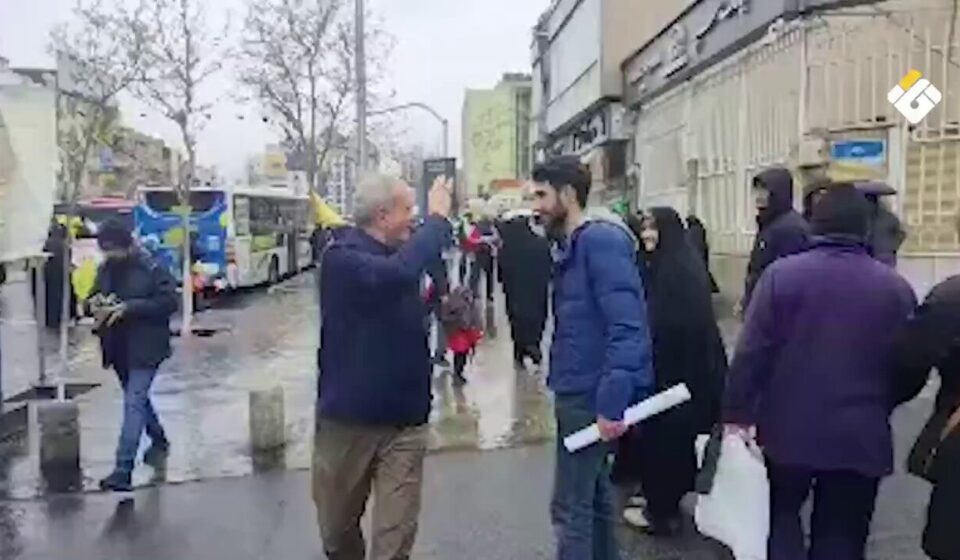
2026-03-13: Iranian Leaders’ Public Appearances Amid Conflict

Based on a Miqrab AI analysis of 117 X / Twitter posts trending in Iraq on March 13, 2026, the online discourse was dominated by the escalating conflict between the United States, Israel, and Iran, and its direct repercussions within Iraq. Key narratives included widespread discussion of airstrikes targeting Iran-backed Hashd al-Sha’abi (PMF) factions, leading to divided reactions of mourning, criticism, and calls for de-escalation. Accounts closely followed the public appearances of Iranian leaders, with some praising their bravery and others condemning them for endangering civilians. The conflict’s economic impact was a major concern, particularly the halt of Iraq’s oil exports through the Strait of Hormuz. Additionally, there was significant conversation around Iraqi factions offering bounties on US soldiers, geopolitical shifts such as the UAE’s actions against Iranian institutions, and accusations of internal collaboration in the targeting of PMF sites.
Table Of Content
- 1. Iranian Leaders’ Public Appearances Amid Conflict
- 2. Airstrikes on Hashd al-Sha’abi (PMF) Bases
- 3. Iraqi Factions Offer Bounty on US Soldiers
- 4. UAE Shuts Down Iranian Institutions
- 5. Hormuz Closure Halts Iraq’s Southern Oil Exports
- 6. Conflicting Narratives on Mojtaba Khamenei’s Fate
- 7. Criticism of Israeli Government and Netanyahu
- 8. Attacks on Energy Infrastructure Inside Iraq
- 9. Calls for PMF Members to Desert Their Units
- 10. Accusations of Collaboration in Targeting PMF
Today’s Top 10 X (Twitter) Trends in Iraq:
1. Iranian Leaders’ Public Appearances Amid Conflict
Amidst ongoing airstrikes and high tensions, the public appearance of Iranian leaders became a major topic of discussion, eliciting both praise and condemnation. Accounts like Renas Ali (Post Impact: 1%) and Dr. Hayder Al-Barzinji (Post Impact: 0%) shared videos of Iranian President Masoud Pezeshkian and senior official Ali Larijani walking among crowds in Tehran without heavy security. Renas Ali contrasted this with Iraqi leaders, asking, “What kind of people are you!!!” while praising their lack of fear. Conversely, others viewed these appearances negatively. Sufian Al-Samarrai (Post Impact: 0%) described the leaders as “cowards who emerged from the sewers” using their followers as human shields. Many users, including Haider (Post Impact: 0%) and Essam Hussein (Post Impact: 0%), directly rebutted a statement from the U.S. Secretary of War that Iranian leaders were hiding underground, using the rally footage as a counter-narrative.
2. Airstrikes on Hashd al-Sha’abi (PMF) Bases
Airstrikes targeting bases of the Hashd al-Sha’abi (Popular Mobilization Forces) across Iraq were a central theme, prompting varied reactions. Zina Al Saab (Post Impact: 0%) urged US and Israeli forces to target high-level PMF leaders like Qais Khazali and Hadi al-Amiri instead of “ignorant young men who have been lured” into service, whom she described as “cheap flesh.” In contrast, other accounts mourned the casualties. Muna Sami (Post Impact: 0%) posted about the death of Hussein Ali Al-Mousawi at Saqr camp, expressing shame that “the homeland is unable to avenge you and your colleagues.” Haider (Post Impact: 0%) shared a video of a large funeral procession for the PMF members killed in the “American aggression.” Mustafa Al-Dulaimi (Post Impact: 0%) questioned the purpose of the PMF members remaining in their camps to be targeted, asking, “Who are you fighting for?”
3. Iraqi Factions Offer Bounty on US Soldiers
Multiple accounts reported that Iraqi resistance factions have offered a substantial financial reward for information leading to the capture of American soldiers. Haider (Post Impact: 0%) and Ali Farhan (Post Impact: 0%) both stated that a bounty of 150 million Iraqi dinars has been announced for anyone who provides information on US troops who have allegedly left their bases and relocated to civilian sites. Rusly Al-Maliki (Post Impact: 0%) noted the historical parallel, stating it was impossible “how history repeats itself” by comparing the current bounties to similar ones offered by the Iraqi leadership in 2003 during the US invasion.
4. UAE Shuts Down Iranian Institutions
Geopolitical tensions were highlighted by reports of the United Arab Emirates taking significant measures against Iranian establishments within its borders. Omar Abdul Sattar Mahmoud (Post Impact: 1%) reported that the UAE issued a decision to close Iranian hospitals, schools, and the “Iranian Club” in Dubai. The post adds that, according to the decision, expatriate workers in these facilities must leave the country. This move was praised by some users, such as Mustafa Al-Dulaimi (Post Impact: 0%), who commended the UAE as the “only Arab country that is confronting the Iranian aggression with all valor and heroism” and wished protection for its government and people.
5. Hormuz Closure Halts Iraq’s Southern Oil Exports
The economic consequences of the regional conflict on Iraq were a significant concern, particularly regarding the country’s oil exports. Steven Nabil (Post Impact: 0%) provided a detailed summary of statements from Iraq’s Minister of Oil, who confirmed that the country can no longer export oil via tankers through the Strait of Hormuz. The minister explained that this halt will force a reduction in production as storage is limited and detailed an emergency plan to export smaller quantities via tanker trucks through Turkey, Syria, and Jordan. This vulnerability was underscored by Shaho Al-Qaradaghi (Post Impact: 0%), who recalled how factions like Al-Nujaba had previously threatened to attack alternative export routes like the Aqaba pipeline, highlighting the precarity of Iraq’s options.
6. Conflicting Narratives on Mojtaba Khamenei’s Fate
The status of Mojtaba Khamenei, son of Iran’s former Supreme Leader, was the subject of conflicting reports. Dr. Hussein Al-Safi (Post Impact: 1%) shared a lengthy story portraying Mojtaba as a humble and pious figure, detailing his simple marriage arrangement and claiming that his wife, son, parents, and sister were all martyred on the first day of the war with Iran. In stark contrast, Dr. Ali Al-Jabiri (Post Impact: 0%) posted an urgent news alert, quoting the US Secretary of War, which claimed, “Mojtaba Khamenei was injured and his features were disfigured.” These two posts presented completely different narratives about Mojtaba Khamenei’s condition and history, reflecting the information warfare accompanying the military conflict.
7. Criticism of Israeli Government and Netanyahu
The Israeli government and its leader, Benjamin Netanyahu, faced criticism and mockery in several posts. Wasan Al-Sheikhli (Post Impact: 1%) shared a video of what she described as Jewish crowds demanding the downfall of Netanyahu’s government, pointing out the irony that this happened after Netanyahu had called for the overthrow of the Iranian regime. Separately, Haider (Post Impact: 0%) posted a clip claiming to be the most circulated video in the world, alleging that a speech by Netanyahu was generated using artificial intelligence. The post points to a visual glitch where Netanyahu appears to have six fingers on one hand, a common error in AI-generated imagery, to suggest the video was fabricated.
8. Attacks on Energy Infrastructure Inside Iraq
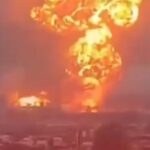
The conflict’s spillover into Iraq was evidenced by reports of attacks on critical energy infrastructure within the country. Haider (Post Impact: 0%) reported that the Lanaz refinery in Erbil province was on fire following an attack by Iraqi factions, noting the refinery is controlled by Mansour Masoud Barzani and its revenues do not go to the regional or central government treasuries. In a separate incident, Yasser Eljuboori (Post Impact: 0%) posted about an “Iraqi bombing” that resulted in a fire at a power station near Baghdad after an attempt to target Baghdad Airport. Mustafa Al-Dulaimi (Post Impact: 0%) sarcastically noted that the “blessed rockets” of the Iraqi resistance hit the Abu Ghraib power station, achieving their goal by plunging the area into darkness.
9. Calls for PMF Members to Desert Their Units
A distinct narrative emerged calling on rank-and-file members of the Popular Mobilization Forces (PMF) to abandon their positions. Faiq Al-Sheikh Ali (Post Impact: 1%) posted a direct appeal to “poor, unfortunate Iraqi mothers” to contact their sons in the militias and tell them to return home. He argued they should leave because their Imam was killed, their leaders are “killers and thieves” who have fled, and their country is occupied by Iran. Similarly, Mustafa Al-Dulaimi (Post Impact: 0%) questioned PMF members filming drones attacking their camps, asking, “What is the meaning of you staying to wait for your death? Who are you fighting for?” suggesting their fight is not for Iraq since the Ministry of Defense is not involved.
10. Accusations of Collaboration in Targeting PMF
Amidst the airstrikes on militia bases, accusations surfaced that collaborators on the ground were providing coordinates for the attacks. Wesam Aziz (Post Impact: 0%) posted a video accusing a man named Ahmed Al-Washah of giving the coordinates of PMF headquarters to the Americans. The post addresses the families of the casualties, stating, “This is the reason for the martyrdom of your sons.” Omar Al-Janabi (Post Impact: 0%) also alluded to this, posting a picture of a man with the caption, “Now the picture is clear and we know how the factions are being targeted. Jackson the specialist.” These posts reflect a narrative of internal betrayal and espionage contributing to the success of the airstrikes against the factions.