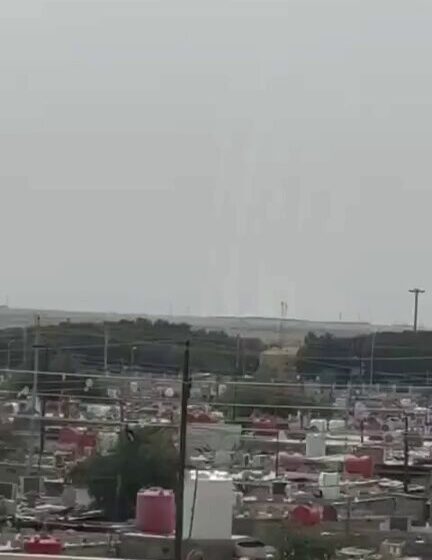
2026-03-24: Kuwait’s Alleged Missile Launches Against Iran

Based on an analysis of 97 X / Twitter posts trending in Iraq on March 24, 2026, Miqrab AI identified several key narratives centered on a rapidly escalating regional conflict involving Iran, Israel, and the United States, with significant spillover into Iraq and neighboring countries. The primary themes include unconfirmed reports of Kuwaiti involvement in strikes against Iran, attacks on both Peshmerga and Popular Mobilization Forces (PMF) on Iraqi soil, and the Iraqi government’s official decision to authorize its security forces to retaliate against these aggressions. Discussions also covered the diplomatic fallout, such as Lebanon severing ties with Iran, and strong commentary on the perceived decline of Iranian influence following the death of its Supreme Leader.
Table Of Content
- 1. Kuwait’s Alleged Missile Launches Against Iran
- 2. Iraq Authorizes Retaliation for Attacks on Its Forces
- 3. Iranian Attacks on Peshmerga Forces in Kurdistan
- 4. Commentary on Khamenei’s Death and Iran’s Weakening Influence
- 5. US Military Actions Against Iranian Targets
- 6. Attack on PMF Headquarters in Anbar Province
- 7. Reports of Iranian Missiles Striking Israel
- 8. Lebanon Severs Diplomatic Ties with Iran
- 9. Arrest of Alleged Pro-Iran Cell in Kuwait
- 10. Criticism of Iraqi Government’s Sovereignty and Response
Today’s Top 10 X (Twitter) Trends in Iraq:
1. Kuwait’s Alleged Missile Launches Against Iran
Multiple X accounts circulated unconfirmed reports and videos claiming that Kuwait had become directly involved in the regional conflict by launching missiles from its territory toward Iran. Dr. Hussein Al-Safi (Post Impact: 21%) stated, “Kuwaiti missiles are launched towards Iranian territory,” suggesting Kuwait is the first Gulf country to officially enter the war. Similarly, Wesam Aziz (Post Impact: 9%) posted a video with the caption, “From the land of Kuwait, Iranian lands were bombed.” These claims were linked to reports of American forces using Kuwaiti territory, with Hayder (Post Impact: 4%) reporting that US missiles launched from Kuwait destroyed the Shalamcheh border crossing on the Iranian side. The news sparked conversations about power outages in Kuwait, with Rusly Al-Maliki (Post Impact: 23%) asking followers from Kuwait if they had experienced any.
2. Iraq Authorizes Retaliation for Attacks on Its Forces
In response to attacks on its security forces, the Iraqi government officially authorized the Popular Mobilization Forces (PMF) and other military units to retaliate. The Prime Minister’s Media Office (Post Impact: 2%) announced that following an emergency meeting, the National Security Ministerial Council decided on “confronting and repelling military aggressions… according to the principle of the right to respond and self-defense.” This was widely interpreted as a declaration of Iraq entering the conflict. Omar Abdul Sattar Mahmoud (Post Impact: 2%) framed it as “Officially Iraq declares war on America and Israel.” Accounts like Hayder (Post Impact: 3%) and Rusly Al-Maliki (Post Impact: 2%) shared the official decision, while Omar Al-Janabi (Post Impact: 2%) noted that Prime Minister Al-Sudani is the first post-2003 leader to decide on a military confrontation with the US Air Force.
3. Iranian Attacks on Peshmerga Forces in Kurdistan
High-level officials from the Kurdistan Region of Iraq condemned a hostile attack on Peshmerga bases, which they attributed to Iran. Kurdistan Regional Government Prime Minister Masrour Barzani (Post Impact: 5%) issued a statement strongly condemning the “hostile and traitorous attack on Peshmerga bases last night, which resulted in 6 brave Peshmergas being martyred and 30 others wounded.” He offered condolences and called on the federal government and the international community to stop the attacks. President of the Kurdistan Region Nechirvan Barzani (Post Impact: 4%) echoed this sentiment, calling the missile strike a “direct hostile aggression on the country’s sovereignty that has no justification.” The Iraqi government’s official statement also mentioned summoning the Iranian ambassador to protest the attacks on Peshmerga headquarters in Erbil.
4. Commentary on Khamenei’s Death and Iran’s Weakening Influence
Following the apparent death of Iran’s Supreme Leader, a prominent narrative emerged discussing the perceived positive consequences for the region and the end of Iran’s network of proxies. Faiq Al-Sheikh Ali (Post Impact: 8%) lauded the event as a “great achievement” by Trump, claiming the world would be rid of religious tyranny, theft of state funds, and the distortion of Shi’ism. This sentiment was shared by Ali Farhan (Post Impact: 2%), who stated that regardless of the war’s outcome, “The only constant that will not change from now on is: The era of Iran’s proxies in the region is over!” Another account, David Yassin (Post Impact: 3%), reported on internal turmoil within Iran, suggesting the Islamic Revolutionary Guard Corps (IRGC) was acting independently of the political leadership, moving from an “executive tool” to a “supreme authority.”
5. US Military Actions Against Iranian Targets
Users reported on significant US military movements and strikes aimed at Iranian targets, often originating from neighboring countries. Salim Al-Jumaili (Post Impact: 5%) posted a video allegedly showing a B-52 bomber accompanied by four F-16 jets in the skies over Nasiriyah, heading towards Iran to strike strategic targets. Hayder (Post Impact: 4%) reported that US forces launched missiles from Kuwaiti territory, destroying the Shalamcheh border crossing on the Iranian side and leading to its temporary closure. Another account, Aayad Al-Twfan (Post Impact: 5%), noted the recent naming of a US amphibious assault ship as the “USS Fallujah,” claiming it had arrived in the region to participate in the war and secure the Strait of Hormuz.
6. Attack on PMF Headquarters in Anbar Province
An attack targeting the Anbar operations command headquarters of the Popular Mobilization Forces (PMF) drew condemnation and highlighted the ongoing targeting of Iraqi security forces. Ammar Al-Hakim (Post Impact: 3%), head of the National Wisdom Movement, strongly condemned the attack, which resulted in casualties among PMF leaders and personnel, and reiterated his rejection of these “unjustified aggressions.” The aftermath was also discussed by Rusly Al-Maliki (Post Impact: 5%), who praised the people of Anbar for rushing to donate blood for their “brothers in the Hashd who were bombed.” The Iraqi government’s subsequent decision to authorize retaliation was a direct response to this and other attacks on its forces.
7. Reports of Iranian Missiles Striking Israel
Amid the escalating conflict, accounts shared videos and reports of Iranian missiles successfully hitting targets inside Israel. Wasan Al-Shaikhli (Post Impact: 8%) posted a video claiming to show Iranian missiles falling in the middle of Tel Aviv, stating that the bombing of the “Zionist entity” was happening day and night. Ahmad Abdul Sada (Post Impact: 1%) shared a clip of what he described as a “blessed Iranian ballistic missile” striking its target in the city of Safed in northern occupied Palestine. These posts were part of a broader narrative celebrating Iranian retaliation against Israel.
8. Lebanon Severs Diplomatic Ties with Iran
The regional conflict appeared to trigger significant diplomatic shifts, with reports that Lebanon decided to cut diplomatic relations with Iran. Mahdi Majeed (Post Impact: 5%) commented on the situation, sarcastically suggesting the Lebanese government ask Israeli military spokesmen to tweet an ultimatum for the Iranian ambassador to leave if he refuses. Rusly Al-Maliki (Post Impact: 1%) added that following Lebanon’s decision, Hezbollah and the Amal Movement were demanding that the Iranian ambassador not comply with the Lebanese Foreign Ministry’s request to depart.
9. Arrest of Alleged Pro-Iran Cell in Kuwait
A detailed post from Mujtahid al-Iraq (Post Impact: 6%) alleged that Kuwaiti authorities were “cleaning” the country of “Iran’s agents and tails” by arresting a terrorist cell. The post, which stated that “Kuwait’s security is a red line,” listed the full names and civil ID numbers of ten Kuwaiti citizens allegedly part of this second cell. The author expressed support for Kuwait’s leadership and security forces against “the conspiracies of the hateful” and asked followers what fate they expected for the arrested individuals.
10. Criticism of Iraqi Government’s Sovereignty and Response
Amid the cross-border attacks, some Iraqi commentators expressed shame and frustration over the government’s inability to control its own airspace and protect its sovereignty. Muna Sami (Post Impact: 4%) noted that for 25 days, she has heard Israeli-American warplanes in the skies of Baghdad. She called it “truly shameful that my country… is unable to refuse the use of its airspace in this war, and is even incapable of protecting the blood of its sons.” Similarly, in a later post, she criticized the government’s response, which she characterized as just holding a meeting. Dr. Hussein Al-Safi (Post Impact: 1%) pointed out the irony that the government, which had previously blocked the PMF from establishing an air defense directorate, was now asking it to confront enemy aircraft.

