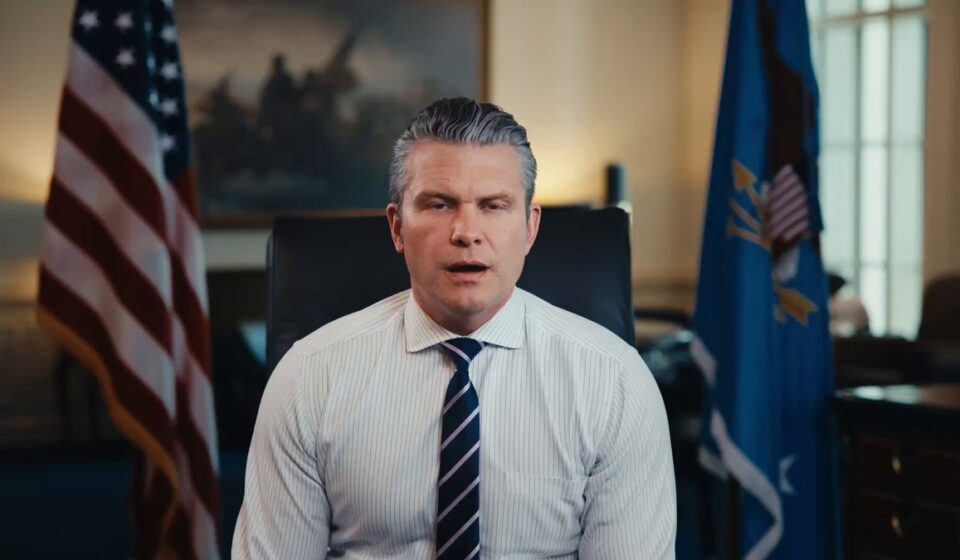
2026-04-02: Hegseth Lifts Ban on Guns at US Military Installations

Based on an analysis of 136 X / Twitter posts trending in Iraq on April 2, 2026, by Miqrab AI, online conversations were dominated by a mix of high-engagement international news and intense regional conflict. The most engaged-with story concerned a US domestic policy change allowing military personnel to carry firearms on bases. However, the bulk of the discussion revolved around the escalating US-Iran conflict, with users sharing news of strikes, threats from former President Trump, and polarized commentary reflecting either anti-Iran sentiment or support for the “Resistance Axis.” This conflict’s direct impact on Iraq was a major theme, with reports of strikes in Anbar, criticism of the Iraqi government’s inability to control militias, and a formal security warning from the U.S. Embassy. Amid the conflict-related news, discussions also touched on national pride and internal political division following the Iraqi football team’s qualification for the World Cup.
Table Of Content
- 1. Hegseth Lifts Ban on Guns at US Military Installations
- 2. Trump Threatens to Send Iran to the “Stone Age”
- 3. Football Team’s World Cup Qualification Sparks Controversy
- 4. Elon Musk’s Posts Capture Top Engagement
- 5. Sectarian Warnings Against Shi’ism and Iranian Influence
- 6. Pro-Iran and “Resistance Axis” Narratives Circulate
- 7. Criticism of Iraqi Government’s Handling of Crisis
- 8. Strike on PMF in Anbar Sparks Local Tensions
- 9. Analyst Liqaa Maki’s Commentary Draws Fierce Debate
- 10. US Embassy Issues Stern Security Alert for Iraq
Today’s Top 10 X (Twitter) Trends in Iraq:
1. Hegseth Lifts Ban on Guns at US Military Installations
A policy change by U.S. Secretary of War Pete Hegseth to allow service members to carry personal firearms on military installations generated significant discussion. In a video announcement, Secretary of War Pete Hegseth (Post Impact: 92%) stated that installations had been turned into “gun-free zones,” leaving members “vulnerable and exposed,” a situation that “ends today.” Eric Daugherty (Post Impact: 8%) celebrated the move as “Long overdue!” and shared extensive quotes from Hegseth’s memo. Hegseth justified the decision by citing recent attacks at locations like Fort Stewart and Pensacola Naval Air Station, arguing that service members have the “courage and training” to respond to threats and should not be denied their Second Amendment rights on post. The new directive presumes that requests to carry a privately owned firearm are necessary for personal protection.
2. Trump Threatens to Send Iran to the “Stone Age”
Reports of former U.S. President Donald Trump’s aggressive rhetoric toward Iran circulated widely, shaping the narrative of an escalating war. Mahdi Majeed (Post Impact: 0%) summarized Trump’s latest speech with the direct quote: “In the next three weeks we will return Iran to the Stone Age.” In a follow-up post, Mahdi Majeed (Post Impact: 1%) further elaborated that Trump vowed the war would continue until Iran’s power is destroyed, and would only stop if the regime’s behavior changes. Similarly, Rusly Al-Maliki (Post Impact: 1%) offered a concise summary of Trump’s speech: “The war will continue.” The commentary framed the conflict as a determined effort by Trump to neutralize Iran’s capabilities completely.
3. Football Team’s World Cup Qualification Sparks Controversy
The Iraqi national football team’s qualification for the World Cup was a topic of both celebration and political debate. While Haydar (Post Impact: 1%) shared a congratulatory message from the Iranian Football Federation to its Iraqi counterpart praising the “remarkable achievement,” the occasion was met with dissent from prominent figures. Faig Alsheakh ali/Kalimati Liltarikh (Post Impact: 3%) explained why he would not congratulate the team, asking rhetorically, “Who should I congratulate? Those who will sit under the hand of a man with a turban and dedicate the victory to him? …Those who, if they bring the cup, will dedicate it to a turbaned cleric…?” His refusal highlighted political and sectarian objections to the current leadership, viewing any national success as a victory for the ruling religious and political class.
4. Elon Musk’s Posts Capture Top Engagement
Two posts from Elon Musk (Post Impact: 100%) drove the highest engagement of the day, despite being unrelated to Iraqi or regional events. The top post featured a video with the caption, “Visual intelligence beyond the human paradigm,” showcasing advancements in AI. In a subsequent high-impact post, Elon Musk (Post Impact: 90%) humorously proposed a “new merch idea: rocket pocket underpants!” The significant traction of these posts underscores Musk’s massive reach and influence on the platform among Iraqi users, with his content trending above all local and regional news.
5. Sectarian Warnings Against Shi’ism and Iranian Influence
A number of posts contained strong sectarian rhetoric, specifically warning against Shi’ism and its connection to Iranian influence. In a lengthy post, Mahdi Majeed (Post Impact: 2%) addressed Egyptians, cautioning them against converting to Shi’ism for financial promises from Iran. He claimed Iran has destroyed Yemen, Iraq, and Lebanon and warned that Egypt would face the same fate. He made several inflammatory claims, including that Shi’ism requires men to approve of their female relatives engaging in temporary marriage with Iranian men and that followers would move from worshipping God to worshipping 12 Imams. In a similar vein, Sufian Al-Samarrai (Post Impact: 1%) posted a video with a list of statements renouncing practices he attributes to Shia Islam, such as “We will not worship Ali” and “We will not worship Hussein.”
6. Pro-Iran and “Resistance Axis” Narratives Circulate
Countering anti-Iran sentiment, several accounts shared content supporting Iran and its allies in the ongoing conflict. Wasan Al-Shaikhli (Post Impact: 2%) posted a video showing a crowd with a caption translating to “The Lebanese Shiite people do not die. A message to the world.” In another post, Wasan Al-Shaikhli (Post Impact: 1%) shared a video allegedly showing an Iranian hypersonic missile destroying a US base in Jordan. These posts aimed to project an image of strength, resilience, and military capability on the part of Iran and its regional partners, portraying the conflict as a successful resistance against American and Israeli aggression.
7. Criticism of Iraqi Government’s Handling of Crisis
Prime Minister Mohammed Shia’ Al Sudani’s government faced criticism for its perceived failure to protect Iraq from being drawn into the regional conflict. Omar Abdul Sattar Mahmoud (Post Impact: 1%) stated “Sudani says goodbye to the stadiums,” claiming the US Embassy announced the Iraqi government’s failure to prevent terrorist attacks and noted that armed militias are linked to the government. This narrative was echoed by U.S. Embassy Baghdad (Post Impact: 0%) in a security alert, which stated, “The Government of Iraq has been unable to prevent terrorist attacks that occur within or are launched from Iraqi territory.” These posts portrayed the Iraqi government as either unable or unwilling to assert its sovereignty and protect its territory from being used as a battleground.
8. Strike on PMF in Anbar Sparks Local Tensions
Reports of a military strike and its aftermath in Anbar province highlighted local and sectarian fault lines. Omar Abdul Sattar Mahmoud (Post Impact: 1%) reported that the strike targeting Brigade 57 of the Popular Mobilization Forces (PMF) was “very strong.” The incident became more controversial when a memorial service for the slain PMF commander, Saad Duwai Al-Buaiji, was reportedly blocked. Omar Al-Janabi (Post Impact: 1%) shared a video claiming that when the PMF tried to hold a mourning council, they found the mosque doors “welded shut.” This act was condemned by pro-PMF accounts like Emad Al Musafir (Post Impact: 1%), who sarcastically commented, “If you had welded your doors in the face of ISIS, we would have considered you men.”
9. Analyst Liqaa Maki’s Commentary Draws Fierce Debate
Political analyst Liqaa Maki’s commentary on the US-Iran conflict generated significant discussion and a sharp rebuke from a rival analyst. Liqaa Maki (Post Impact: 1%) drew a parallel between Trump’s threat to return Iran to the “stone age” and the 1991 threat to return Iraq to a “pre-industrial age,” arguing the war targets the state of Iran, not just its regime. He also criticized Iran’s rhetoric of “sharing the pain” with the region as a “pathological tendency” and discussed the position of Arab Shiites as distinct from the Iranian regime’s agenda. This analysis prompted a strong reaction from Ahmad Abdulsada (Post Impact: 1%), who accused Maki of being a “Baathist” with a “Daeshi” mindset, using his platform on Al Jazeera to promote an anti-Iran agenda.
10. US Embassy Issues Stern Security Alert for Iraq
The U.S. Embassy Baghdad (Post Impact: 0%) issued a Level 4 “Do Not Travel” security alert, urging American citizens to leave Iraq immediately. The alert warned that “Iran-aligned terrorist militias may be planning attacks in central Baghdad” within 24 to 48 hours. It explicitly stated that the Iraqi government “has been unable to prevent terrorist attacks” and that some terrorists may carry identification linking them to the government. The embassy suspended routine consular services and provided detailed information on land-based exit routes through Jordan, Kuwait, Saudi Arabia, and Turkey, as Iraqi airspace was closed. The warning was cited by accounts like Omar Abdul Sattar Mahmoud (Post Impact: 1%) as evidence of the Iraqi government’s failure.

