2026-04-04: Iranians Reportedly Celebrate Regime’s Collapse

Based on 136 X / Twitter posts analyzed by Miqrab AI on April 4, 2026, the key themes and narratives in Iraq centered on the escalating conflict between Iran and a US-Israeli alliance, with a significant focus on its regional implications. Discussions were dominated by reports of celebrations within Iran over the perceived collapse of the regime, alongside criticism of the hypocrisy of Iranian officials whose families live freely in the West. Key topics of direct relevance to Iraq included Iran’s decision to exempt Iraqi oil tankers from restrictions in the Strait of Hormuz, demonstrations led by the Sadrist Movement calling for de-escalation, and alleged cross-border militia attacks targeting Kuwait from Iraqi territory. Broader conversations also touched upon historical grievances, including the commemoration of the Feyli Kurd genocide, and debates over Iraq’s diplomatic posture towards its Gulf neighbors.
Table Of Content
- 1. Iranians Reportedly Celebrate Regime’s Collapse
- 2. Families of Iranian Officials in the US Face Scrutiny
- 3. Iran Exempts Iraqi Oil from Hormuz Strait Restrictions
- 4. Sadrist Movement Holds Rallies Across Iraq
- 5. Criticism of Iran’s Regional Role and Egypt’s Stance
- 6. Reports of Military Strikes on Iran and Iraqi Border
- 7. Alleged Militia Attacks on Kuwait from Iraqi Territory
- 8. Commemoration of the Feyli Kurd Genocide
- 9. Hypocrisy of Iranian Regime Highlighted
- 10. Debate on Raising Gulf Flags at Protests
Today’s Top 10 X (Twitter) Trends in Iraq:
1. Iranians Reportedly Celebrate Regime’s Collapse
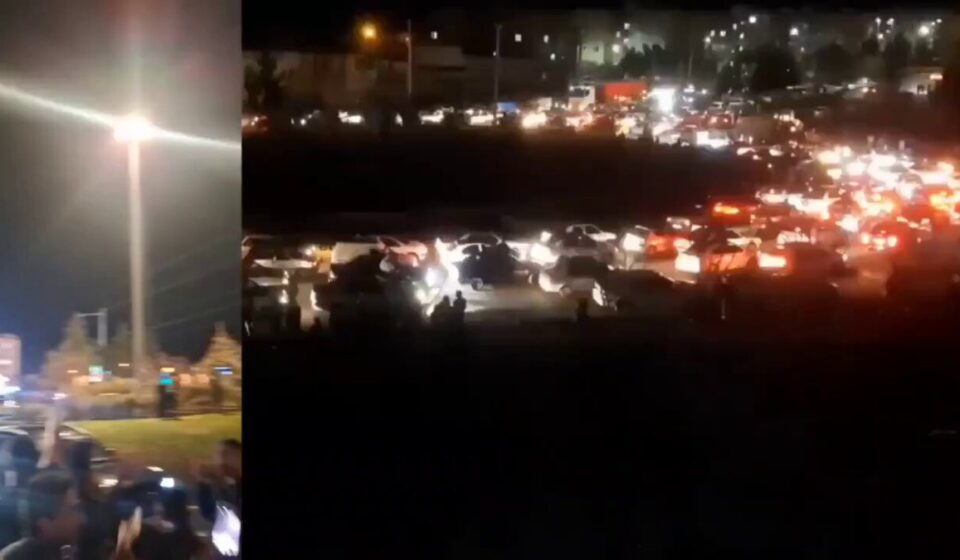
Several high-engagement accounts shared videos allegedly showing widespread celebrations in Iran. Saif alderei (Post Impact: 44%) posted footage of “Huge crowds” flooding the streets, describing the scene as if it were “Liberation Day… while the regime is collapsing under Trump!” Similarly, 0HOUR1 (Post Impact: 23%) posted a clip of “People cheering for the fall of the Iranian regime in Iran!!!” Ian Miles Cheong (Post Impact: 21%) reported that after power strikes in Tehran, thousands of Iranians took to the streets to celebrate what he termed the “downfall of the IRGC.” These posts collectively depict a narrative of internal dissent and joy at the perceived weakening of the Iranian government amid external pressures.
2. Families of Iranian Officials in the US Face Scrutiny
A major topic of discussion was the presence and legal status of relatives of high-ranking Iranian officials in the United States. Mahdi Majeed (Post Impact: 11%) highlighted the “scandal” of Ali Larijani’s daughter, Fatima, whose permanent residency was reportedly canceled after 15 years of studying in the US, questioning how her family afforded over a million dollars in expenses on a small official salary. Other accounts, such as Rusly Al-Maliki (Post Impact: 3%) and Mujtahid Iraq (Post Impact: 4%), reported on the arrest of Qasem Soleimani’s niece and grand-niece by US federal agents. Tech 4 Peace (Post Impact: 4%) clarified that a widely circulated photo was indeed of Hamida Soleimani Afshar, Qasem Soleimani’s niece. The narrative across these posts points to perceived hypocrisy and questions the officials’ anti-American rhetoric while their families reside in the US.
3. Iran Exempts Iraqi Oil from Hormuz Strait Restrictions
Several pages reported that Iran officially exempted Iraq from any restrictions imposed on maritime traffic in the Strait of Hormuz. Hayder (Post Impact: 11%) announced the decision, citing the spokesman for Iran’s Khatam al-Anbiya Central Headquarters, who framed it as a gesture of appreciation for the Iraqi people’s support. This sentiment was echoed by Dr. Hussein Al-Safi (Post Impact: 7%), who thanked “Great Iran” and noted that “only Iraq can export oil now” freely through the strait. Ahmed Al-Thawaq (Post Impact: 5%) argued that the credit for this exemption belongs to the Iraqi people for their donations and support for Iran, rather than any Iraqi government action. Abu Mzeal (Post Impact: 3%) also praised Iran for the decision.
4. Sadrist Movement Holds Rallies Across Iraq
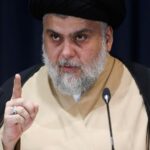
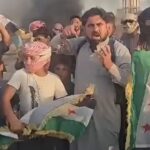
Supporters of Muqtada al-Sadr held large demonstrations in Baghdad and other Iraqi governorates. According to Ali Al-Khalidi (Post Impact: 4%), the turnout was impressive and demonstrated the loyalty and obedience of Sadr’s followers. The rallies carried a message of de-escalation and nationalism. Rusly Al-Maliki (Post Impact: 3%) described Sadr’s message as “positive and nationalist,” noting that the Iraqi flag was predominantly displayed, while flags of Iran and Gulf countries were placed on the main stage to encourage dialogue. In contrast, Amir al-Mousawi (Post Impact: 3%) highlighted that both Iraqi and Iranian flags were present and that the rallies also voiced opposition to the “Zionist-American aggression” against Iraq, Iran, and Palestine.
5. Criticism of Iran’s Regional Role and Egypt’s Stance
High-impact posts voiced strong criticism of Iran’s regional influence and the positions of other Arab nations. Mahdi Majeed (Post Impact: 32%) questioned Egypt’s stance, arguing that by siding with Iran, which attacks Gulf countries, Egypt is alienating its Gulf allies who would be needed in a future conflict. He urged Egypt to stand with its “Gulf brothers,” stating, “Be with them today so they will be with you tomorrow.” Faiq Al-Sheikh Ali (Post Impact: 19%) asked his Gulf followers to imagine who Iran’s arsenal of missiles and drones would have been aimed at in the future if not for the current “blessed divine war” being waged against it by international powers.
6. Reports of Military Strikes on Iran and Iraqi Border
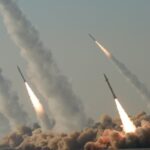
Multiple accounts shared news and videos of military strikes targeting Iranian assets and border areas. Rusly Al-Maliki (Post Impact: 4%) posted a video allegedly documenting the moment of an attack on the B1 bridge in Iran. He also reported on strikes against the Mashour petrochemical complex in Ahvaz (Post Impact: 2%) and on convoys of the Popular Mobilization Forces (PMF) at the Shalamcheh border crossing (Post Impact: 4%). Separately, Ali Farhan (Post Impact: 2%) reported significant damage to the passenger terminal on the Iranian side of the Shalamcheh crossing, leading to a halt in trade and travel.
7. Alleged Militia Attacks on Kuwait from Iraqi Territory
A series of posts reported on alleged missile attacks targeting Kuwait, which were said to have originated from Iraq. Hayder (Post Impact: 3%) reported that the Abdali border crossing in Kuwait was hit by 16 rockets, causing a “complete paralysis” of the facility. The same account also warned residents of Basra to expect loud explosions due to “unknown source” shelling of Kuwait in retaliation for Kuwait allowing its territory to be used for attacks on the Shalamcheh crossing (Post Impact: 3%). Omar Abdul Sattar Mahmoud (Post Impact: 4%) explicitly blamed “Iran’s militias” for the shelling from Basra against Kuwait, warning them that “Basra is our Basra, not yours.”
8. Commemoration of the Feyli Kurd Genocide
Kurdish leaders commemorated the 46th anniversary of the genocide against the Feyli Kurds by the former Ba’athist regime. In his post, Masrour Barzani (Post Impact: 4%) paid tribute to the thousands who were killed, disappeared, or displaced and called on the Iraqi federal government to fulfill its “moral, legal and constitutional responsibility to provide reparations to the victims.” Similarly, Kurdistan Region President Nechirvan Barzani (Post Impact: 2%) described the events as a “racist genocide by the Ba’ath” and reiterated the need for the federal government to compensate the victims and restore their citizenship and property, as per a ruling by the Iraqi High Criminal Court.
9. Hypocrisy of Iranian Regime Highlighted
Beyond reports of arrests, several accounts highlighted what they see as the hypocrisy of Iranian officials and their supporters. Rusly Al-Maliki (Post Impact: 7%) contrasted the case of Mahsa Amini, who was killed because “a strand of her hair showed from her hijab,” with a picture of Hamida, Qasem Soleimani’s niece, appearing unveiled in America without consequences from the “Islamic Revolution” regime. Hiba Alnnayib (Post Impact: 3%) made a similar point, asking why the women of Iranian leaders’ families live unveiled in London and America while Iraqi and Iranian women are pressured to maintain “Zainabi modesty.” Ali Farhan (Post Impact: 2%) called out the “morality police and protectors of honor,” stating their record is full of violations and that how these women appear is a matter of personal freedom.
10. Debate on Raising Gulf Flags at Protests
The decision to raise Gulf state flags at the Sadrist demonstrations sparked debate. While some saw it as a gesture of peace, others were critical. Abu Mzeal (Post Impact: 4%) listed a series of grievances against Saudi Arabia, the UAE, Bahrain, and Kuwait—from the persecution of Shia populations to military actions in Yemen and historical aggression against Iraq—and questioned the logic of raising their flags. Similarly, Hayder (Post Impact: 3%) argued that the flags of Yemen and Lebanon should have been present instead, noting that Yemenis were raising the Iraqi flag in Sana’a while Kuwaiti territory was allegedly being used to attack Iraq. These posts reflect a deep-seated mistrust of some Gulf states among certain Iraqi commentators.