2026-04-05: Conflicting Narratives on US Pilot Rescue in Iran

Based on a Miqrab AI analysis of 130 X / Twitter posts trending in Iraq on April 5, 2026, the primary online conversation revolves around the escalating military conflict between Iran and the United States. Dominant narratives include conflicting reports about the rescue of a downed American pilot inside Iran, with pro-US accounts hailing it as a success and pro-Iran accounts mocking alleged American equipment losses or questioning the story’s validity. This is accompanied by significant discussion about the regional spillover, particularly rising tensions with Kuwait, which is reportedly being targeted by Iran-aligned militias. Other key themes include reports of growing internal unrest and anti-regime protests within Iran, criticism of the perceived hypocrisy of the Iranian regime, and diplomatic maneuvering involving threats and mediation offers from US President Donald Trump.
Table Of Content
- 1. Conflicting Narratives on US Pilot Rescue in Iran
- 2. Anti-Regime Protests Reported Across Iran
- 3. Tensions Escalate with Attacks on Kuwait
- 4. Netanyahu Reportedly Attacked in Israeli Parliament
- 5. Trump’s War Aims and Iran’s Rejection of Mediation
- 6. Accusations of Iranian and “Resistance” Hypocrisy
- 7. Iraqi and Kurdish Leaders Congratulate Christians on Easter
- 8. Pro-Iran Accounts Share Videos of Military Preparedness
- 9. Criticism Directed at Egypt and Gulf Media Outlets
- 10. Reflecting on the 2003 US Invasion of Iraq
Today’s Top 10 X (Twitter) Trends in Iraq:
1. Conflicting Narratives on US Pilot Rescue in Iran
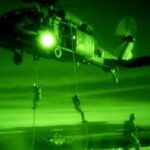
The rescue of a US pilot inside Iran is the most discussed topic, generating conflicting narratives. Accounts like Steven Nabil (Post Impact: 3%) and David Yassin (Post Impact: 4%) describe a successful and complex special forces operation led by the CIA, rescuing the pilot from deep within Iranian territory. Conversely, pro-Iran accounts dispute this version. Dr. Hussein Al-Safi (Post Impact: 8%) mocks the American account, highlighting reports of multiple US aircraft being destroyed or malfunctioning during the mission. Others, like Rusly Al-Maliki (Post Impact: 8%), suggest the entire story might be fabricated to cover for a different, larger operation. Mahdi Majeed (Post Impact: 5%) views the incident as proof of Iran’s weak internal intelligence and control.
2. Anti-Regime Protests Reported Across Iran
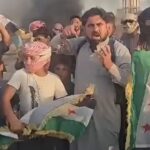
Several posts highlight what is described as a burgeoning popular uprising against the Iranian government. Sheikh Thaer Al-Bayati (Post Impact: 19%) shared a video claiming to show Abdanan as the “first Iranian city to fall into the hands of the free Iranian people.” In a subsequent post, Sheikh Thaer Al-Bayati (Post Impact: 6%) also published footage allegedly showing the flight of “terrorist Basij forces” in the face of popular protests, questioning where Iran’s allies are to support them. These posts frame the events as “good news” and a sign of the regime’s imminent collapse.
3. Tensions Escalate with Attacks on Kuwait
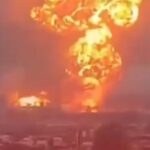
The regional conflict appears to be spreading, with several accounts reporting attacks on Kuwait. The account Haydar (Post Impact: 6%) shared a video purportedly from the “Saraya Awliya al-Dam” faction showing drone strikes targeting Kuwait, Jordan, and Syria. The same account also reported hearing over 30 explosions in Kuwait and warned residents in both Kuwait and Basra of further intense attacks. Liqaa Maki (Post Impact: 7%) characterized the attacks on Kuwaiti civilian targets as a “purely retaliatory act” with no military value, suggesting it could be a prelude to spreading chaos in the country. Ahmed Al-Thawaq (Post Impact: 9%) explicitly called for an “uprising in Kuwait and Bahrain to return rule to the Shiite majority.”
4. Netanyahu Reportedly Attacked in Israeli Parliament
A widely circulated post from Wasan Al-Shaykhli (Post Impact: 100%) features a video claiming to show Israeli Prime Minister Benjamin Netanyahu being physically assaulted by another member inside the Israeli parliament. The post describes Netanyahu as a “criminal” and presents the event as a significant internal political crisis for Israel amidst the regional conflict.
5. Trump’s War Aims and Iran’s Rejection of Mediation
Discussions around the United States’ political objectives are prominent, with conflicting analyses of President Donald Trump’s strategy. Omar Abdul Sattar Mahmoud (Post Impact: 18%) quotes analyst Salman Al-Ansari on Canadian TV, who argues that Trump wants to end the war with Iran quickly due to the upcoming World Cup and congressional elections. In contrast, Najah Mohammed Ali (Post Impact: 12%) claims that Iranian President Masoud Pezeshkian received over 30 calls from Trump-sent intermediaries to stop the war, but Supreme Leader Khamenei rejected the offers.
6. Accusations of Iranian and “Resistance” Hypocrisy
A strong narrative emerges criticizing the perceived hypocrisy of Iran and its allied “resistance” factions. Husam Altaee (Post Impact: 11%) shared a video of former British Foreign Secretary Jack Straw stating that Iran provided Israel with aerial photos of Iraq’s nuclear reactor. Steven Nabil (Post Impact: 10%) argues that Iran is an economically exhausted state that has dragged its people and neighbors into wars under a religious guise for imperial ambitions. Other posts highlight that the children of hardline Iranian officials live freely and study in the West, which they publicly condemn as the “Great Satan.”
7. Iraqi and Kurdish Leaders Congratulate Christians on Easter
Amidst the news of conflict, several Iraqi and Kurdish leaders took to X to share Easter greetings. Prime Minister Mohammed Shia’ Al Sudani (Post Impact: 5%) congratulated Iraqi Christians at home and abroad, reaffirming his government’s commitment to protecting the country’s cultural and civilizational diversity. Similarly, Kurdistan Region President Nechirvan Barzani (Post Impact: 3%) and Prime Minister Masrour Barzani (Post Impact: 4%) also issued statements celebrating the occasion and emphasizing the Kurdistan Region’s history of coexistence.
8. Pro-Iran Accounts Share Videos of Military Preparedness
Accounts aligned with Iran shared videos and statements projecting strength and readiness. Wasan Al-Shaykhli (Post Impact: 11%) posted a video described as the “first appearance” of Ayatollah Mojtaba Khamenei, son of the Supreme Leader, in a war room. Likewise, Najah Mohammed Ali (Post Impact: 6%) also shared a video, which he noted was AI-generated, showing Mojtaba Khamenei in a military control room with a map of Israel’s Dimona nuclear reactor in the background, ending with the words “News is on the way.” These posts serve to bolster morale and signal threats to Iran’s adversaries.
9. Criticism Directed at Egypt and Gulf Media Outlets
The regional conflict has sparked criticism of the roles played by other Arab nations and media. Mahdi Majeed (Post Impact: 16%) questioned why Egyptians, who accuse other Arab countries of betraying Palestine, do not expel the Israeli ambassador and cancel a $35 billion gas import deal with Israel. Meanwhile, Steven Nabil (Post Impact: 16%) lambasted Gulf media channels for hosting pro-Iran guests who parrot regime propaganda, arguing they fail to provide either “professional” or “patriotic” coverage and instead are giving “Iranian coverage.”
10. Reflecting on the 2003 US Invasion of Iraq
The ongoing conflict has led some to draw parallels and reflect on the 2003 US invasion of Iraq. Othman Al-Mukhtar (Post Impact: 15%) shared a clip from an Al Jazeera report filmed days after the fall of Baghdad, highlighting a slogan used at the time: “A thousand Americans and not one Tikriti.” He uses this to criticize the hypocrisy of the “resistance” axis, which he says celebrated the Americans’ arrival 23 years ago but now lectures on fighting the enemy.