2026-04-07: Conflicting Reports on Deadly Airstrike in Basra

Based on an analysis of 898 X / Twitter posts on April 7, 2026, Miqrab AI identified several key narratives dominating online discourse in Iraq. The most prominent theme involved conflicting reports about a deadly airstrike in Basra, which some accounts blamed on a US attack from Kuwaiti territory, while others claimed it targeted a Hezbollah militia leader. This event triggered significant anti-Kuwait sentiment, leading to protests at its consulate. These developments occurred against a backdrop of escalating regional tensions, with widespread discussion about a potential US war with Iran, shifting diplomatic alliances involving Oman and North Korea, and a series of separate security incidents, including rocket and drone attacks within Baghdad.
Table Of Content
- 1. Conflicting Reports on Deadly Airstrike in Basra
- 2. Oman’s Hormuz Agreement with Iran Seen as Blow to US
- 3. Growing Tensions and Anti-Iran Rhetoric Amid War Fears
- 4. North Korea Reportedly Refuses to Support Iran
- 5. Baghdad Rocked by Rocket and Drone Attacks
- 6. Protesters Attack Kuwaiti Consulate in Basra
- 7. Kata’ib Hezbollah Releases Kidnapped US Journalist
- 8. Iraqi Politicians Condemn Attacks by Militias
- 9. Drone Attack Kills Peshmerga and Family in Erbil
- 10. Journalist Addresses Kuwait Amid Basra Tensions
Today’s Top 10 X (Twitter) Trends in Iraq:
1. Conflicting Reports on Deadly Airstrike in Basra
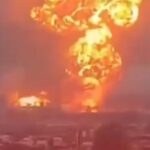
A deadly airstrike in Basra sparked polarizing narratives on Iraqi social media. Pro-militia accounts, such as Hydir (Post Impact: 50%), claimed Kuwait had committed a “massacre” by allowing a US missile attack launched from its territory to strike a civilian home, killing an entire family. This narrative was supported by Ahmed Al-Thawaq (Post Impact: 24%) who shared scenes of the “American-Kuwaiti aggression” and called for revenge. Conversely, other users offered a starkly different account. Ahmed Al-Alwani (Post Impact: 30%) provided “confirmed information” that the strike hit a farm belonging to Kata’ib Hezbollah leader Bahaa Raad Al-Dirai’i, destroying a radar and a missile launchpad aimed at Kuwait, and killing at least three people in a meeting. This viewpoint, echoed by accounts like Noor – Um Omar (Post Impact: 8%), asserted that no family home was hit and dismissed civilian casualty claims as “loyalist propaganda.”
2. Oman’s Hormuz Agreement with Iran Seen as Blow to US
A significant diplomatic development was Oman’s agreement with Iran over the Strait of Hormuz, which was widely interpreted as a setback for US policy in the region. According to Ali Fadlallah (Post Impact: 76%), Oman became the first country to formally recognize Iranian sovereignty over the strategic waterway, a move he described as a “major blow to Trump” and a defiance of international law. The strategic importance of the strait was highlighted by Dr. Hussein Al-Safi (Post Impact: 31%), who noted that its revenues alone could make Iran a rich nation. However, Liqaa Maki (Post Impact: 22%) presented a counter-perspective, suggesting that Iran’s control over the strait was a “big trap” that shifted its international image from victim to aggressor, providing the US with a pretext for military action.
3. Growing Tensions and Anti-Iran Rhetoric Amid War Fears
The possibility of a direct military conflict between the US and Iran was a major topic, generating strong and polarized opinions. Staunchly anti-Iran sentiment was voiced by figures like Faiq Al-Sheikh Ali (Post Impact: 47%), who declared, “Iran will burn. The Iranian regime will fall,” and urged supporters of the Tishreen protest movement to prepare to assume power. On the other side, pro-Iran voices issued stark warnings. Ahmed Abdul Sada (Post Impact: 13%) cautioned that if Trump attacks Iran’s infrastructure, Iran would retaliate by sending Gulf states back to the “desert era” for their complicity. Dr. Hussein Al-Safi (Post Impact: 31%) argued that a US strike would ultimately backfire, strengthening Iran’s regional position and forcing an American withdrawal. Even some critics of the Iranian government, such as Rusly Al-Maliki (Post Impact: 17%), expressed disgust with Trump’s rhetoric about destroying an entire civilization.
4. North Korea Reportedly Refuses to Support Iran
A high-impact post indicated a significant diplomatic shift, with North Korea distancing itself from Iran. According to Sufian Al-Samarrai (Post Impact: 100%), the leader of North Korea has declared that “supporting Iran is not a good idea at all” and expressed his country’s intent to maintain its relationship with the United States. Al-Samarrai interpreted this as a major betrayal, commenting that Iran’s allies “sold them for the cheapest price.” This single-source report suggests a potential collapse in support for Iran from one of its few international allies at a time of heightened regional crisis.
5. Baghdad Rocked by Rocket and Drone Attacks
Baghdad experienced a series of security incidents, which several accounts attributed to pro-Iranian militias. Steven Nabil (Post Impact: 28%) reported that Grad rockets fired by “Iraqi terrorist groups working for Iran” targeted Baghdad airport, with one missile hitting a civilian home in the Al-Amiriyyah district and causing casualties. This was corroborated by Ali Farhan (Post Impact: 20%), who also blamed an “Iranian drone” for the attack. Broadening the accusation, Sufian Al-Samarrai (Post Impact: 23%) claimed that Shia militias were in a state of “hysteria,” launching drone attacks on Sunni areas in what he called a “despicable sectarian war.” The targeting of civilians was condemned by Wikileaks Iraq (Post Impact: 12%), which warned the perpetrators, “your reckoning is coming.”
6. Protesters Attack Kuwaiti Consulate in Basra
In a direct fallout from the contested airstrike in Basra, angry demonstrators converged on the Kuwaiti consulate, eventually storming the building. Videos shared by Hydir (Post Impact: 19%) and Rusly Al-Maliki (Post Impact: 7%) showed protesters tearing down the Kuwaiti flag from the building. The demonstration escalated, with Hydir (Post Impact: 7%) later reporting that protesters had breached the consulate itself. During the unrest, a journalist from Al-Taghier television channel was assaulted by protesters while covering the events, an incident reported by Ali Farhan (Post Impact: 11%) and condemned by Ahmed Al-Adhami (Post Impact: 7%).
7. Kata’ib Hezbollah Releases Kidnapped US Journalist
The Iran-backed militia Kata’ib Hezbollah announced it was releasing Shelly Kittleson, an American journalist it had abducted in Baghdad. According to Hydir (Post Impact: 7%), the group stated the release was made out of “appreciation for” Prime Minister Mohammed Shia’ Al Sudani. Following her release, the group circulated a recorded statement, shared by users like Ahmed Abdul Sada (Post Impact: 7%) and Rusly Al-Maliki (Post Impact: 8%), in which Kittleson purportedly confessed to receiving intelligence training from US officers and being directed by the US Embassy in Baghdad to gather information on Hashd al-Sha’abi factions, particularly Kata’ib Hezbollah.
8. Iraqi Politicians Condemn Attacks by Militias
Amid the escalating security incidents, several Iraqi politicians spoke out against the actions of armed militias. Former Parliament Speaker Mohammed Al-Halbousi (Post Impact: 27%) issued a strong condemnation of the attacks on diplomatic missions, attributing them to “outlaw groups” and “unruly factions” that undermine state authority and harm Iraq’s international relations. He urged political leaders to support the government in taking decisive legal action against these groups. In a similar vein, Najeh Abbas Al-Mizan (Post Impact: 12%) called directly on the international community to “Cut your relations with the government of the Popular Mobilization Forces belonging to Iran.”
9. Drone Attack Kills Peshmerga and Family in Erbil
Leaders in the Kurdistan Region of Iraq expressed outrage over a drone attack in Erbil that killed a Peshmerga soldier and his wife. KRG Prime Minister Masrour Barzani (Post Impact: 10%) labeled the incident a “heinous crime” and emphasized that “The targeting of civilians and civilian homes is a war crime.” Kurdistan Region President Nechirvan Barzani (Post Impact: 8%) also condemned the attack and called upon the Iraqi federal government to fulfill its duty to prevent such acts of aggression against civilians in the region. Shaho Al-Qaradaghi (Post Impact: 8%) shared a poignant video of the orphaned children, describing them as “victims of terrorism and darkness.”
10. Journalist Addresses Kuwait Amid Basra Tensions
In an effort to quell rising tensions, journalist Anwar Al-Hamdani directly addressed the people and government of Kuwait. In a series of posts, Anwar Al-Hamdani (Post Impact: 21%) communicated with Kuwaiti academic Dr. Ayed Al-Manna to send messages of reassurance. He later posted a detailed rebuttal to accusations of Kuwait’s involvement in the Basra strike, stating there was no evidence and that protesting at the Kuwaiti consulate instead of the American embassy was illogical. As posted by Anwar Al-Hamdani (Post Impact: 9%), he asked, “What is wrong with you, how do you judge? Fear God, don’t ruin it completely.” He also expressed respect for Kuwait’s Minister of Interior in a post with Anwar Al-Hamdani (Post Impact: 12%).