2026-04-14: Sadrists Commemorate Martyrdom of Mohammed Sadiq al-Sadr

Based on an analysis of 537 X / Twitter posts trending on April 14, 2026, Miqrab AI found that conversations in Iraq were dominated by a mix of domestic religious commemorations, regional geopolitical tensions, and local political discontent. The most prominent narrative was led by Sadrist movement leader Muqtada al-Sadr, who marked a significant religious martyrdom. Simultaneously, there was extensive discussion surrounding Iraq’s strained relationship with Bahrain, the ongoing conflict in Lebanon involving Iraqi aid and political visits, and the 38th anniversary of the Anfal genocide against the Kurds. Other key topics included warnings from political figure Faig al-Sheikh Ali about a security crackdown on his supporters, analysis of the escalating US-Iran standoff, and reports on a US bounty placed on a leader of an Iraqi militia.
Table Of Content
- 1. Sadrists Commemorate Martyrdom of Mohammed Sadiq al-Sadr
- 2. Iraqi-Bahraini Tensions Flare Over Media Exchange
- 3. Faig al-Sheikh Ali Alleges Security Crackdown on Supporters
- 4. Commentary on the US-Iran Geopolitical Standoff
- 5. Kuwait Revokes Citizenship of Influencer Badr Khalf
- 6. Leaders Commemorate 38th Anniversary of Anfal Genocide
- 7. Conflict in Lebanon and Iraqi Involvement
- 8. Grand Ayatollah Sistani’s Office Provides Aid to Lebanon
- 9. US Offers $10M Reward for Kata’ib Hezbollah Leader
- 10. Russia and China Questioned as Reliable Allies
Today’s Top 10 X (Twitter) Trends in Iraq:
1. Sadrists Commemorate Martyrdom of Mohammed Sadiq al-Sadr
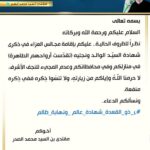
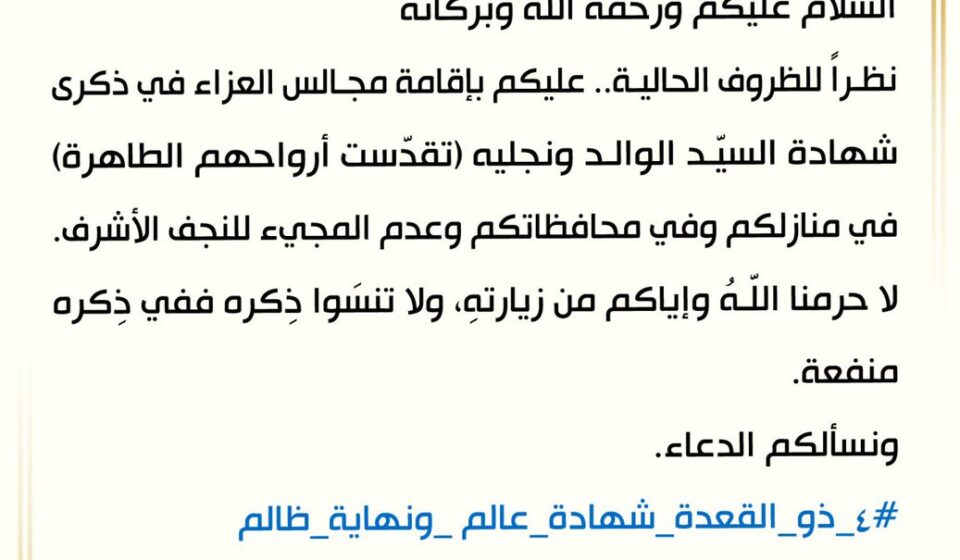
The most impactful story was driven by Sadrist leader Muqtada al-Sadr (Post Impact: 100%), who posted a graphic with the hashtag “#٤_ذو_القعدة_شهادة_عالم_ونهاية_ظالم,” which translates to “#4th_of_Dhu_al-Qi’dah_martyrdom_of_a_scholar_and_end_of_a_tyrant.” This commemorates the anniversary of the death of his father, Grand Ayatollah Mohammed Sadiq al-Sadr. Supporting this theme, journalist Najah Mohammed Ali (Post Impact: 27%) shared a video of the late cleric, stating, “The martyred Sayyid, the most sacred, explains what is happening in detail as if he were living with us,” and urged his followers to share the video widely. The posts reflect a significant mobilization of Sadrist followers online to remember the prominent religious figure and his legacy.
2. Iraqi-Bahraini Tensions Flare Over Media Exchange
Tensions between Iraqi and Bahraini figures became a major topic after an exchange on social media and television. Iraqi TV host Anwar al-Hamdani (Post Impact: 40%) posted a video message directed at Bahraini writer Jaffar Salman and the people of Bahrain, using the hashtag “#Bahrain_is_a_red_line.” This followed a heated television debate where an Iraqi analyst was accused of insulting Bahrain. The controversy was also highlighted by Mahdi Majeed (Post Impact: 7%), who blamed pro-Iran militias in Iraq for instigating conflicts with Gulf countries to serve Iranian interests. Analyst Hiba Alnnayib (Post Impact: 4%) criticized a pro-militia channel for hosting guests who insult Bahrain, which she says led to Bahrainis describing Iraq as a “banana republic.”
3. Faig al-Sheikh Ali Alleges Security Crackdown on Supporters
Iraqi politician Faig al-Sheikh Ali (Post Impact: 24%) made several posts alleging a security campaign against his supporters. He claimed that an individual praising him online was actually an Iraqi intelligence officer tasked with identifying his backers. In a follow-up post, Faig al-Sheikh Ali (Post Impact: 19%) stated that more than ninety young people have been detained by National Security in various provinces as part of this effort, not just one person in Najaf. He criticized his followers for being driven by emotions and not understanding the full story, asserting “#The_Tishreen_Revolution_Will_Triumph.” Another account, Mulla Aboud Al-Karkhi (Post Impact: 4%), advised supporters to remove the politician’s pictures from their profiles to avoid being targeted by “infiltrators.”
4. Commentary on the US-Iran Geopolitical Standoff
The ongoing tensions between the United States and Iran generated significant commentary. Dr. Hussein al-Safi (Post Impact: 22%), citing the New York Times, argued that America is in decline, pointing to its allies’ refusal to participate in its actions, its loss of moral legitimacy, and its military’s vulnerability to low-cost warfare. In contrast, Dr. Ali Al-Jabiri (Post Impact: 13%) suggested that the Iranian narrative of “victory” is collapsing since negotiations in Pakistan stalled, and that the coming days will reveal concessions Iran can no longer hide. Meanwhile, Rusly Al-Maliki (Post Impact: 18%) reported that Russia has agreed to receive the uranium stockpile that will be removed from Iran, adding another layer to the international dimensions of the conflict.
5. Kuwait Revokes Citizenship of Influencer Badr Khalf
A widely discussed story concerned Kuwait’s decision to revoke the citizenship of Badr Khalf, a well-known Gulf social media personality. The account Haydar (Post Impact: 66%) reported on the news with a video, sarcastically noting that “sadness descends upon the great Gulf artist Badr Khalf after Kuwaiti authorities withdrew his citizenship.” The high engagement on this single post indicates significant interest in the event among the Iraqi audience, highlighting the cross-border attention given to cultural and social issues within the Gulf region.
6. Leaders Commemorate 38th Anniversary of Anfal Genocide
Iraqi and Kurdish political leaders marked the 38th anniversary of the Anfal genocide campaign against the Kurdish people. Masrour Barzani (Post Impact: 14%), Prime Minister of the Kurdistan Region, described Anfal as one of the “most brutal ethnic cleansing and genocide operations” and reaffirmed that the Iraqi government has a “moral and constitutional responsibility” to provide reparations to the victims’ families. Iraqi Prime Minister Mohamed Shia’ Al Sudani (Post Impact: 5%) also issued a statement, remembering the “heinous crimes” of the former regime and celebrating the country’s current unity. Former Iraqi President Barham Salih and KRG President Nechirvan Barzani also posted messages of remembrance.
7. Conflict in Lebanon and Iraqi Involvement
The escalating conflict in Southern Lebanon was another central topic, with a focus on Iraqi solidarity and involvement. Former Iraqi President Barham Salih (Post Impact: 16%) announced his arrival in Beirut “in solidarity” and to “urgently push for protection of civilians.” The account Haydar (Post Impact: 15%) posted photos of banners in Beirut thanking Iraq for its assistance. The same account also reported on the death of an 80-year-old member of the Amal Movement in battles alongside Hezbollah in Bint Jbeil. These posts highlight the close monitoring of the Lebanese situation and pride in Iraq’s supportive role.
8. Grand Ayatollah Sistani’s Office Provides Aid to Lebanon
News that the office of Grand Ayatollah Ali al-Sistani is providing financial assistance to displaced families in southern Lebanon was shared widely. Haydar (Post Impact: 14%) reported that the religious authority directed support of $200 for families of four or fewer and $300 for larger families, expected to cover around 70,000 families. The news was also commented on by Hiba Alnnayib (Post Impact: 6%), who contrasted this aid with the suffering of Sistani’s followers in Iraq, who she said face shortages of gas and electricity while his office does not address their needs.
9. US Offers $10M Reward for Kata’ib Hezbollah Leader
The US government’s announcement of a $10 million reward for information on Abu Hussein al-Hamidawi, the leader of the Kata’ib Hezbollah militia, drew reactions from various accounts. Ahmad Abdulsada (Post Impact: 7%) described the reward as a “great honor” for al-Hamidawi, stating that the US is “begging for help” after being hurt by his rockets and drones. Other news-focused accounts like Haydar (Post Impact: 4%) and Rafid Jaboori (Post Impact: 3%) also reported the news from the US State Department’s “Rewards for Justice” program, noting the group’s strength and ties to Iran.
10. Russia and China Questioned as Reliable Allies
The reliability of Russia and China as international partners was questioned, particularly in the context of Iran. Ahmed akhu Mza’al Basra-Iraq (Post Impact: 24%) argued that Russia and China cannot be depended on in international alliances, citing Dr. Hassan Ahmadian’s explanation for why Russia did not supply Iran with Su-35 aircraft. Separately, Dr. Hussein al-Safi (Post Impact: 6%) reported on a Chinese ship carrying two million barrels of oil crossing the Strait of Hormuz, describing it as a challenge to the US blockade and putting America in a difficult position where it can neither stop the ship nor officially allow its passage.