2026-04-17: Iran Reopens Strait of Hormuz Amid Divided Opinions

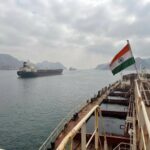
Based on 618 X / Twitter posts analyzed on April 17, 2026, Miqrab AI’s analysis reveals that online conversations in Iraq are dominated by Iran’s decision to reopen the Strait of Hormuz, which has sparked a deeply divided narrative. One side portrays it as a humiliating surrender to American pressure, while the other hails it as a strategic victory demonstrating Iranian sovereignty. Other significant topics include the defiant public appearance of Kata’ib Hezbollah’s leader, Abu Hussein al-Hamidawi, in Karbala despite a US bounty; criticism of Iran’s regional influence and alleged espionage; new US sanctions against Iraqi militia leaders; and domestic political commentary, including harsh critiques of the Iraqi Prime Minister and commemorations of the anniversary of the liberation of Faw.
Table Of Content
- 1. Iran Reopens Strait of Hormuz Amid Divided Opinions
- 2. Calls to Counter Iran’s Regional Influence
- 3. Kata’ib Hezbollah Leader Appears Publicly in Karbala
- 4. Hezbollah’s “Historic Victory” Over Israel
- 5. Criticism of Iraqi Prime Minister’s Leadership
- 6. US Imposes New Sanctions on Iraqi Militia Leaders
- 7. Allegations of Iranian Misinformation and Defeat
- 8. Anniversary of the Liberation of Faw Divides Opinion
- 9. Kurdish Leaders Engage in Regional Diplomacy
- 10. Reports of Unrest and Protests in Damascus
Today’s Top 10 X (Twitter) Trends in Iraq:
1. Iran Reopens Strait of Hormuz Amid Divided Opinions
Iran’s announcement that it has reopened the Strait of Hormuz to international navigation is the most discussed topic, with Iraqi commentators offering starkly contrasting interpretations. Critics frame the decision as a capitulation to US pressure. Liqaa Maki (Post Impact: 56%) argues that a naval blockade was necessary to make Tehran retreat from its “aggressive decision.” Similarly, Najeh Abbas Al-Mizan (Post Impact: 29%) calls it a “disgraceful surrender,” questioning why it took a US blockade for this to happen. Conversely, pro-Iran accounts view it as a demonstration of strength. Dr. Hussein Al-Safi (Post Impact: 36%) states, “Iran is the one that closed the Strait of Hormuz, and Iran is the one that opened the Strait of Hormuz… Power to the powerful, may God not bless the weak.” This sentiment is echoed by Wesam Aziz (Post Impact: 8%), who declares the strait was opened “by order of the guardian, Khamenei.” Adding to the complexity, Haidar (Post Impact: 20%) reports that Donald Trump thanked Iran for the move.
2. Calls to Counter Iran’s Regional Influence
Several high-engagement posts focus on confronting Iran’s influence and actions in the region. Faiq Al-Sheikh Ali/Kalimati Lil Tarikh (Post Impact: 45%) urges Gulf Arab rulers and Jordan to take “the killer option for Iran and its regime” by collectively filing a request at the United Nations for war reparations and pursuing legal action against Iran and its Revolutionary Guard Corps. In a related post, Dr. Ali Al-Jabiri (Post Impact: 39%) highlights what he calls the “first official Iranian admission of planting spy cells in the Gulf countries.” He reports that during a confrontation, Bahrain’s representative accused Iran of subversive activities, and when mentioning the arrest of Iranian spy cells in several Gulf nations, the Iranian delegate allegedly responded, “Against traitors, against America, against Israel,” which Al-Jabiri interprets as a confession. Other accounts, like David Yassin (Post Impact: 24%), claim Iran has agreed to give up its “followers” in the region and its enriched uranium stockpile as part of a surrender.
3. Kata’ib Hezbollah Leader Appears Publicly in Karbala
The Secretary-General of Kata’ib Hezbollah in Iraq, Abu Hussein al-Hamidawi, made a rare public appearance, participating in what supporters called a “victory march” in Karbala. This event was widely covered by pro-militia accounts, which framed it as an act of defiance against the United States. Haidar (Post Impact: 30%) and Sabereen news (Post Impact: 15%) both shared videos of Hamidawi at the event. Ahmad Abdulsada (Post Impact: 12%) analyzed the appearance as sending four messages, including a “defiant message to the American enemy” which has offered a $10 million reward for information about him, and a message of absolute loyalty to the “guardianship of the jurist” (Wilayat al-Faqih) led by Iran. Emad Al Musafir (Post Impact: 8%) described the scene as summarizing “the meaning of steadfastness and courage.”
4. Hezbollah’s “Historic Victory” Over Israel
A post with exceptionally high engagement celebrates a victory for Hezbollah against Israel. Wesam Aziz (Post Impact: 100%) claims that “Hezbollah in the era of Sheikh Naim shattered Israel in a historic battle unlike any other in the party’s history” over a period of 50 days. The post includes an image of Hezbollah fighters and presents this alleged victory as a monumental achievement for the Lebanese group. This narrative portrays Hezbollah as a formidable military force capable of decisively defeating its primary adversary, Israel.
5. Criticism of Iraqi Prime Minister’s Leadership
Iraqi Prime Minister Mohammed Shia’ Al Sudani is facing sharp criticism from some commentators. Ali Fadhil (Post Impact: 28%) posted a scathing message directly addressing the Prime Minister, stating, “Leave, with no regrets, you worst of prime ministers. Your movie is over, and you won’t get a second term.” This sentiment of failed leadership is echoed by Iyad Al-Anbar (Post Impact: 7%), who analyzed an article by Al Sudani in Newsweek magazine. Al-Anbar claims the article expresses a “political schizophrenia,” pointing to the contradiction between the Prime Minister’s claims of government control over war and peace and the reality of US statements of distrust and Gulf states’ protests over attacks launched from Iraqi soil.
6. US Imposes New Sanctions on Iraqi Militia Leaders
The United States has imposed new sanctions on leaders of Iraqi militias, a development reported by several accounts. Rusly Al-Maliki (Post Impact: 22%) provided a detailed list of eight sanctioned individuals, including members of Asa’ib Ahl al-Haq, Kata’ib Hezbollah, Harakat Hezbollah al-Nujaba, and Kata’ib Sayyid al-Shuhada. This was corroborated by Ali Farhan ali farhan (Post Impact: 7%), who quoted the US Treasury Secretary as saying, “We will not allow Iraqi militias backed by Iran to threaten American lives and interests.” Rafid Jaboori (Post Impact: 7%) noted that the sanctions are a reminder that the issue of Iraq will remain open even after the end of the Iran conflict and that they renew the call for the Iraqi government to dismantle the militias, something he believes the government cannot achieve.
7. Allegations of Iranian Misinformation and Defeat
Accounts critical of the Iranian government are circulating claims of misinformation and military defeat. Sufian Al-Samarrai (Post Impact: 22%) alleges that after the killing of Ibrahim Zolfaghari in an Israeli raid near Tehran, the Iranian regime is displaying old photos of him as new, claiming that recent videos were fabricated with AI. He asserts that the regime “drowns in one lie to cover it up in a deeper swamp of other lies.” In a separate post, he outlines the terms of what he calls Iran’s defeat, claiming Tehran agreed to hand over all its uranium and abandon its nuclear project in exchange for unfreezing only a portion of its assets. Mustafa Al-Dulaimi (Post Impact: 19%) mocked pro-Iran supporters in Iraq, listing Iran’s alleged losses and sarcastically concluding, “and they scream we have won.”
8. Anniversary of the Liberation of Faw Divides Opinion
The anniversary of the liberation of Faw on April 17, 1988, during the Iran-Iraq War, has prompted divided reactions online. Some commentators commemorate the day as a moment of national pride and military achievement. Raghad Saddam Hussein (Post Impact: 12%) posted that the Iraqi Army achieved a “great victory” and that the “homeland is protected by the heroism of its men.” Aayad Al Twfan (Post Impact: 14%) shared a clip from an interview, describing the event as an “epic of pride that will not be forgotten.” In contrast, others condemn the celebration. Dr. Ahmed Al-Abbasi (Post Impact: 8%) attacked those celebrating, stating, “Saddam turned the youth and elders of Iraq into a furnace in a war he started.”
9. Kurdish Leaders Engage in Regional Diplomacy
Leaders of the Kurdistan Region of Iraq have been active on the diplomatic front. Masrour Barzani (Post Impact: 16%), Prime Minister of the KRG, reported a conversation with US Secretary Doug Burgum about the region’s energy outlook, the role of US companies, and the need for more protection from attacks. In a separate meeting, Kurdistan Region President Nechirvan Barzani (Post Impact: 15%) met with Syrian President Ahmed Al-Sharaa in Antalya, commending his efforts to stabilize Syria and discussing stronger ties between Iraq, the Kurdistan Region, and Syria. The President also met with US Ambassador Tom Barrack to discuss relations and regional developments.
10. Reports of Unrest and Protests in Damascus
Several posts highlight growing popular unrest in the Syrian capital, Damascus. Sharing video clips of apparent protests, Haidar (Post Impact: 15%) reports “chaos” and “clashes between regime loyalists and demonstrators demanding an improvement in the living situation.” The account attributes the protests to a severe economic downturn that has made securing basic necessities, including bread, extremely difficult for the population. Another post from the same account describes a “popular revolution in Damascus and escalating popular tension” as a major challenge for the Syrian people.