2026-04-19: Narendra Modi’s Campaign Rallies in West Bengal

Based on an analysis of (532) X / Twitter posts trending in Iraq on April 19, 2026, Miqrab AI identified several key narratives. The most engaged-with content originated from Indian Prime Minister Narendra Modi’s account, detailing his political campaigning in West Bengal, an unusual trend for the Iraqi sphere. More regionally relevant discussions centered on perceived double standards regarding Arab nations’ alliances, particularly the criticism Iraq and Lebanon face for aligning with Iran. Domestically, a major topic of debate was a proposed mandatory military conscription law, which drew both strong support and opposition. Other prominent themes included anger over alleged foreign interference by both the US and Iran in the formation of Iraq’s government, reports of an Israeli soldier desecrating a Christian statue in Lebanon, and growing concern over escalating military tensions between the United States and Iran.
Table Of Content
- 1. Narendra Modi’s Campaign Rallies in West Bengal
- 2. Perceived Double Standards on Regional Alliances
- 3. Debate Over Mandatory Military Service Law in Iraq
- 4. Israeli Soldier Filmed Desecrating Jesus Statue in Lebanon
- 5. Foreign Interference in Iraqi Government Formation
- 6. Rising US-Iran Tensions and Military Posturing
- 7. Bahrain Reportedly Revoking Citizenship from Iran Sympathizers
- 8. Analyst Liqaa Maki on “Permanent” vs. “Temporary” Enemies
- 9. Criticism Directed at Politician Haibat al-Halbousi
- 10. Houthi Presence and Threats from within Iraq Alleged
Today’s Top 10 X (Twitter) Trends in Iraq:
1. Narendra Modi’s Campaign Rallies in West Bengal
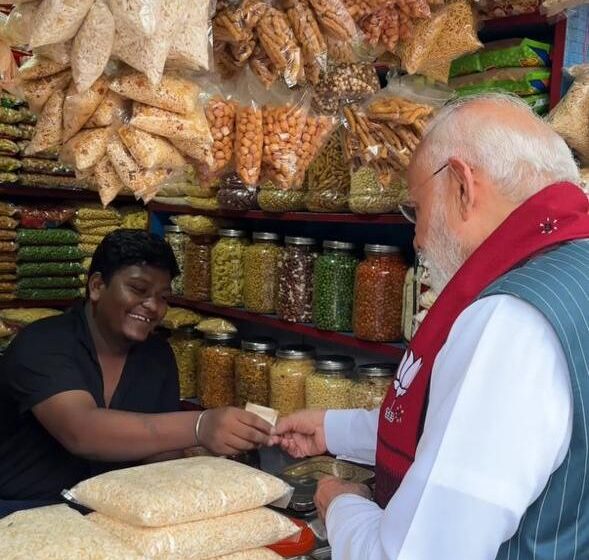
Indian Prime Minister Narendra Modi’s X account dominated engagement with a series of posts about his campaign activities in the Indian state of West Bengal. The posts from Narendra Modi (Post Impact: 100%), also posted in Bengali, showcased what he described as overwhelming public enthusiasm during a “scorching Sunday afternoon” in Purulia and a “Jhalmuri break” in Jhargram. Through photos and videos of large crowds, Modi’s account conveyed a message of strong support, stating that spontaneous roadshows and packed rallies made it “extremely clear which way the political wind is blowing in West Bengal!” The high engagement of these posts made them the most visible topic in this dataset.
2. Perceived Double Standards on Regional Alliances
A prominent narrative emerged from several accounts questioning why alliances sought by Iraq or Lebanon with Iran are heavily criticized, while other Arab nations’ strategic partnerships are accepted. Hussein Abu Alimah (Post Impact: 3%) asks, “Why is everyone allowed to create their alliances, while Iraq alone is meant to remain without a backbone?” He points out that Saudi Arabia chose Pakistan, Qatar chose Turkey, and the UAE allied with Israel. Similarly, Dr. Hussein Al-Safi (Post Impact: 4%) highlights this “strange paradox,” suggesting the world turned upside down when Lebanon allied with Iran. He concludes that “the Arabs are afraid of any Shiite alliance because they know very well that the Shiites do not know the impossible.”
3. Debate Over Mandatory Military Service Law in Iraq
The Iraqi Parliament’s first reading of a mandatory conscription law, or “service of the flag” law, sparked widespread debate. Opponents, including Hayder (Post Impact: 0%) and Abbas Al-Ardawi (Post Impact: 0%), questioned the need for such a law in a country with nearly two million security personnel, arguing it could be a tool to “milk the people” through exemption fees and would not apply to the children of political elites. In contrast, politician Haibat al-Halbousi, cited by Yasser Eljuboori (Post Impact: 0%), defended the law as a means to foster national belonging. Following political pushback, Hiba Alnnayib (Post Impact: 0%) reported that al-Halbousi clarified the service would be “optional, not compulsory.”
4. Israeli Soldier Filmed Desecrating Jesus Statue in Lebanon
A post with very high engagement from Younis Tirawi | يونس (Post Impact: 99%) shared a video allegedly showing an Israeli soldier in southern Lebanon smashing the head of a statue of Jesus Christ. The post, simply captioned “Lebanon | An Israeli soldier smashing the head of a Jesus Christ statue during operations in southern Lebanon,” drew significant attention to the act of religious desecration during military activities in the region.
5. Foreign Interference in Iraqi Government Formation
Multiple users expressed frustration over the perceived roles of Iranian and American officials in Baghdad during the critical period of government formation. Faiq Al-Sheikh Ali/My Word for History (Post Impact: 1%) called the presence of Iran’s Esmail Ghaani and the US’s Tom Barak a “silly game that will not change Iraq’s situation at all.” This sentiment was echoed by Dr. Hussein Al-Safi (Post Impact: 0%), who lamented that America is still trying to impose its will on the choice of prime minister. Mohamed Jabbar (Post Impact: 0%) noted the irony that the same political forces influenced by foreign envoys might later accuse Iraqis of being “embassy agents.”
6. Rising US-Iran Tensions and Military Posturing
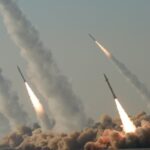
Discussions about a potential conflict between the United States and Iran were frequent, fueled by reports of military movements. Mahdi Majeed (Post Impact: 1%) and Rafid Jaboori (Post Impact: 0%) both noted the return of the USS Gerald R. Ford, the world’s largest aircraft carrier, to the Middle East. Meanwhile, Najah Muhammad Ali (Post Impact: 0%), citing a report from Axios, detailed Iran’s suspicions that US President Trump’s offer to send negotiators to Pakistan is a “trap” and a potential cover for a surprise military attack. Sufian Samarrai (Post Impact: 1%) interpreted a video shared by Trump as a message to the Iranian people that “a major change is coming.”
7. Bahrain Reportedly Revoking Citizenship from Iran Sympathizers
Two accounts reported on a directive issued by the King of Bahrain regarding citizens who sympathize with Iran. Hayder (Post Impact: 1%) posted that the “head of the criminal Al Khalifa regime” in Bahrain directed the withdrawal of Bahraini citizenship from the country’s Shiites. A similar post by Wasan Al-Shaykhli (Post Impact: 0%) stated that the Bahraini monarch ordered the revocation of citizenship from “anyone who sympathizes with the Islamic Republic of Iran.”
8. Analyst Liqaa Maki on “Permanent” vs. “Temporary” Enemies
In a widely circulated statement, analyst Liqaa Maki (Post Impact: 1%) outlined his position on regional conflicts, differentiating between what he considers permanent and temporary adversaries. He labeled Israel a “permanent enemy” due to its occupation of Palestine, while classifying Iran as a “temporary enemy” whose hostility is linked to its “aggressive behavior” and expansionist project in Syria and Iraq. Maki asserted that while he condemns the US-Israeli attack on Iran as illegal, he also condemns Iran’s simultaneous aggression against Arab states. He argued that supporting the Palestinian cause does not absolve the Iranian regime of its “countless crimes against our peoples.”
9. Criticism Directed at Politician Haibat al-Halbousi
Iraqi politician Haibat al-Halbousi was the subject of online criticism. The account Wikileaks Iraq (Post Impact: 1%) strongly condemned a statement attributed to al-Halbousi about wanting to “make our boys men.” The post called this an insult to Iraqi youth and advised al-Halbousi to “start by freeing yourself from the dependency that manages you” instead of “preaching from a position of privilege.” Yasser Eljuboori (Post Impact: 0%) shared a video of al-Halbousi defending the controversial mandatory conscription law.
10. Houthi Presence and Threats from within Iraq Alleged
Journalist Othman Al-Mokhtar (Post Impact: 1%) shared a video from a Houthi-affiliated platform showing the group’s leaders in Iraq. The video reportedly features a poet reciting insults and threats against Gulf Arab countries. Al-Mokhtar noted that this occurred in the presence of two Iraqi members of parliament, leading him to accuse the Iraqi government of “harboring an internationally designated terrorist group” and providing it with financial support under the umbrella of the “Popular Mobilization Forces.”