2026-04-21: Faction Leaders Post Videos Amid Tensions

Based on an analysis of (630) X / Twitter posts trending in Iraq on April 21, 2026, Miqrab AI identified several dominant narratives shaping the online conversation. The primary theme is the escalating regional tension involving Iran, the United States, and Gulf nations, with many posts highlighting Iraq’s precarious position as a potential battleground. This includes reports of drone attacks launched from Iraq and the possibility of retaliatory strikes by Gulf countries. Domestically, there is significant discourse around the political paralysis in forming a new government, coupled with stark warnings about the country’s future. Security failures are also a key topic, demonstrated by widespread outrage over the attempted assassination of an activist, which is blamed on unchecked militias. Additionally, social media users engaged in political satire, particularly mocking a parliamentarian’s linguistic error, while distinct pro- and anti-Iran narratives were evident through posts praising Iran’s Supreme Leader and others reporting on internal conflict within the Iranian regime.
Table Of Content
- 1. Faction Leaders Post Videos Amid Tensions
- 2. Fears of Gulf Airstrikes on Iraqi Soil
- 3. Rain Conspiracy Links Iran, UAE, and Israel
- 4. Warnings of Iraq’s “Dark” Political Future
- 5. Outrage Over Activist Assassination Attempt
- 6. MP Mocked for Misinterpreting Arabic Word
- 7. Pro-Iran Accounts Praise Supreme Leader
- 8. Reports of Internal Conflict in Iran’s Regime
- 9. Leaders Mourn Passing of Sayyid Hussein al-Sadr
- 10. Iran Accused of Threatening Gulf States
Today’s Top 10 X (Twitter) Trends in Iraq:
1. Faction Leaders Post Videos Amid Tensions
Leaders of prominent Iraqi armed factions, Qais al-Khazali of Asa’ib Ahl al-Haq and Akram al-Kaabi of Harakat Hezbollah al-Nujaba, shared video messages that garnered high engagement. The post from Qais al-Khazali (Post Impact: 100%) and a similar video post from Sheikh Akram al-Kaabi (Post Impact: 22%) were released amid heightened regional conflict. These posts are widely interpreted by users as declarations of readiness and intent, signaling their factions’ positions and potential involvement in any widening conflict in the Middle East. The videos serve as powerful statements to both their followers and adversaries.
2. Fears of Gulf Airstrikes on Iraqi Soil
A significant narrative emerged from multiple accounts citing a Wall Street Journal report about the potential for Saudi Arabia and other Gulf nations to launch airstrikes inside Iraq. Posts by Rusly Al-Maliki 🇮🇶 رسلي المالكي (Post Impact: 22%) and Steven Nabil (Post Impact: 20%) state that this potential action is a response to numerous drone attacks launched from Iraq by armed factions. According to the report, these factions are responsible for nearly half of the approximately 1,000 drone attacks on Saudi Arabia, targeting vital infrastructure such as oil refineries in Yanbu, eastern oil fields, Kuwait’s airport, and Bahrain. This narrative suggests Gulf states are treating Iraq as a proxy arena to counter Iran without engaging in direct confrontation.
3. Rain Conspiracy Links Iran, UAE, and Israel
A high-impact post discusses the recent heavy rainfall in Iraq and Iran, which ended a seven-year drought, by linking it to regional conspiracies. The account Haydar (Post Impact: 80%) highlights a belief among some Iranians that the increased precipitation resulted from Iran striking a “cloud seeding and climate change center in the UAE.” The post revives a 2018 accusation from a senior IRGC official, who, as reported by the New York Times, blamed Israel and the UAE for “stealing” Iran’s rain, alleging, “Israel and another country are working together to make Iranian clouds not rain.” This narrative connects recent weather phenomena directly to the ongoing geopolitical conflict and covert actions.
4. Warnings of Iraq’s “Dark” Political Future
Politician Ezzat Alshabandar issued a grave warning about the consequences of Iraq’s ongoing political stalemate over the formation of a new government. In a widely shared post, Ezzat Alshabandar | Ezzat Alshabandar (Post Impact: 28%) stated, “I swear to you that what is coming is dark, (and it has become imminent).” He claims Iraq is part of a “Zionist-American plan” and warns that any further delay in appointing a competent and patriotic prime minister will lead to a disastrous end for the political class. This sentiment is echoed by Abu Maryam (Post Impact: 6%), who threatened “dire consequences” if the Coordination Framework proceeds with nominating a prime minister in the “traditional way,” reflecting deep anxiety over the country’s leadership vacuum.
5. Outrage Over Activist Assassination Attempt
Social media users widely condemned the attempted assassination of activist Dhurgham Majid, sharing footage of the attack and demanding accountability. Accounts like Ahmad Alwishah (Post Impact: 22%) and Mustafa Al-Dulaimi (Post Impact: 15%) posted images reportedly showing the unmasked face of the assailant, describing it as a defiant challenge to the state’s security forces. The posts connect the attack to Majid’s activism on public service issues. Sajjad Salim (Post Impact: 9%) directly accused “militias loyal to Iran” of being behind the attempt, framing it as part of a broader campaign to silence dissent.
6. MP Mocked for Misinterpreting Arabic Word
A parliamentary session clip went viral, showing MP Ahmed Shahid misinterpreting a word in the mandatory conscription bill, which led to widespread ridicule. Commentators such as MUNQITH DAGHER (Post Impact: 28%) and Rusly Al-Maliki 🇮🇶 رسلي المالكي (Post Impact: 16%) shared the video where the MP mistakes the classical Arabic word “yusaq” (meaning “to be led” or “driven”) for the colloquial Iraqi insult “suga.” This linguistic blunder was seized upon by critics like Yasser Eljuboori – ياسر الجبوري (Post Impact: 12%) and Dr. Yahya Alkubisi (Post Impact: 11%) as evidence of the incompetence of some lawmakers, turning the debate on a serious law into a moment of political satire.
7. Pro-Iran Accounts Praise Supreme Leader
A clear pro-Iran narrative was present, with accounts expressing strong admiration for Iran’s Supreme Leader, Ayatollah Ali Khamenei. For example, Dr. Hussein Al-Safi (Post Impact: 24%) posted that Khamenei is an “exceptional man who will not be repeated for a thousand years” and who will “change the course of the entire world.” Likewise, Ali Abd Al-Sahib Al-Jubouri (Post Impact: 16%) praised his courage for allegedly refusing to leave a location despite being threatened with a missile strike. These posts portray Khamenei as a uniquely powerful and steadfast leader capable of standing up to global powers.
8. Reports of Internal Conflict in Iran’s Regime
Contrasting with the praise for its leadership, another set of posts pointed to severe internal turmoil within the Iranian regime, with some suggesting a coup was underway. Sheikh Thair Al-Bayati (Post Impact: 20%) reported on demonstrations by the IRGC in Tehran calling for war, alongside claims that senior officials like Ghalibaf and Araghchi were under house arrest. He wrote, “What is happening in Tehran now is a declared coup.” This narrative of a regime at odds with itself was also shared by Mazin Al-Eshaiker 🇮🇶 (Post Impact: 10%), portraying Iran as being on the brink of an internal explosion due to power struggles.
9. Leaders Mourn Passing of Sayyid Hussein al-Sadr
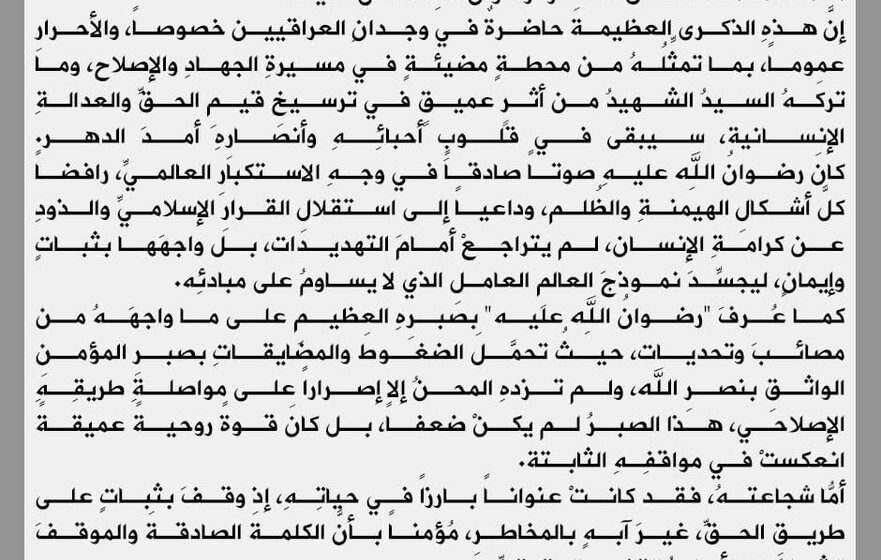
The death of Ayatollah Sayyid Hussein Muhammad Hadi al-Sadr prompted an outpouring of condolences from across Iraq’s political landscape. Former Prime Minister Mustafa Al-Kadhimi مصطفى الكاظمي (Post Impact: 11%) remembered him as a key national figure who opposed dictatorship and promoted an inclusive Iraqi identity. Current Prime Minister Mohammed Shia’ Al Sudani (Post Impact: 10%) and political leader Ammar Al-Hakim | عمار الحكيم (Post Impact: 10%) also issued statements praising his religious and social contributions. The unified messages of mourning from diverse political figures highlighted the late cleric’s respected position in Iraq.
10. Iran Accused of Threatening Gulf States
Several posts highlighted alleged direct threats from Iran aimed at neighboring Gulf countries, suggesting its aggression is primarily focused on the Arab world rather than Israel. Dr. Ali Al-Jabiri د. علي الجابري (Post Impact: 12%) reported that an Iranian military spokesman called on residents of Gulf states (except Oman) to “leave immediately.” In a separate post with a video, he claimed an IRGC-affiliated platform showed a ballistic missile with Qatari gas facilities marked as a target (Post Impact: 14%). He asserted, “These aggressive statements prove that this terrorist regime primarily targets the Arab Gulf countries, not Israel!”