2026-05-11: Secret Israeli Military Base in Najaf Desert Sparks Outrage

A Miqrab AI analysis of 501 X / Twitter posts trending in Iraq on May 11, 2026, reveals that the dominant conversation revolves around reports of a secret Israeli military base in the Najaf desert, sparking widespread debate on national sovereignty and security failures. This primary narrative is followed by significant discussions on Iran’s “quiet infiltration” strategy to expand its influence within Iraqi state institutions, which has been met with both pro-Iranian sentiment and criticism. Other key themes include the persistent power of armed militias intimidating civilians and academic institutions, ongoing political disputes over government formation, and heightened regional tensions marked by US military movements and rhetoric concerning Iran.
Table Of Content
- 1. Secret Israeli Military Base in Najaf Desert Sparks Outrage
- 2. Iran’s “Quiet Infiltration” Plan and Iraqi Loyalty Debates
- 3. Militia Intimidation and Lack of State Control
- 4. Disputes Over Government Formation and Nepotism
- 5. Heightened US-Iran Regional Tensions
- 6. Remembering Assassinated Iraqi Academics
- 7. Debate Over Naturalizing Displaced Bahraini Shiites
- 8. Revival of Iraq’s Southern Marshes
- 9. Anger Over Unfair Traffic Camera Fines
- 10. US Sanctions on IRGC-Linked Entities
Today’s Top 10 X (Twitter) Trends in Iraq:
1. Secret Israeli Military Base in Najaf Desert Sparks Outrage
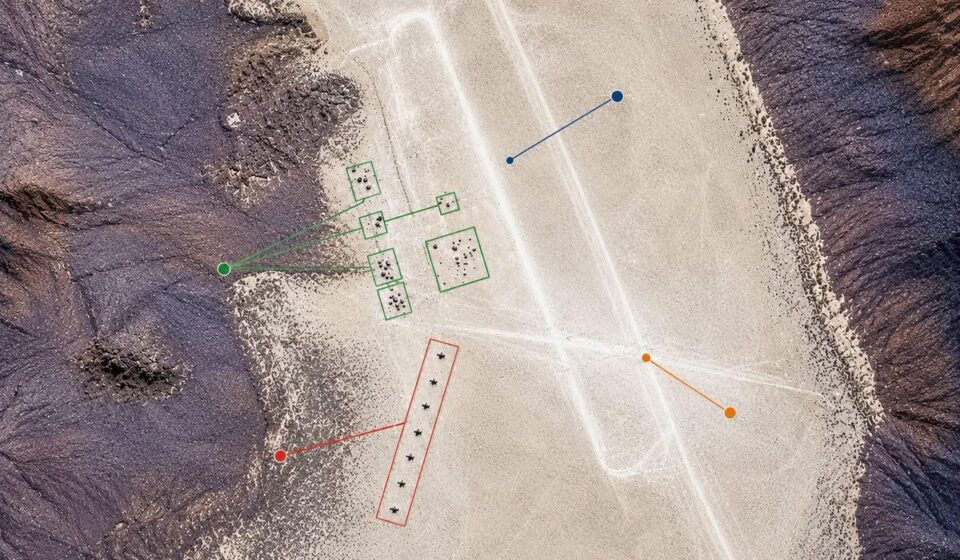
Reports of a secret military base in the desert between Najaf and Karbala have dominated Iraqi social media, prompting strong reactions from political figures and the public. Former Prime Minister Mustafa Al-Kadhimi مصطفى الكاظمي (Post Impact: 100%) described the news, if true, as “a serious breach that affects Iraq’s sovereignty,” demanding transparency and accountability. Multiple posts by Rusly Al-Maliki 🇮🇶 رسلي المالكي (Post Impact: 86%) and Najeh Abbas Al-Mizan (Post Impact: 39%) alleged that the Popular Mobilization Forces (PMF) were aware of the base, with Rusly Al-Maliki quoting Radio Monte-Carlo Doualiya that the PMF knew its mission was to monitor Iranian movements. The government’s Security Media Cell (Post Impact: 23%) issued a statement acknowledging an incident on March 5, 2026, where Iraqi forces clashed with “unauthorized, unknown detachments supported by aircraft,” but denied the current existence of any unauthorized bases.
2. Iran’s “Quiet Infiltration” Plan and Iraqi Loyalty Debates
A significant narrative concerns an alleged secret Iranian plan for “quiet infiltration” to regain influence within the Iraqi state. Mohamed Almaroof/محمد المعروف (Post Impact: 43%), citing Al-Mada newspaper, reported that the plan involves placing figures with undisclosed affiliations into government positions and that Washington has responded by expanding conditions to block anyone linked to factions from holding government posts. This discussion on Iranian influence is paralleled by a debate on Iraqi loyalties. Faiq Al-Sheikh Ali/كلمتي للتاريخ (Post Impact: 82%) shared an anecdote about Iraqis in London defending the Iranian regime more vehemently than Iranians themselves. In a direct expression of allegiance, writer Ahmed Abdulsada (Post Impact: 30%) responded to accusations of being an Iranian sympathizer by proudly declaring, “Yes, I am Iranian, and Iranian, and Iranian.”
3. Militia Intimidation and Lack of State Control
The power of non-state armed groups and their ability to act with impunity was another major topic. Several accounts, including Yasser Eljuboori – ياسر الجبوري (Post Impact: 21%) and Hiba Al-Nnayib HIBA Alnnayib (Post Impact: 19%), shared a video showing a convoy of armed men reportedly threatening the president of Al-Israa University, Dr. Abdul Razzaq Al-Majidi, to force the passing of a student. Hiba Al-Nnayib identified the gunmen as belonging to the Asa’ib Ahl al-Haq militia. In a separate viral video, influencer Haider Al-Hamdani (Post Impact: 81%) posted a clip of himself confronting a figure identified as “Abu Janna” and issuing a direct warning to him, further highlighting the ongoing tensions and public confrontations involving influential armed figures.
4. Disputes Over Government Formation and Nepotism
The challenges of forming a new government and internal political disputes remain a central theme. Ahmed Al-Thawaq (Post Impact: 25%) described how leaders of the Coordination Framework are allegedly obstructing the government over their share of ministries. A specific point of contention, highlighted by Haidar (Post Impact: 23%), is the reported nomination by former Prime Minister Nuri al-Maliki of his son-in-law, Yasser Sakhil al-Maliki, for the sensitive position of Minister of Interior. This move has triggered public anger and calls to keep security institutions free from family influence, as noted by Abu Maryam (Post Impact: 13%).
5. Heightened US-Iran Regional Tensions
Tensions between the United States and Iran were reflected in several posts discussing US military movements and statements by Donald Trump. The account Aayad Al Twfan – أعياد الطوفان (Post Impact: 23%) shared a video of the American nuclear submarine USS Alaska entering the Strait of Gibraltar, noting its capacity to carry nuclear-tipped Trident missiles and questioning the reason for its public appearance. This was echoed by Sufian Al-Samarrai (Post Impact: 12%), who saw the submarine’s movement as a sign of impending conflict. The rhetoric was further amplified by Dr. Zaid Abdulwahab Al-Adhami (Post Impact: 11%), who reported a statement from Donald Trump that the “ceasefire with Iran is up in the air.”
6. Remembering Assassinated Iraqi Academics
A widely shared post by Rusly Al-Maliki 🇮🇶 رسلي المالكي (Post Impact: 62%) brought renewed attention to the systematic targeting of Iraqi intellectuals after 2003. The post contained an extensive list of names of prominent Iraqi scientists, academics, and doctors who were assassinated. The list was categorized by specialty, including physics, engineering, medicine, and humanities, serving as a somber reminder of the immense loss of human capital that Iraq has suffered. The post itself did not offer new information but acted as a memorial, circulating widely as a tribute to the victims and a condemnation of the violence that targeted them.
7. Debate Over Naturalizing Displaced Bahraini Shiites
A proposal by MP Alaa Al-Haidari to welcome and naturalize Bahraini Shiites whose citizenships were revoked has stirred a sectarian debate online. Issam Hussein (Post Impact: 29%) strongly supported the initiative, arguing that those who oppose it are driven by anti-Shiite sectarianism, pointing out that the same people welcomed Gulf citizens during a football championship. He stated, “They are our brothers in faith and loyalty.” Conversely, Husam Altaee (Post Impact: 24%) posted a video of a man he identified as a Bahraini in Iran, questioning his loyalty and asking, “How many agents like this are there in #Iraq.”
8. Revival of Iraq’s Southern Marshes
Amidst the political and security-focused discussions, several posts celebrated the rejuvenation of the marshes in southern Iraq. Wasan Al-Shaikhli (Post Impact: 23%) shared a video of the lush Chibayish marshes, commenting, “This is not the Amazon, this is Chibayish after life returned to its marshes.” Similarly, Haidar (Post Impact: 22%) posted a picture of the Hor Umm al-Wida’ in Dhi Qar province. These posts offered a positive counter-narrative, showcasing the natural beauty of Iraq and the success of efforts to restore the vital ecosystem.
9. Anger Over Unfair Traffic Camera Fines
A grassroots issue gaining traction is public frustration with the new traffic camera system, which citizens claim is issuing unfair and exorbitant fines. Dr. Qusay Shafiq (Post Impact: 16%) highlighted the “disaster” of the system, citing an example where a citizen was fined 800,000 IQD after being photographed twice in the same second while stopped at a traffic light. In a follow-up post (Post Impact: 13%), he shared a video of a citizen describing these “crimes” against Iraqis and questioned the general silence on the matter, claiming that 99% of the camera-issued fines are flawed.
10. US Sanctions on IRGC-Linked Entities
The ongoing economic pressure from the United States on Iran and its affiliates was another topic of discussion. Dr. Zaid Abdulwahab Al-Adhami (Post Impact: 16%) posted a breaking news alert that the U.S. Treasury Department had added new entities and individuals to its sanctions list due to their connections with the Islamic Revolutionary Guard Corps (IRGC). This was discussed in the context of broader U.S. financial actions, with Dr. Majed Shingali (Post Impact: 9%) calling on the Iraqi government to request the documents from the U.S. Treasury that were used to sanction Iraqi officials, like the Deputy Minister of Oil, so that the Iraqi government itself can take action if the documents are valid.