2026-06-10: Escalating Tensions and Threats of a U.S. Strike on Iran

Based on an analysis of 500 posts by Miqrab AI, the key narratives trending on X / Twitter in Iraq on June 10, 2026, center on the escalating military tensions between the United States and Iran. A significant volume of discussion revolves around imminent U.S. airstrikes in response to Iran downing an American helicopter, with users sharing news of military deployments and threats from former U.S. President Donald Trump. This has prompted a parallel conversation defending Iran’s power and right to retaliate. Another dominant theme is historical reflection, as users commemorate the 12th anniversary of the fall of Mosul to ISIS and the related Speicher Massacre, often assigning blame and discussing the political and social wounds that remain. Finally, a high-impact debate emerged from a post comparing Iran’s regional actions unfavorably to those of Israel, sparking widespread controversy and commentary on Iran’s influence in the Middle East.
Table Of Content
- 1. Escalating Tensions and Threats of a U.S. Strike on Iran
- 2. Debate on Comparing Iranian and Israeli “Violations”
- 3. Commemoration of the 12th Anniversary of the Fall of Mosul
- 4. Discovery of Ancient Islamic Inscriptions in Saudi Arabia
- 5. Criticism of Jordan’s Military Cooperation with Western Powers
- 6. Concerns Over Kuwaiti-Funded Water Project in Syria
- 7. Analysis of a Recent Interview with Singer Kadim Al-Sahir
- 8. Remembering the Speicher Massacre
- 9. Disarmament of the Imam Ali Brigades Militia
- 10. Leaked Government Economic Plan and Baiji Refinery Corruption
Today’s Top 10 X (Twitter) Trends in Iraq:
1. Escalating Tensions and Threats of a U.S. Strike on Iran
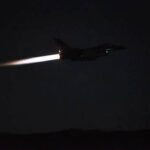
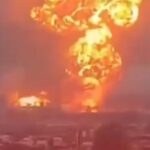
Speculation and reports of an impending U.S. military strike against Iran dominated Iraqi social media following Iran’s downing of an American Apache helicopter. Accounts like Rusly Al-Maliki (Post Impact: 19%) and Sufian Al-Samarrai (Post Impact: 6%) reported on U.S. preparations for an attack, with the latter sharing videos of B-52 bombers allegedly heading to the Middle East. Pro-Iran accounts such as Dr. Hussein Al-Safi (Post Impact: 46%) framed Iran’s actions as a new equation of power, stating, “the era of hit and run is over.” This was contrasted by accounts like Mujtahid Al-Iraq (Post Impact: 25%) which cheered on a potential “Islamic-Western coalition” to retaliate. The tension was amplified by statements from former U.S. President Donald Trump, shared by Ali Farhan (Post Impact: 11%) and Rafid Jaboori (Post Impact: 10%), in which he warned that Iran would have to “pay the price” for delaying negotiations. Amid these threats, the U.S. Embassy Baghdad (Post Impact: 32%) issued a Level 4 “Do Not Travel” security alert, urging American citizens to leave Iraq immediately due to the regional developments.
2. Debate on Comparing Iranian and Israeli “Violations”
A post by Liqaa Maki (Post Impact: 100%) ignited a major controversy by stating that Iran has committed “violations worse than what Israel has done.” He clarified that his statement was not an acquittal of Israel, which he described as the “standard for evil and criminality,” but an indictment of Iran’s role in fueling sectarian conflict in Iraq, Syria, Lebanon, and Yemen since 2003. This sparked a heated debate, with supporters like Sufian Al-Samarrai (Post Impact: 11%) and Iyad Al-DULAIMI (Post Impact: 8%) defending Maki’s courage. Al-DULAIMI argued that the backlash came from those who “do not want to hear the truth,” and that while Maki consistently attacks Israel, the reality is that Iran is also a “criminal state” whose actions have shifted Arab popular anger away from Israel and towards Tehran.
3. Commemoration of the 12th Anniversary of the Fall of Mosul
Multiple users marked June 10th as the 12th anniversary of the fall of Mosul to ISIS in 2014, reflecting on the day as a national tragedy. Haidar (Post Impact: 11%) described the date as the “beginning of a new era of blood” and a “wound in the heart of the nation.” Similarly, Othman Al-Mukhtar (Post Impact: 16%) commemorated the “catastrophe of Mosul” and explicitly blamed former Prime Minister Nuri al-Maliki, stating that the Iraqi judiciary continues to cover for him as a “war criminal.” The discussions often included archival footage and images from 2014, with some criticizing Arab media outlets for their coverage at the time, as shown in another post by Haidar (Post Impact: 11%).
4. Discovery of Ancient Islamic Inscriptions in Saudi Arabia
A significant cultural discovery was highlighted by Rusly Al-Maliki (Post Impact: 57%), who reported on the finding of 461 Islamic-era rock inscriptions in the Al-Mahd region of Saudi Arabia. The post emphasized the historical value of these findings, which include poetry and other texts, as a way to “touch what the hands of our predecessors touched.” The account shared an image of one specific inscription that reads, “(God is the guardian of Omar ibn al-Khattab in this world and the hereafter, there is no god but God),” noting that the second Caliph, Omar, was known to be literate.
5. Criticism of Jordan’s Military Cooperation with Western Powers
Jordan’s military alliances came under scrutiny after an official statement described joint training exercises with “friendly and brotherly forces.” Mohammed Al-Hamad (Post Impact: 37%) strongly criticized this terminology, asserting that the “brotherly forces” are primarily the United States, Britain, and France. He sarcastically commented that “despicableness has reached its peak when kinship is presented in a military format.” This sentiment aligns with a broader regional narrative about foreign military presence, also touched upon by Sufian Al-Samarrai (Post Impact: 6%), who argued for the right of Arab nations to have American and Israeli bases to counter Iran.
6. Concerns Over Kuwaiti-Funded Water Project in Syria
Reports of a revived Kuwaiti-funded project to divert water from the Tigris River in Syria have raised alarm among Iraqi users who fear it will negatively impact Iraq’s water supply. Haidar (Post Impact: 19%) explained that Kuwait had previously offered to fully fund the project in 2010 but it was halted due to Iraqi objections and the Syrian conflict. The account questioned Kuwait’s motives, suggesting the project is intended to harm Iraq, stating Kuwait would “even support the devil to implement it.” Naji Asal (Post Impact: 12%) also shared a video discussing the geopolitical implications of the project involving Iran and Kuwait, further highlighting the regional concerns.
7. Analysis of a Recent Interview with Singer Kadim Al-Sahir
A recent interview with acclaimed Iraqi singer Kadim Al-Sahir was a major topic of cultural discussion. Ali al-Khalidi (Post Impact: 18%) provided a detailed summary, highlighting the singer’s comments on his humble upbringing, respect for women, healthy lifestyle, and close relationship with his sons. Other users, like Amer Ibrahim (Post Impact: 8%) and Ali Wajeeh (Post Impact: 6%), praised the interview as a rare and authentic “human document” that showed a different side of the artist, beyond his music. They commended his sincerity and lack of pretense, noting his simple gesture of wiping his glasses on his jacket as a sign of his genuineness.
8. Remembering the Speicher Massacre
Alongside the anniversary of Mosul’s fall, users commemorated the Speicher Massacre, in which hundreds of predominantly Shia army cadets were executed by ISIS and allied tribesmen. Ammar Al-Hakim (Post Impact: 12%) called for the anniversary’s slogan to be “From blood to the state,” emphasizing the need to build state institutions that can prevent such atrocities from recurring. Emad Al-Musafir (Post Impact: 9%) described the event as a “crime that targeted our sons on a sectarian basis,” specifically naming the Albu Ajeel and Albu Nasir tribes as participants and calling the massacre a “wound that remains open.”
9. Disarmament of the Imam Ali Brigades Militia
A significant domestic security development was the reported disarmament of the Imam Ali Brigades, a prominent Shia militia. Iraq’s Security Media Cell announced that the Committee for Disassociation and Confining Arms to the State had begun procedures to integrate the group’s fighters and take inventory of its weapons and vehicles. This news was shared by accounts like Haidar (Post Impact: 7%) and Shaho Al-Qaradaghi (Post Impact: 7%), who shared images of the process, including the presence of the well-known fighter Abu Azrael. However, Al-Qaradaghi questioned the move’s effectiveness, asking, “Is confining weapons limited to these steps only?”
10. Leaked Government Economic Plan and Baiji Refinery Corruption
Concerns over the Iraqi economy and corruption were fueled by leaks of a new government economic plan and ongoing scandals. Citing the newspaper “Al-Mada,” Abu Maryam (Post Impact: 10%) reported that a plan presented by Prime Minister Ali Al-Zaidi and approved by the Coordination Framework leaders includes raising the U.S. dollar exchange rate again and privatizing state assets to address the country’s $83 billion debt. Meanwhile, corruption at the Baiji refinery remained a focus, with Dr. Qusay Shafiq (Post Impact: 12%) sharing a video of Yazan al-Jubouri discussing the “gang” involved shortly before the arrest of Adnan al-Jumaili, the former head of the refinery.