2026-06-19: Escalating Conflict Between Hezbollah and Israel

Based on its analysis of 410 X / Twitter posts trending in Iraq on June 19, 2026, Miqrab AI found that the online conversation was dominated by regional tensions, particularly the escalating conflict between Hezbollah and Israel which threatened to draw in other actors. A parallel narrative, driven by a Reuters report, focused on claims that Iran’s IRGC has formed new secret cells within Iraq to attack Gulf states, sparking discussions on Iraqi sovereignty and regional security. Domestically, there was significant attention on the initial actions of the new Prime Minister, Ali al-Zaydi, with many accounts highlighting his directives aimed at reforming border crossings and combating corruption. Conversations also frequently featured commentary on US politics, especially statements by former President Donald Trump regarding Iran and his European allies, alongside internal Iraqi political controversies and social critiques.
Table Of Content
- 1. Escalating Conflict Between Hezbollah and Israel
- 2. Iraqi-Syrian High-Level Dialogue Reported
- 3. IRGC Reportedly Forming Secret Cells in Iraq
- 4. Criticism of Iraq’s Political Hypocrisy and Social State
- 5. Donald Trump’s Strong Statements on Iran and US Allies
- 6. New Iraqi PM Al-Zaydi’s Directives on Borders and Governance
- 7. Controversy Surrounding Former Minister Othman Al-Ghanmi
- 8. Reports of Easing Social Restrictions in Iran
- 9. Anti-Corruption Arrests in Iraq’s Electricity Sector
- 10. Iraq’s Foreign Relations and Security Concerns
Today’s Top 10 X (Twitter) Trends in Iraq:
1. Escalating Conflict Between Hezbollah and Israel
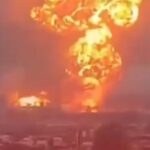
The most engaging topic was the intensifying military conflict between Hezbollah and Israel. Accounts like Hayder (Post Impact: 100%) shared images and updates indicating this was the top trending story in Lebanon. Further posts from Hayder (Post Impact: 33%) cited Hezbollah statements claiming “no areas are safe for ‘Israel'” and detailed significant Israeli losses, including the killing of five soldiers and a battalion commander in what was dubbed “Operation Ashura.” In response, Israeli National Security Minister Itamar Ben Gvir was quoted as saying, “Lebanon must burn whole!” The same account later reported on a potential ceasefire agreement following US pressure, indicating the severity of the escalation. Hussein Abu Alimah (Post Impact: 13%), citing Israeli newspaper Haaretz, provided context on Hezbollah’s military capabilities, describing a large underground base that the Israeli army had failed to destroy.
2. Iraqi-Syrian High-Level Dialogue Reported
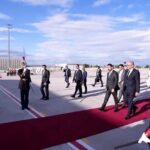
A widely discussed post from Issam Hussein (Post Impact: 61%) detailed an alleged final communication between Iraq’s Sayyid Ali al-Zaydi and Syria’s Ahmed al-Sharaa. According to the post, al-Sharaa invited al-Zaydi to visit Syria, but al-Zaydi, presenting himself as a representative of Iraq’s largest component, set several conditions. These prerequisites reportedly included a joint visit with al-Sharaa to the Sayyida Zainab shrine to build trust, the appointment of a Shiite minister in the Syrian cabinet, and guarantees for the protection of the shrine’s management. The post also claims al-Zaydi issued a stern warning to al-Sharaa against entering Lebanon, stating, “If you enter Lebanon by one kilometer, our guys will not fall short of entering by ten kilometers.”
3. IRGC Reportedly Forming Secret Cells in Iraq
A significant narrative emerged from a Reuters report, widely shared by multiple Iraqi accounts, alleging that Iran’s Islamic Revolutionary Guard Corps (IRGC) has established new secret cells in Iraq. Rusly Al-Maliki (Post Impact: 39%) and Dr. Zaid Abdulwahab Al-Adhami (Post Impact: 21%) both amplified the core claim that these cells were formed to attack Gulf countries. A more detailed summary from Hayder (Post Impact: 21%) explained that the move was a response to some Iraqi factions handing over their weapons to the state. The new cells, consisting of elite fighters, allegedly operate outside the command structure of established groups and report directly to the IRGC to maintain plausible deniability. The report claims these cells have already conducted at least seven drone attacks on Kuwait, Saudi Arabia, and the UAE from southern Iraq.
4. Criticism of Iraq’s Political Hypocrisy and Social State
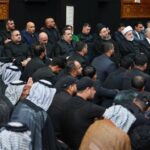
Critical commentary on Iraq’s current political and social environment was a prominent theme. Shaho Al-Qaradaghi (Post Impact: 57%) questioned the rationale behind anti-American street protests, pointing out the hypocrisy of such actions when the Iraqi government appears to be implementing all of America’s demands even before the arrival of a US official named Barak. In a similar vein of social critique, Tamara Alkhazraji (Post Impact: 53%) shared a video of a large crowd of men with swords, captioning it, “No, this is not the movie ‘The Message.’ This is Iraq 2026,” suggesting a regression in the country’s societal progress.
5. Donald Trump’s Strong Statements on Iran and US Allies
Statements by former US President Donald Trump attracted significant attention. Rusly Al-Maliki (Post Impact: 37%) and Aayad Al Twfan (Post Impact: 20%) highlighted Trump’s declaration that “Iran’s matter is over” and that the country “won’t get any money, not even 10 cents.” Another narrative, covered by Hayder (Post Impact: 23%), focused on diplomatic tension between the US and Italy after Trump claimed Italian Prime Minister Giorgia Meloni “begged” him for a photograph. Meloni reportedly responded angrily, stating, “Italy and I never beg,” and expressed shock at Trump’s behavior towards allies while showing leniency towards adversaries.
6. New Iraqi PM Al-Zaydi’s Directives on Borders and Governance
The administrative actions of Iraq’s new Prime Minister, Ali Faleh al-Zaydi, were a central topic of discussion. Rusly Al-Maliki (Post Impact: 21%) and Abu Maryam (Post Impact: 15%) detailed a series of directives aimed at reforming border crossings. These orders include a mandatory rotation of all staff at border points within 48 hours, closing all unofficial land and sea routes, and enhancing the role of security and intelligence agencies in preventing smuggling. Separately, Rusly Al-Maliki (Post Impact: 30%) reported on the Prime Minister’s directive to unify the official Iraqi flag used across all government institutions to ensure it adheres to proper specifications, a move described as a step towards reinforcing “soft sovereignty.”
7. Controversy Surrounding Former Minister Othman Al-Ghanmi
Former Iraqi Interior Minister Othman Al-Ghanmi was the subject of conflicting narratives. Abu Maryam (Post Impact: 32%) shared a video of Al-Ghanmi speaking about how the arrest of businessman Noor Zuhair was handled and exposing what he called the “reality” of many political leaders. The post suggests Al-Ghanmi “paid the price” for this stance. In contrast, Rusly Al-Maliki (Post Impact: 28%) circulated a document allegedly from 2005 that lists Othman Al-Ghanmi among officers who were subject to de-Ba’athification laws, raising questions about his past.
8. Reports of Easing Social Restrictions in Iran
A post by Shaho Al-Qaradaghi (Post Impact: 54%) generated discussion about social changes within Iran. The account shared a video depicting nightlife in Tehran, commenting that the Iranian regime is no longer imposing social restrictions with the same severity as in the past. This post suggests a tangible shift in the public sphere and a relaxation of the strict rules that have long characterized the Islamic Republic, pointing to a potential change in the country’s internal social dynamics.
9. Anti-Corruption Arrests in Iraq’s Electricity Sector
A specific anti-corruption operation gained traction online, focusing on the Central Electricity Distribution Company. Abu Maryam (Post Impact: 21%) reported that a security force closed the company’s financial department due to a “major financial corruption” case and arrested the head of accounts, identified as “Mahmoud.” A follow-up post from the same account announced the arrest of another official, “Ahmed Saadi,” the head of follow-up. Dr. Qusay Shafiq (Post Impact: 10%) also covered the arrests, praising the new Prime Minister for heeding the calls of “patriotic media” to strike against corruption.
10. Iraq’s Foreign Relations and Security Concerns
Iraq’s international standing and ongoing security challenges were a recurring theme. The US Embassy in Baghdad issued a statement, shared by Hayder (Post Impact: 11%) and Abu Maryam (Post Impact: 10%), acknowledging Iraq’s new cooperation with the Financial Action Task Force (FATF) to combat money laundering and terror financing, encouraging Baghdad to accelerate its implementation. In parallel, a different security concern was highlighted by Rusly Al-Maliki (Post Impact: 28%), who reported that Turkey currently operates 139 military bases in northern Iraq, with a presence reaching 100km deep into Iraqi territory and supported by a network of military roads, raising questions about national sovereignty.