2026-06-20: Director of Electricity Arrested on Corruption Charges

Based on an analysis of (425) X / Twitter posts trending in Iraq on June 20, 2026, Miqrab AI found that online conversations were dominated by outrage over high-level corruption, highlighted by the arrest of a senior electricity official. This event fueled a broader narrative of state failure, with many users sharing data on Iraq’s poor global rankings in public services and governance. Concurrently, regional tensions were a major topic, focusing on Iran’s closure of the Strait of Hormuz and its implications for Iraq. Domestic politics were also in the spotlight, with discussions on the alleged violent conduct of a member of parliament and the emergence of sectarian undertones in the government’s anti-corruption campaign.
Table Of Content
- 1. Director of Electricity Arrested on Corruption Charges
- 2. Widespread Criticism of Iraq as a “Failed State”
- 3. Iran’s Closure of the Strait of Hormuz
- 4. MP Muhayman al-Hamdani Accused of Repeated Violence
- 5. Debate Over Proposed Symbolic Funeral for Khamenei
- 6. Trump’s Remarks on Qasem Soleimani Circulate Online
- 7. Conflicting Narratives on PMF and Jurf al-Sakhr
- 8. Sectarian Allegations Surround Anti-Corruption Campaign
- 9. Pro-Iran Narratives on Regional Relations
- 10. Integrity Commission Vows to Review Major Contracts
Today’s Top 10 X (Twitter) Trends in Iraq:
1. Director of Electricity Arrested on Corruption Charges
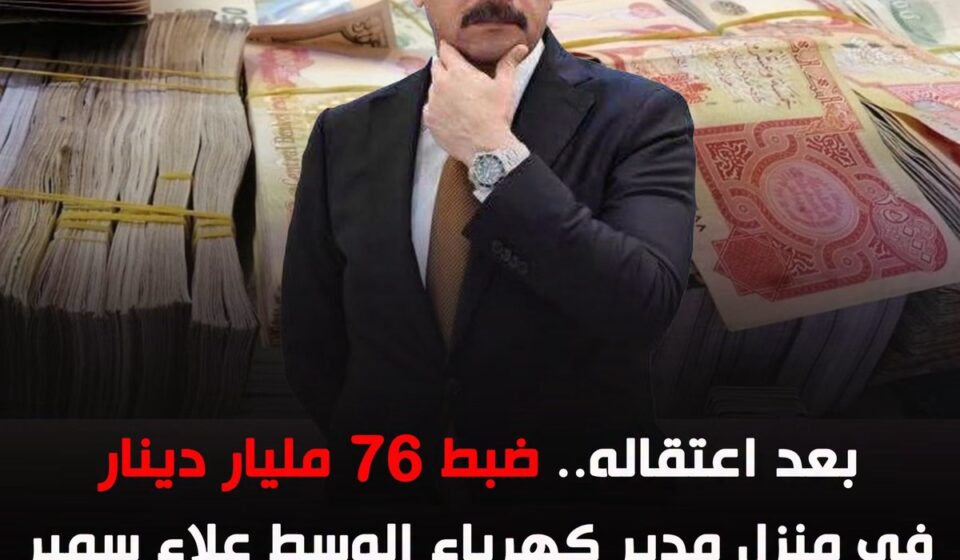
The arrest of Alaa Samir, the Director General of the Central Electricity Distribution Company, was the most significant story of the day, sparking widespread discussion about corruption. Multiple accounts, including Shaho Al-Qaradaghi (Post Impact: 9%) and Abu Maryam (Post Impact: 8%), reported that a massive sum of 76 billion Iraqi dinars was seized from his home. Further details were provided by Husham Ali (Post Impact: 8%), who noted that the Integrity Commission also raided a farm owned by Samir, finding documents and assets described as “beyond imagination.” While most accounts reported the 76 billion figure, Dr. Ghalib Al-Daami (Post Impact: 3%) stated that this number was incorrect but confirmed Samir’s involvement in corrupt contracts for substandard equipment. The news prompted calls from users like Dr. Majed Shingali (Post Impact: 3%) to prosecute not only the individuals but also the political parties that protect them.
2. Widespread Criticism of Iraq as a “Failed State”
A prominent narrative of discontent with the state of the nation was driven by a highly engaged post from Rusly Al-Maliki (Post Impact: 21%), who labeled Iraq a “banana republic” and a “failed state by all global standards.” The post listed Iraq’s dismal international rankings across various sectors, including 188th in education, 136th in corruption, 162nd in press freedom, and being among the worst 10 countries for pollution. The account attributed this failure to “twenty years of stupidity, corruption, sectarianism, and sacred gangs.” This sentiment of despair was echoed by others, such as Ameer aldaami (Post Impact: 3%), who described the scale of theft by officials as a “black comedy,” especially given that past governments ran on anti-corruption platforms.
3. Iran’s Closure of the Strait of Hormuz
Multiple Iraqi accounts reported on Iran’s announcement that it was closing the Strait of Hormuz. Hayder (Post Impact: 5%) and Dr. Zaid Abdulwahab Al-Adhami (Post Impact: 2%) stated that Iran’s Islamic Revolutionary Guard Corps (IRGC) announced the closure in response to Israel’s “continuous violation” of the ceasefire in southern Lebanon. Rafid Jaboori (Post Impact: 3%) framed the move as the first major test of the recently signed agreement between the US and Iran, which was predicated on keeping the strait open. The news prompted significant discussion on regional stability and its direct impact on Iraq, with another post by Hayder (Post Impact: 4%) citing a report that Iraq has already lost 350 million barrels of oil exports, valued at $37.7 billion, since the strait’s closure.
4. MP Muhayman al-Hamdani Accused of Repeated Violence
Allegations of violent misconduct by Muhayman al-Hamdani, a Member of Parliament from the Taqadum party, were a major topic of discussion. Abu Maryam (Post Impact: 6%) compiled a list of incidents attributed to the MP, including allegedly shooting his wife, mother-in-law, and two workers in Baghdad, as well as assaulting an army officer. The most recent incident was detailed by Hiba Alnnayib (Post Impact: 4%), who reported that al-Hamdani attacked construction workers at a nearby mosque following a family dispute and then verbally assaulted the police who intervened. The account described him as a “rabid dog” and claimed that local residents live in fear of his repeated violent outbursts and gunfire.
5. Debate Over Proposed Symbolic Funeral for Khamenei
A proposal to hold a symbolic funeral in Iraq for Iranian Supreme Leader Ali Khamenei generated a polarized debate online. The idea was praised by some officials, with Shaho Al-Qaradaghi (Post Impact: 4%) quoting a prime ministerial advisor who claimed that such an event would be an “honor for all Iraqis.” This viewpoint was met with strong opposition from other users. Hiba Alnnayib (Post Impact: 5%) fiercely criticized the proposal, accusing its supporters of seeking to “innovate a new idol to be blessed” and questioning why they would honor someone who, in her view, has not sacrificed for Iraq.
6. Trump’s Remarks on Qasem Soleimani Circulate Online
Comments made by former U.S. President Donald Trump regarding the late Iranian general Qasem Soleimani were widely shared and discussed. Accounts such as Hayder (Post Impact: 7%) and Wesam Aziz (Post Impact: 2%) quoted Trump calling the killing of Soleimani “one of the biggest moments in the history of the Middle East” and describing Soleimani as the “most feared man in the last 100 years.” Trump was also quoted as claiming that Soleimani’s preferred weapon was responsible for US soldiers returning home “without legs, without arms,” and that Soleimani was planning to blow up five US military bases.
7. Conflicting Narratives on PMF and Jurf al-Sakhr
Sectarian tensions flared online through competing narratives about the Popular Mobilization Forces (PMF) and the historical context of violence in the Jurf al-Sakhr region. Mustafa Al-Dulaimi (Post Impact: 8%) posted a video allegedly showing a PMF member confessing to and boasting about participating in a “massacre” where civilians were taken from their homes and killed in the desert as revenge for the Speicher massacre. In direct opposition, Essam Hussein (Post Impact: 4%) posted a counter-narrative, listing alleged crimes committed by the former residents of Jurf al-Sakhr against Shia travelers and civilians in nearby cities, arguing that these actions justified the “liberation” of the area by security forces.
8. Sectarian Allegations Surround Anti-Corruption Campaign
The government’s recent anti-corruption campaign has sparked accusations of being selective and politically motivated. Some users claimed the campaign unfairly targets Sunni officials. Sheikh Thaer Al-Bayati (Post Impact: 3%) directly addressed the Prime Minister, stating that the campaign “started with the Sunni component” and demanded it be expanded to include all corrupt figures regardless of sect or party. This sentiment was echoed by Azhar Al-Jumaili (Post Impact: 3%) who commented that the “Sunni component has had enough kicks” from the new government. Conversely, Essam Hussein (Post Impact: 3%) dismissed these concerns with sectarian rhetoric, mocking the arrested officials by saying “two Sunni whales were found with 90 billion dinars… and they cry about being marginalized!”
9. Pro-Iran Narratives on Regional Relations
A strong pro-Iran viewpoint on regional politics was expressed by some Iraqi accounts. In one post, Dr. Hussein Al-Safi (Post Impact: 11%) sarcastically suggested that to protect itself from a “coming war,” Kuwait should submit a request to the Iraqi government to join Iraq, with its Emir becoming a provincial governor. In another highly engaged post, the same account shared an image of the Iraqi and Iranian flags with the caption, “Iraq and Iran, two bodies but one heart……..” (Post Impact: 10%), illustrating a narrative of deep allegiance and shared identity between the two countries.
10. Integrity Commission Vows to Review Major Contracts
Following high-profile arrests, Iraq’s Integrity Commission publicly announced its intention to intensify its anti-corruption efforts. Husham Ali (Post Impact: 5%) reported that the head of the commission, Mohammed Ali Al-Lami, directed his teams to accelerate the review of major government contracts, particularly within the Ministries of Oil and Electricity. The announcement was also covered by Abu Maryam (Post Impact: 2%), who quoted Al-Lami as saying there would be “no compromise on the people’s money” and that the anti-corruption drive has the full support of the Prime Minister and all branches of government.