2026-06-24: Muqtada al-Sadr’s Statement on the Umayyads

Based on Miqrab AI’s analysis of 448 X / Twitter posts trending in Iraq on June 24, 2026, the key narratives revolved around high-level political commentary, widespread corruption, and regional tensions. A statement from cleric Muqtada al-Sadr generated the highest engagement, sparking discussions about historical and religious divisions. A significant portion of the conversation focused on major corruption scandals, with users following developments in the arrest of official Adnan al-Jumaili and discussing allegations against other political figures, reflecting deep public distrust in the political establishment. Other prominent topics included criticism of a controversial television interview, a significant archaeological discovery in Nineveh, legal actions against political analysts, and updates on Iraq’s relationship with the US and tensions between Iran and the US.
Table Of Content
- 1. Muqtada al-Sadr’s Statement on the Umayyads
- 2. Corruption Scandals and Arrests Dominate Discussion
- 3. Backlash Against Journalist’s Controversial Comments
- 4. Commentary on Systemic Corruption and “Selling” of Positions
- 5. Major Archaeological Discovery in Nineveh
- 6. Sunni Endowment Sues Analyst for “Sectarian Incitement”
- 7. Allegations of a Female MP Fleeing with Billions
- 8. Iran Reportedly Bans Anti-US Slogans
- 9. Judiciary to Apply Anti-Terror Law to Illegal Drones
- 10. Syrian Military Buildup on Lebanese Border Reported
Today’s Top 10 X (Twitter) Trends in Iraq:
1. Muqtada al-Sadr’s Statement on the Umayyads
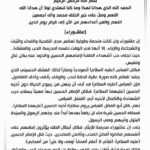
A post by cleric Muqtada al-Sadr received the highest engagement, featuring a graphic with the statement: “The Umayyads are corrupt, unjust, and outside the Muhammadan path.” The post from Muqtada Al-Sayyid Muhammad Al-Sadr (Post Impact: 100%) contained only this image. Commenting on the statement, political analyst Shaho Al-Qaradaghi (Post Impact: 14%) remarked, “We’re back to the same old tune,” suggesting that this is a recurring theme used by the cleric.
2. Corruption Scandals and Arrests Dominate Discussion
A major theme was the ongoing anti-corruption campaign, particularly focusing on the case of Adnan al-Jumaili, a former official. Posts detailed the seizure of his assets, including a convoy of vehicles in Erbil, and the discovery of millions of dollars hidden in his properties. Yasser Eljuboori (Post Impact: 3%) and Dr. Qusay Shafiq (Post Impact: 4%) shared videos of the seized vehicles. The discussions expanded to question the sincerity of the anti-corruption drive, with Shaho Al-Qaradaghi (Post Impact: 9%) asking about another figure, “Is what we are witnessing a real fight against the corrupt, or just settling political scores under the guise of confronting the corrupt to convince the public?!” Allegations also surfaced against former Minister of Industry Khalid Battal, with Ali Fadhil (Post Impact: 7%) claiming he received over $40 million from a silica sand contract.
3. Backlash Against Journalist’s Controversial Comments
A television interview sparked widespread criticism online due to the journalist’s comments to a guest who was reportedly involved in a recent scandal. Multiple users shared a clip of the interview in which the journalist says, “After the video that spread, now the girls are lining up for you!” Hiba Al-Nnaayib (Post Impact: 10%) described the journalist as “degraded.” Similarly, Bahaa Khaleel (Post Impact: 9%) questioned if her words were those of a “respectable journalist.” Yasser Eljuboori (Post Impact: 6%) and Mujahid Al-Taee (Post Impact: 4%) both expressed shock and questioned the appropriateness of the dialogue on air.
4. Commentary on Systemic Corruption and “Selling” of Positions
A post by Dr. Hussein Al-Safi (Post Impact: 35%) gained significant traction by recounting a personal story of being offered a director-general position. He described setting strict anti-corruption conditions—such as not accepting perks and rejecting nepotism—only to find that the position was given to someone else who allegedly paid a substantial bribe. He concluded, “The problem in Iraq is they impose the corrupt on you and want the situation to be corrected… The first thing to fight corruption is to prevent the sale of positions.” This narrative was echoed in a detailed analysis by Falah Al-Mashal (Post Impact: 3%), who explained how corruption in oil refineries creates a system where public funds become spoils shared by powerful parties and individuals.
5. Major Archaeological Discovery in Nineveh
A significant archaeological find in Nineveh province was widely reported. According to Rusly Al-Maliki (Post Impact: 12%), a complete and un-defaced stele showing the face of the Assyrian King Sennacherib was discovered for the first time. He noted that in all other known carvings, the king’s face was deliberately destroyed by the Babylonians. The post states the artifact was found at “Bab Shamash,” one of the gates of ancient Nineveh’s wall. Haidar (Post Impact: 4%) also reported on the discovery, citing the State Board of Antiquities and Heritage.
6. Sunni Endowment Sues Analyst for “Sectarian Incitement”
Political analyst Issam Hussein became the subject of a lawsuit filed by the Sunni Endowment, accusing him of defamation and inciting sectarian strife. Emad Al Musafir (Post Impact: 7%) highlighted the irony, noting that the Endowment is “implicated in a corruption deal worth billions of dinars.” In his own defense, Issam Hussein (Post Impact: 6%) pointed out that the lawsuit was filed by an institution with a sectarian name, asking, “Why not ask a simple question: Why isn’t the name ‘The National Endowment’ instead of ‘The Sunni Endowment’?” The lawsuit was also reported by Abu Maryam (Post Impact: 3%), who commented that sectarian incitement has become a “trade for some people from both sides.”
7. Allegations of a Female MP Fleeing with Billions
A high-impact story surfaced alleging the escape of a female Member of Parliament. Dr. Haitham Almayahi (Post Impact: 10%) reported “semi-accurate” information that MP (A.S.) fled the country the previous night after transferring 30 billion dinars. He presented the information as a public appeal to the Integrity Commission, the Anti-Corruption Committee, the National Security Service, and the judiciary to investigate the matter. In a follow-up post, he claimed the MP, associated with the Salah al-Din Governorate, is currently in Amman.
8. Iran Reportedly Bans Anti-US Slogans
Accounts circulated news, attributed to Iranian media, about a significant shift in Iran’s policy towards the United States. Rusly Al-Maliki (Post Impact: 8%) reported that “according to the agreement between America and Iran, whoever burns the American flag or raises the slogan ‘Death to America’ will be prosecuted and punished.” This was framed as a major concession. Sheikh Thaer Al-Bayati (Post Impact: 3%) used the news to mock followers of Iran in Iraq, writing, “This is what the ‘Iranian victory’ looks like when the slogan ‘Death to America’ turns into a violation that requires punishment.”
9. Judiciary to Apply Anti-Terror Law to Illegal Drones
A new directive from Iraq’s Supreme Judicial Council regarding the use of drones drew attention. Rusly Al-Maliki (Post Impact: 5%) reported that the council has instructed competent courts to apply the provisions of the Anti-Terrorism Law No. 13 of 2005 to anyone who manufactures, uses, or possesses drones for illegal purposes. He linked this development to a recent tweet by a US Senator about armed factions launching drones from Iraq. Ali Farhan (Post Impact: 3%) also covered the news, highlighting that the judiciary has directed courts to apply the law to anyone who “manufactures, uses, or possesses” such drones.
10. Syrian Military Buildup on Lebanese Border Reported
Amid rising regional tensions, a post concerning military movements on the Syria-Lebanon border was shared. Rusly Al-Maliki (Post Impact: 11%) reported in an urgent update that Syrian military convoys and heavy weapons were being dispatched along the border with Lebanon. The post did not provide further context or reasons for the deployment, but it contributed to the broader narrative of escalating instability in the Levant.