2026-07-21: MP Mustafa Sanad’s Satirical Post on Government Spending

Based on a Miqrab AI analysis of 420 Facebook posts trending in Iraq on July 21, 2026, the primary narratives revolve around domestic governance, political maneuvering, and rising regional tensions. The highest engagement came from a satirical post by MP Mustafa Sanad criticizing government spending. A major focus was on the Council of Ministers’ decisions, led by Prime Minister Ali Faleh Al-Zaydi, particularly the allocation of funds for the Arbaeen pilgrimage and new anti-corruption directives. Concurrently, statements from Mohammed Shia Al-Sudani warned of the economic damage from regional conflicts, a theme echoed by pages reporting on US-Iran military escalation. Other key topics include significant security changes, such as the reactivation of the Office of the Commander-in-Chief, local protests over electricity shortages in Najaf, and allegations of financial mismanagement highlighted by the Board of Supreme Audit.
Table Of Content
- 1. MP Mustafa Sanad’s Satirical Post on Government Spending
- 2. Concerns Over Regional Escalation’s Impact on Iraq
- 3. Council of Ministers Approves Arbaeen Funds and Anti-Corruption Rules
- 4. PM Reactivates Office of the Commander-in-Chief
- 5. Al-Sudani Forms Political Bureau for his Coalition
- 6. Mohammed Al-Khaza’i Challenges Politicians on Corruption
- 7. Protests Violently Suppressed in Najaf Over Power Shortages
- 8. Abu Azrael Accuses PMF of Mistreatment in Land Dispute
- 9. Financial Audit Reveals Unaudited Ministry and 26 Trillion IQD
- 10. The Disappearance of Imam Musa al-Sadr Discussed
Today’s Top 10 Facebook Trends in Iraq:
1. MP Mustafa Sanad’s Satirical Post on Government Spending
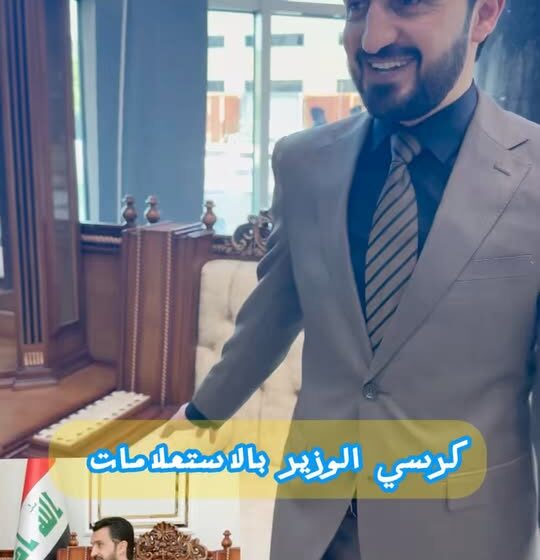
A video post by Member of Parliament Mustafa Sanad – Mustafa Sanad (Post Impact: 100%) garnered the highest engagement of the day. The post featured a short, satirical caption stating, “I donated my office sofas to the information desk, so that I can buy sofas for two billion😃”. This statement appears to be a pointed critique of perceived lavish government spending and corruption. The high impact rate suggests that this message resonated strongly with the public, highlighting widespread concerns about how public funds are utilized by officials. The post’s humorous and sarcastic tone served as a vehicle for political commentary on financial waste.
2. Concerns Over Regional Escalation’s Impact on Iraq
The escalating conflict in the region and its direct consequences for Iraq were a major topic of discussion, prominently highlighted by politician Mohammed Shia Al-Sudani. On his official page, The Engineer Mohammed Shia Al-Sudani (Post Impact: 50%) stated that ongoing military confrontations directly affect Iraq’s security and stability, causing severe economic and humanitarian damage. He specifically noted that Iraq is among the most affected nations, particularly with the halt of southern oil exports, and called on all parties to prioritize dialogue and diplomacy. This concern was amplified by pages like Steven Nabil (Post Impact: 7%), which quoted a threatening statement from Iran’s Khatam al-Anbia headquarters against U.S. interests, and Baghdad (Post Impact: 3%), which reported on Iran allegedly threatening to open a front from southern Iraq against Kuwait and Bahrain.
3. Council of Ministers Approves Arbaeen Funds and Anti-Corruption Rules
Several pages reported on the decisions made during the eleventh regular session of the Council of Ministers, chaired by Prime Minister Ali Faleh Al-Zaydi. According to The Media Office of the Iraqi Prime Minister (Post Impact: 13%) and Maher Mouhi::Sawt Humat Al-Watan (Post Impact: 19%), the cabinet allocated 52.5 billion dinars for the upcoming Arbaeen pilgrimage, including the rental of 2,400 buses for pilgrims. A significant anti-corruption measure was also approved, with the Prime Minister directing ministers to dismiss any deputy minister or director-general facing suspicions of corruption, holding the minister responsible for their continued presence. Furthermore, the council terminated the appointment of the head of the Federal Public Service Council and his deputy, referring their case to the Integrity Commission. These decisions were also covered by Baghdad (Post Impact: 5%).
4. PM Reactivates Office of the Commander-in-Chief
News circulated across multiple pages about the reactivation of the Office of the Commander-in-Chief of the Armed Forces after years of being dormant. Iraqeen W Bas – Iraqis Only (Post Impact: 17%) and Support for Iraqi Security Forces (Post Impact: 5%) reported that Prime Minister Al-Zaydi appointed Lieutenant General Abdul Amir al-Shammari as the director of the office. The new office will be responsible for coordinating and directing all security and military agencies. The page Khan Jghan (Post Impact: 3%) added that the office was previously abolished by former Prime Minister Haider al-Abadi, who held it responsible for the fall of Mosul in 2014, and that it will now operate from the Joint Operations Command building in the Green Zone.
5. Al-Sudani Forms Political Bureau for his Coalition
Mohammed Shia Al-Sudani, in his capacity as head of the Reconstruction and Development Coalition, announced the formation of a political bureau for the coalition. His official page, The Engineer Mohammed Shia Al-Sudani (Post Impact: 31%), stated that the move aims to enhance the coalition’s organizational and political structure. Dr. Haider Abdul Kadhim Naeema Al-Fawadi was appointed to preside over the new bureau. The post explained that the bureau will be the “main driver of the political and programmatic vision of the coalition” and will formulate its positions on national and developmental issues to support reform and improve service and economic sectors. The coalition’s page, Reconstruction and Development Coalition (Post Impact: 1%), also shared the announcement.
6. Mohammed Al-Khaza’i Challenges Politicians on Corruption
In a video clip from his show “Zero Distance,” journalist Mohammed Al-Khazai (Post Impact: 23%) directly confronted political blocs over the issue of corruption. He posed a rhetorical question to them, asking: “If you are talking about corruption.. who is corrupt, us or your members?” This statement challenges political leaders to look within their own parties for the sources of corruption rather than blaming others. The post implies that the very political blocs that publicly condemn corruption are simultaneously protecting corrupt individuals within their ranks. This narrative of holding the political establishment accountable for endemic corruption received significant engagement.
7. Protests Violently Suppressed in Najaf Over Power Shortages
Multiple pages shared videos documenting the suppression of protests in Najaf province. Demonstrators had gathered to demand improved electricity services amid soaring temperatures. According to Hassan Zuher Hakim (Post Impact: 7%) and Ammar Al-Hilfi (Post Impact: 4%), security forces used force, including gunfire and tear gas, to disperse the crowds, resulting in dozens of injuries. The page Ahmed Al-Washah (Post Impact: 4%) also posted a video of the crackdown, later adding another clip showing direct gunfire and condemning the violence against citizens demanding basic services in 55-degree heat. The posts highlight a recurring issue of public frustration over inadequate services and the authorities’ heavy-handed response.
8. Abu Azrael Accuses PMF of Mistreatment in Land Dispute
Prominent PMF figure Abu Azrael was featured in videos circulating on several pages, where he voiced his frustration with the Popular Mobilization Forces (PMF or Hashd) over a land dispute. According to Min Baghdad (Post Impact: 10%), the issue arose after he purchased a plot of land in the Al-Bu’aitha area. In a widely shared clip, Abu Azrael is quoted by pages like Al-Iraqi Al-Asil (Post Impact: 3%) and Muheeb Rishan (Post Impact: 7%) as saying, “I am not a Sunni for you to fight me,” a statement that introduces sectarian undertones into his complaint and suggests discriminatory treatment by elements within the PMF.
9. Financial Audit Reveals Unaudited Ministry and 26 Trillion IQD
The Board of Supreme Audit revealed major financial irregularities, sparking discussion about government oversight. The page Min Baghdad (Post Impact: 5%) reported that the Board stated the Ministry of Finance has not been subjected to an audit since 2022. The report also found that 26 trillion Iraqi dinars are currently held outside the state treasury. The page Baghdad (Post Impact: 2%) confirmed this information following a session where the Board of Supreme Audit was hosted by the Council of Representatives. The Board also noted significant obstacles to its work, including 500,000 state-owned properties being encroached upon.
10. The Disappearance of Imam Musa al-Sadr Discussed
The historical case of the disappearance of Shiite cleric Imam Musa al-Sadr received renewed attention. A video shared by Dr. Hamid Abdullah (Post Impact: 16%), from his show “Those Days,” claimed that the fate of al-Sadr was sealed by “two bullets from Gaddafi’s pistol.” Another post from the same page (Post Impact: 3%) identified Libyan officer Salim Mohammed al-Hajjaji as someone who contributed to uncovering the cleric’s fate. This narrative points to the direct involvement of former Libyan leader Muammar Gaddafi in the killing of al-Sadr, a topic of enduring interest and speculation in Iraq and the wider region.