2026-07-22: Political Leaders Share Symbolic Imagery

Based on the analysis of 471 X / Twitter posts trending on July 22, 2026, Miqrab AI has identified several key narratives circulating in Iraq. The most prominent conversations are driven by high-engagement posts from major political and religious figures like Muqtada al-Sadr and Qais al-Khazali, who shared symbolic images. Another dominant theme is the escalating tension between the United States and Iran, with numerous posts detailing threats from former U.S. President Donald Trump and retaliatory statements from Iranian officials. Domestically, discussions focus on Prime Minister Ali al-Zaydi’s upcoming visit to Tehran, his firm stance on confining weapons to state control, and the resulting pushback from militia-affiliated groups. Also trending are stories about a high-profile anti-corruption case involving a former ministry official, significant leadership changes within Iraq’s top security apparatus, and specific denunciations issued by political leaders against their opponents.
Table Of Content
- 1. Political Leaders Share Symbolic Imagery
- 2. Escalating Threats Between the US and Iran
- 3. PM al-Zaydi’s Iran Visit and Militia Stance
- 4. Muqtada al-Sadr Denounces Ghaith al-Tamimi
- 5. Major Leadership Changes in Iraqi Security Forces
- 6. Adnan al-Jumaili Anti-Corruption Case Developments
- 7. Critique of Post-2003 Iraq’s Cultural Decline
- 8. Discussion on the Saudi-US Nuclear Agreement
- 9. UK Closes Embassy in Tehran Amid Regional Tensions
- 10. Criticisms Directed at Iraqi Parliamentarians
Today’s Top 10 X (Twitter) Trends in Iraq:
1. Political Leaders Share Symbolic Imagery
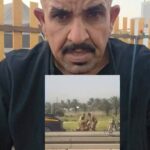
Prominent Iraqi political and militia leaders shared images without accompanying text, generating significant engagement. The most impactful post came from Muqtada Sayyid Muhammad al-Sadr (Post Impact: 100%), who published a photo of himself. Similarly, Qais al-Khazali (Post Impact: 71%), leader of Asa’ib Ahl al-Haq, posted an image of himself. This trend was also followed by accounts such as Dr. Laith al-Khazali (Post Impact: 43%) and Abu Alaa al-Walaei (Post Impact: 8%). The posts rely on visual symbolism to convey messages to their followers amidst a tense political and security climate.
2. Escalating Threats Between the US and Iran
Tensions between the United States and Iran are a major topic of discussion. Accounts reported on threats issued by former U.S. President Donald Trump, with Rusly Al-Maliki (Post Impact: 6%) quoting him as saying, “any time the Islamic Republic of Iran fires on a ship in the Strait of Hormuz… the United States will bomb and destroy one bridge or power plant.” In response, Iranian officials and allies issued their own warnings. Dr. Hussein Al-Safi (Post Impact: 9%) quoted Iran’s Revolutionary Guard Corps as preparing for “a military operation that will lead to a declaration of public mourning in America.” Another post by Rusly Al-Maliki (Post Impact: 14%) relayed a statement from Mohammad Marandi suggesting that in response to Trump, “Kuwait, Qatar, Saudi Arabia, Bahrain, the UAE, and possibly Oman should be evacuated.”
3. PM al-Zaydi’s Iran Visit and Militia Stance
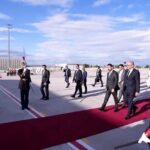
Prime Minister Ali al-Zaydi’s upcoming visit to Iran and his statements on state sovereignty are widely discussed. Rusly Al-Maliki (Post Impact: 9%) shared a statement from government spokesman Haider al-Aboudi, confirming the visit and emphasizing that “confining weapons to the state is an Iraqi affair to be discussed exclusively in Baghdad.” This position has drawn sharp reactions from armed groups. Hiba Alnnaayib (Post Impact: 6%) highlighted a threat from the spokesman for Kata’ib Sayyid al-Shuhada, who addressed al-Zaydi by saying, “You are a man who came by chance, so don’t butt heads with us, and no one can force us to confine our weapons.” Meanwhile, Shaho Al-Qaradaghi (Post Impact: 3%) quoted the Prime Minister’s resolve: “I may lose my life, but I will not accept anything less than a state governed by institutions.”
4. Muqtada al-Sadr Denounces Ghaith al-Tamimi
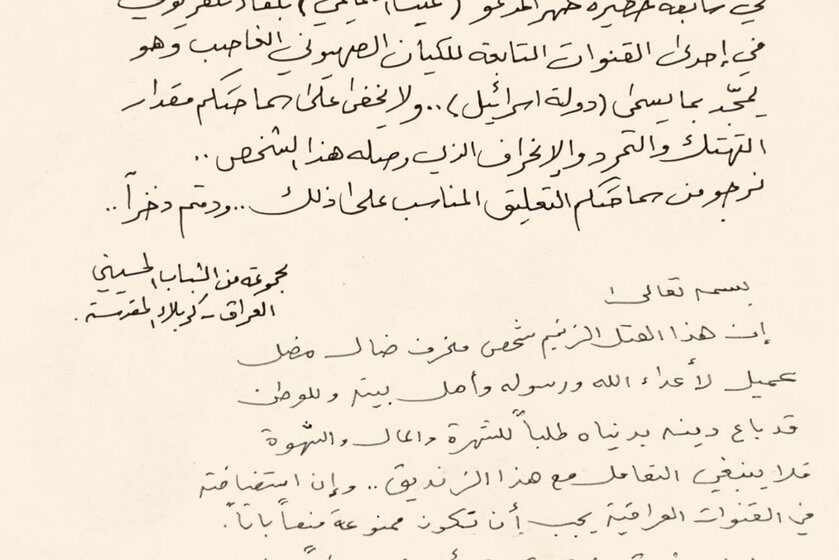
Influential cleric Muqtada al-Sadr issued a strong condemnation of political analyst Ghaith al-Tamimi. According to a post by Haider (Post Impact: 5%), al-Sadr described al-Tamimi as a “deviant, misleading, and corrupt agent who has sold his religion for his world in pursuit of fame, money, and lust.” The statement, also shared by Ali Farhan (Post Impact: 4%), called for al-Tamimi’s appearances on Iraqi channels to be “strictly forbidden” and urged his tribe to disown him. This public denunciation highlights the ongoing political and ideological conflicts within Iraq’s Shiite circles.
5. Major Leadership Changes in Iraqi Security Forces
Significant changes were reported at the top of Iraq’s security apparatus. Multiple sources, including Haider (Post Impact: 5%) and Dr. Zaid Abdulwahab Al-Adhami (Post Impact: 3%), announced that Lieutenant General Zaid Houshi has been appointed as the new head of the Iraqi Counter-Terrorism Service (CTS), replacing Lieutenant General Karim al-Tamimi. The official Counter-Terrorism Service (Post Impact: 4%) account confirmed the handover of duties. Other accounts, such as Abu Maryam (Post Impact: 4%), mentioned that these changes are part of a wider set of expected dismissals and appointments within the Ministries of Interior and Defense and the Popular Mobilization Forces.
6. Adnan al-Jumaili Anti-Corruption Case Developments
The anti-corruption campaign continues to be a focus, with new details emerging in the case of Adnan al-Jumaili, former Undersecretary of the Ministry of Oil. Several accounts shared news from the judiciary about the seizure of vast sums of money and assets. Haider (Post Impact: 6%) and Ali Farhan (Post Impact: 3%) reported that authorities found 13 billion Iraqi dinars, 400,000 US dollars, 40 gold bars, and other gold jewelry. Raad Hashim (Post Impact: 2%) posted a video showing the recovery of the illicit funds, including a barrel filled with cash found in a rural area.
7. Critique of Post-2003 Iraq’s Cultural Decline
A video comparing Iraqi students before and after 2003 sparked a debate about the perceived decline of culture and education in the country. A highly impactful post by Rusly Al-Maliki (Post Impact: 53%) presented interviews with students from both eras to highlight what the account described as a “huge difference in culture, language, style, interests, and manners.” The post lamented the change as a true “fall,” reflecting a nostalgic view of the pre-2003 era and a critical perspective on the societal shifts that have occurred since.
8. Discussion on the Saudi-US Nuclear Agreement
The landmark 30-year civil nuclear agreement between Saudi Arabia and the United States is being discussed by Iraqi commentators. Mahdi Majeed (Post Impact: 5%) hailed the deal as a “major achievement” that will bring prosperity to the entire region by diversifying energy sources and enhancing technological cooperation. David Yassin (Post Impact: 8%) offered a more strategic view, describing the development not just as a nuclear program but as “precise intelligence engineering to rebuild who holds the ‘enrichment’ decision in the region.” Salim Aljomaili (Post Impact: 3%) also noted the agreement.
9. UK Closes Embassy in Tehran Amid Regional Tensions
As a sign of escalating regional instability, the United Kingdom reportedly closed its embassy in Tehran. The news was shared by Rusly Al-Maliki (Post Impact: 9%), who also noted that Britain has warned its citizens against traveling to Israel. The embassy closure was also reported by Abu Maryam (Post Impact: 3%). This development is being interpreted as a precautionary measure in anticipation of a wider military conflict involving Iran, the US, and their respective allies in the region.
10. Criticisms Directed at Iraqi Parliamentarians
Iraqi parliamentarians are facing public criticism for their performance and conduct. Rusly Al-Maliki (Post Impact: 9%) shared a video mocking a female parliamentarian’s incoherent speech, stating, “I want to understand her intervention, what, who, why, I understood nothing.” In another critical post, Othman Al-Mokhtar (Post Impact: 4%) accused Parliament Speaker al-Halbousi and his allies of posturing against the head of the Financial Supervision Bureau while failing to question officials from the “Martyrs’ Foundation” about sensitive issues like mass graves, alleging they would not do so because powerful political parties protect those officials.