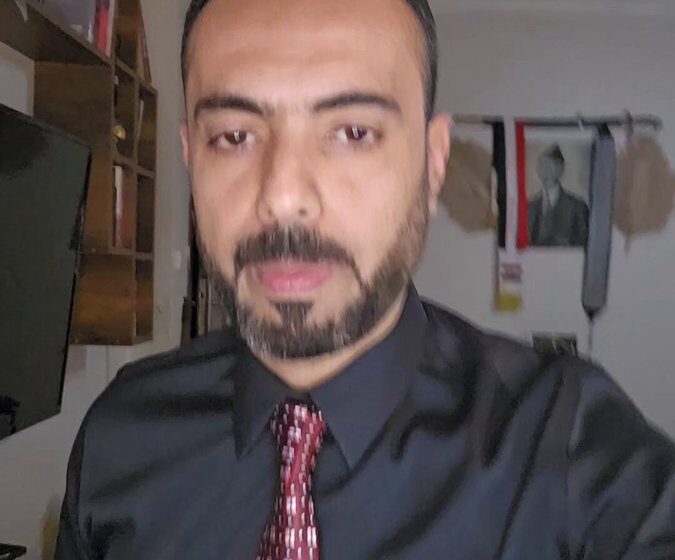
2026-07-28: Transport Minister’s Refusal to Sign Turkey Deal

Based on an analysis of 471 X / Twitter posts conducted by Miqrab AI on July 28, 2026, the primary narrative in Iraq revolves around Prime Minister Ali Al-Zaydi’s official visit to Turkey. This visit was dominated by a widely reported incident where the Iraqi Minister of Transport initially refused to sign an agreement concerning the crucial “Development Road” project, sparking accusations of foreign influence and causing a national embarrassment. Other significant conversations included praise for Iraqi security forces removing Iranian flags from visitors, asserting national sovereignty, and strong criticism of sectarian remarks made by actress Saba Ibrahim. Geopolitical tensions were also prominent, with Saudi Arabia accusing Iraqi-based militias of launching drone attacks on its oil facilities, alongside ongoing discussions about the extent of Iranian influence over Iraqi armed groups and US-FBI investigations into alleged corruption involving former Iraqi officials.
Table Of Content
- 1. Transport Minister’s Refusal to Sign Turkey Deal
- 2. PM Al-Zaydi’s Diplomatic and Economic Talks in Turkey
- 3. Iraqi Forces Remove Iranian Flags from Visitors
- 4. Actress Saba Ibrahim Faces Backlash for Sectarian Remarks
- 5. Saudi Arabia Alleges Drone Attacks from Iraq
- 6. FBI Investigates Mark Savaya and Iraqi Officials
- 7. Debate Over Iran’s Role in ‘Confining Arms’
- 8. Corruption Allegations in Iraq’s Electricity Sector
- 9. Arms Smuggling from Syria to ISIS Thwarted
- 10. Scrutiny of PM Ali Al-Zaydi’s Background
Today’s Top 10 X (Twitter) Trends in Iraq:
1. Transport Minister’s Refusal to Sign Turkey Deal
A significant controversy erupted during Prime Minister Ali Al-Zaydi’s official visit to Turkey when the Iraqi Minister of Transport, Wahab Al-Husseini, was seen refusing to sign an agreement for the “Development Road” project during a televised ceremony with Turkish President Erdoğan. Accounts like Rusly Al-Maliki (Post Impact: 100%) and Ali Farhan (Post Impact: 16%) shared videos of the incident, describing it as a “scandal” and a moment that brought “embarrassment to Iraq before the whole world.” Many users, including Mustafa Al-Dulaymi (Post Impact: 26%) and Maan Habib (Post Impact: 11%), pointed out that the minister is affiliated with the Iran-backed Badr Organization, led by Hadi al-Amiri, suggesting his refusal was politically motivated. The posts show PM Al-Zaydi visibly annoyed, questioning the minister about his refusal before he was reportedly compelled to sign the agreement. Calls for the minister’s dismissal circulated widely, with users demanding that Iraq’s interests be placed above those of neighboring countries.
2. PM Al-Zaydi’s Diplomatic and Economic Talks in Turkey
Beyond the controversy with the transport minister, Prime Minister Ali Al-Zaydi’s official visit to Ankara for talks with Turkish President Recep Tayyip Erdoğan was a major topic of discussion. The Prime Minister’s Media Office (Post Impact: 4%) shared updates on the formal reception and bilateral meetings. A key moment highlighted by Abu Maryam (Post Impact: 76%) was Al-Zaydi’s offer to supply Turkey with one million barrels of oil per day, which received a notable reaction from Erdoğan and Turkish ministers. According to Rusly Al-Maliki (Post Impact: 15%), the visit resulted in the signing of several memoranda of understanding, including cooperation between police academies, protection of industrial intellectual property, and collaboration between the two countries’ youth and sports ministries, in addition to the memorandum on the Development Road project.
3. Iraqi Forces Remove Iranian Flags from Visitors
Videos circulated on X showing Iraqi security forces removing Iranian flags carried by visitors, drawing praise from several accounts. Pages like Mustafa Al-Dulaymi (Post Impact: 12%) and Hiba Al-Nnaib (Post Impact: 11%) shared the clips, asserting that “In Iraq, only the Iraqi flag is raised.” The posts framed the action as a necessary step to uphold national sovereignty and counter foreign influence. Abu Maryam (Post Impact: 7%) and Raad Hashim (Post Impact: 3%) also covered the event, with comments suggesting the move was a welcome assertion of Iraqi identity, particularly in the context of religious pilgrimages where flags of other nations are often displayed.
4. Actress Saba Ibrahim Faces Backlash for Sectarian Remarks
Iraqi actress Saba Ibrahim became the subject of intense criticism following recent controversial statements. Zaidon Samir (Post Impact: 16%) posted a detailed critique, questioning whether her views on those who don’t believe in the “Wilayat of Imam Ali” extend to Iraqi Christians, Mandaeans, and Yazidis, who do not follow Islam. Samir also questioned her professional hypocrisy, recalling seeing her happily dining with Syrian producers and artists, and pointed out that Sunnis revere Imam Ali. In a more direct post, Bahaa khaleel (Post Impact: 7%) shared a clip of her remarks, sarcastically asking Imam Ali, “Is this one of your followers?” The comments were widely interpreted as sectarian and exclusionary, sparking a debate about tolerance and coexistence in Iraq.
5. Saudi Arabia Alleges Drone Attacks from Iraq
Tensions escalated as Saudi Arabia’s Ministry of Defense issued a statement claiming its petroleum facilities in the Eastern Province were attacked by drones launched from Iraqi territory. Steven Nabil (Post Impact: 3%) and Abu Maryam (Post Impact: 3%) reported on the official Saudi statement, which attributed the attacks to “terrorist militias affiliated with Iran.” This narrative was also shared by Hydar (Post Impact: 4%). However, some users, like Essam Hussein (Post Impact: 5%), questioned the claims, asking why Saudi air defenses seem capable of intercepting drones from Iraq but not those launched from Yemen, implying skepticism about the source of the attacks.
6. FBI Investigates Mark Savaya and Iraqi Officials
Reports surfaced alleging an FBI investigation into the dealings of former US envoy Mark Savaya with high-level Iraqi officials. Citing an article from The Cradle, Rafid Jaboori (Post Impact: 6%) and Mujahid Al-Taee (Post Impact: 3%) stated that former Prime Minister Shia Al-Sudani was questioned by the FBI regarding payments allegedly made to Savaya. The purpose of these payments was reportedly to lobby the Trump administration to prevent Nouri al-Maliki’s return to power and to impose sanctions on Iraqi Chief Justice Faiq Zaidan. Abu Maryam (Post Impact: 4%) also shared details from the report, highlighting that investigators were focusing on the money trail and the identities of up to 30 Iraqi officials involved in these arrangements.
7. Debate Over Iran’s Role in ‘Confining Arms’
A statement by Iraqi National Security Advisor Qasim Al-A’raji sparked a debate over Iraqi sovereignty. Al-A’raji claimed that during PM Al-Zaydi’s visit, Iran had pledged to assist in “confining arms to the state.” Accounts like Shahoz Al-Qaradaghi (Post Impact: 4%) and Basil Hussein (Post Impact: 3%) interpreted this as a clear admission that Iraqi armed factions are controlled by Iran and that the decision to control them is not a sovereign Iraqi one. Sheikh Thaer Al-Bayati (Post Impact: 4%) sarcastically questioned the government’s oft-repeated slogan of “Iraq’s sovereignty is a red line,” arguing that seeking Tehran’s permission to control militias operating on Iraqi soil proves the country’s decisions are compromised.
8. Corruption Allegations in Iraq’s Electricity Sector
Iraq’s perpetually troubled electricity sector was a focus of criticism, particularly aimed at the former government’s management. A former minister was reported by A. D Ghalib Al-Daami (Post Impact: 10%) to have stated that 22 trillion dinars were spent on gas imports in just four years, an amount he described as enough to power multiple continents. This led users like ahmedmeckya (Post Impact: 4%) and Abu Maryam (Post Impact: 9%) to point out the irony of the same former minister, now a member of parliament, interrogating the current minister over four months of performance when he presided over years of alleged waste and failure. The discussion highlighted deep-seated corruption and a lack of accountability in one of Iraq’s most critical public services.
9. Arms Smuggling from Syria to ISIS Thwarted
Security news featured prominently with reports that the Iraqi Border Ports Authority had successfully foiled an attempt to smuggle weapons into the country from Syria. According to Hydar (Post Impact: 8%), the shipment included eight Kalashnikov rifles and was allegedly sent by the Jabhat al-Nusra organization for ISIS cells operating in Iraq. An Iraqi driver was reportedly apprehended in connection with the smuggling attempt. In a follow-up post, Hydar (Post Impact: 9%) contrasted this news with what he described as media silence on such events compared to the coverage of alleged weapons smuggling to Hezbollah, questioning whether the incident would become a matter of public opinion.
10. Scrutiny of PM Ali Al-Zaydi’s Background
Amid his high-profile visit to Turkey, Prime Minister Ali Al-Zaydi’s past and business empire came under scrutiny from social media users. Mulla Aboud Al-Karkhi (Post Impact: 7%) provided a summary of Al-Zaydi’s profile, noting his ownership of the sanctioned South Bank, the Dijla TV channel, and his role in the national food basket program, questioning if more information about his rapid rise was being withheld. Mohamed Almaroof (Post Impact: 5%) offered a more detailed and critical account, describing Al-Zaydi as a key figure in an “economic axis” for pro-Iran factions. The post accused him of using his businesses for money laundering and consolidating economic power through ventures like the “Hyper Market” and control over food supplies to the Ministry of Defense, while alleging close ties to figures like Qais Khazali and Nouri al-Maliki.


