2026-07-29: US-Saudi Airstrikes Target PMF Sites Across Iraq

An analysis of 860 posts by Miqrab AI on July 29, 2026, reveals that the dominant narrative on X / Twitter in Iraq revolves around the widespread condemnation of joint U.S.-Saudi airstrikes on Popular Mobilization Forces (PMF) positions across the country. This central theme branched into several key sub-narratives, including angry reactions from faction leaders vowing revenge, a more nuanced statement from cleric Muqtada al-Sadr that drew both criticism and praise, and a broader debate about Iraqi sovereignty in light of armed groups launching attacks on neighboring countries. Other significant discussions included the reported killing of a senior Iranian IRGC commander in the strikes, the cancellation of the Iraqi Prime Minister’s visit to Saudi Arabia, and a controversial claim by former U.S. President Donald Trump that the attacks were coordinated with the Iraqi government.
Table Of Content
- 1. US-Saudi Airstrikes Target PMF Sites Across Iraq
- 2. Muqtada al-Sadr Calls Saudis ‘Brothers’ in Strike Response
- 3. Iraqi Transport Minister Hesitates on Turkey Development Deal
- 4. Faction Leaders Vow Retaliation for Airstrikes
- 5. Reports Indicate Iranian IRGC Commander Killed in Airstrike
- 6. Debate Rages Over Sovereignty and Factional Attacks
- 7. Calls Grow to Expel Saudi Ambassador and Retaliate
- 8. Prime Minister Al-Zaidi Cancels Scheduled Visit to Saudi Arabia
- 9. Trump Claims Airstrikes Were Coordinated with Iraqi Government
- 10. Official Government Response Outlines Diplomatic Action
Today’s Top 10 X (Twitter) Trends in Iraq:
1. US-Saudi Airstrikes Target PMF Sites Across Iraq
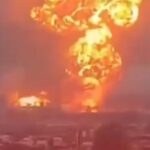
The most dominant story was the joint US-Saudi airstrikes that targeted official Popular Mobilization Forces (PMF) headquarters in multiple Iraqi provinces. Iraqi Prime Minister Mohammed Shia’ Al Sudani (Post Impact: 100%) condemned the attack in the strongest terms, calling it a “blatant violation of Iraq’s sovereignty” and a breach of international law. The PMF Media Directorate (Post Impact: 24%) issued a statement describing the events as “treacherous terrorist attacks” and later released a preliminary casualty count of at least 20 killed and 32 wounded. The Government of Iraq (Post Impact: 8%) announced that its Ministerial Council for National Security had directed the Foreign Ministry to pursue action under international law to document the aggression and affirm Iraq’s rights.
2. Muqtada al-Sadr Calls Saudis ‘Brothers’ in Strike Response
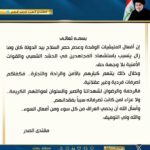
Influential cleric Muqtada al-Sadr (Post Impact: 71%) issued a widely discussed statement that took a nuanced stance on the airstrikes. While condemning the attacks on Iraqi soil, he notably referred to Saudi Arabia as “brothers” and implicitly criticized factions that use Iraq as a launchpad for attacks on neighboring countries, stating that Iraq should not be an arena for settling scores. This position stood in stark contrast to the more uniformly hostile reactions from other political and militia figures. The user Haidar (Post Impact: 3%) pointed out that Sadr’s statement received “widespread Saudi praise” just hours after the attack that targeted sites including Karbala.
3. Iraqi Transport Minister Hesitates on Turkey Development Deal
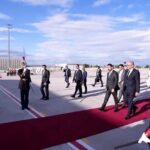
A video shared by Sufian Al-Samarrai (Post Impact: 32%) sparked a separate controversy regarding the Iraq-Turkey Development Road agreement. The clip appears to show Iraqi Minister of Transport Wahab Salman Al-Hassani, whom Al-Samarrai identifies as being affiliated with the Badr Organization, hesitating and maneuvering to avoid signing the agreement. According to the post, the minister’s reluctance was “exposed” by both Iraqi Prime Minister Ali Al-Zaidi and Turkish President Erdoğan, who were present at the signing. Rusly Al-Maliki (Post Impact: 3%) noted that the Turkish press had picked up on his criticism of the minister, whom he accused of acting on Iran’s behalf and being a “disgrace to Iraqis.”
4. Faction Leaders Vow Retaliation for Airstrikes
Leaders and supporters of armed factions responded to the airstrikes with vows of revenge and condemnation. Qais Khazali (Post Impact: 22%), leader of Asa’ib Ahl al-Haq, posted a graphic suggesting a forthcoming response. Prominent PMF figure Abu Azrael (Post Impact: 21%) expressed his sorrow and anger, stating, “Unfortunately, the martyr became a militia, and the killer became a dear brother.” A statement attributed to Saraya Awliya al-Dam and shared by the account Haidar (Post Impact: 2%) called on the Iraqi government to expel the Saudi ambassador, warning that if the government fails, the people should demand that the “resistance” take control of state weaponry.
5. Reports Indicate Iranian IRGC Commander Killed in Airstrike
Several accounts reported that a senior Iranian Islamic Revolutionary Guard Corps (IRGC) commander was among those killed in the airstrikes. Sheikh Thaer Al-Bayati (Post Impact: 9%) and Aayad Al Twfan (Post Impact: 4%) both named the individual as General Iqbal Pour, commander of the “northern axis,” killed in Amerli. Mustafa Al-Dulaimi (Post Impact: 6%) provided a profile, describing Pour as an Iranian national and the “de facto military governor” of areas in north Diyala, Kirkuk, and Tuz Khurmatu, who was responsible for directing armed PMF factions in the region. This led to questions from accounts like Ali Farhan (Post Impact: 3%) about what IRGC officers were doing in PMF camps.
6. Debate Rages Over Sovereignty and Factional Attacks
The airstrikes triggered a heated debate about the meaning of Iraqi sovereignty. While many officials condemned the attack as a violation, others argued that sovereignty was first compromised by Iraqi factions attacking neighboring countries. Rusly Al-Maliki (Post Impact: 16%) criticized the factions, saying, “Day and night you threaten neighboring countries… and when these countries defend themselves and respond, they become the aggressors.” Shaho Al-Qaradaghi (Post Impact: 7%) echoed this sentiment by quoting the late analyst Hisham al-Hashimi, who described the duality of these groups: “They are resistance factions when they shell neighboring countries, but they are the Popular Mobilization Forces when they are shelled and targeted.”
7. Calls Grow to Expel Saudi Ambassador and Retaliate
In response to the airstrikes, several accounts demanded a strong and tangible response from the Iraqi government against Saudi Arabia. Dr. Hussein Al-Safi (Post Impact: 11%) stated directly, “The Saudi ambassador must be expelled from Iraq,” arguing that anything less would be a sham procedure. In another post, he shared a photo of a Saudi Aramco facility, which was interpreted as a veiled threat. The calls for retaliation were also echoed by users like Wasan Al-Shaikhli (Post Impact: 6%), who stated that any Saudi business inside Iraq is “liable to be burned.”
8. Prime Minister Al-Zaidi Cancels Scheduled Visit to Saudi Arabia
In the immediate aftermath of the airstrikes, it was widely reported that Prime Minister Ali Al-Zaidi had canceled his planned visit to Saudi Arabia. The cancellation was reported by accounts like Abu Maryam (Post Impact: 3%) and Haidar (Post Impact: 3%). The decision was interpreted differently across the platform. Sheikh Thaer Al-Bayati (Post Impact: 3%) described the cancellation as “expected,” arguing that the PM first needs to address the internal issue of armed groups before engaging with neighbors. In contrast, analyst David Yassin (Post Impact: 4%) characterized the move as “explicit compliance with factional pressure” that would undermine the prime minister’s legitimacy.
9. Trump Claims Airstrikes Were Coordinated with Iraqi Government
A controversial narrative emerged after former U.S. President Donald Trump claimed the airstrikes were conducted in coordination with the Iraqi government. This claim, reported by users such as Haidar (Post Impact: 3%), added another layer of complexity to the situation. Analyst Liqaa Maki (Post Impact: 6%) noted that the claim, regardless of its accuracy, would ignite a fierce conflict in Baghdad and could force Prime Minister Al-Zaidi to adopt a tougher stance toward the U.S. and Saudi Arabia to disprove it. Political commentator Ezzat Alshabandar (Post Impact: 2%) dismissed the statement as a “Trump show lie,” warning that trusting Trump is a “sin.”
10. Official Government Response Outlines Diplomatic Action
The Iraqi government issued its formal response through a statement from the National Security Council, chaired by Prime Minister Ali Al-Zaidi. The statement, shared by the official Government of Iraq (Post Impact: 8%) account and the Prime Minister’s Media Office (Post Impact: 3%), expressed condemnation for the aggression. The council directed the Foreign Ministry to “move in accordance with international law and the UN Charter to document the case and establish Iraq’s legitimate rights.” The statement reiterated the government’s rejection of all hostile acts and stressed that confronting such attacks is the “exclusive responsibility of the Iraqi government and its constitutional state institutions, and no one else.”