2026-08-05: Muqtada al-Sadr’s Redefinition of Imam Ali Stirs Debate

Based on an analysis of 389 X / Twitter posts by Miqrab AI on August 5, 2026, the primary narratives circulating in Iraq revolve around significant political and religious declarations, domestic crises, and tense regional geopolitics. The most impactful story was a statement from cleric Muqtada al-Sadr redefining a key historical Islamic figure, sparking wide discussion. Alongside this, conversations were dominated by deep-seated concerns over systemic corruption and the squandering of state oil and non-oil revenues, leading to a severe economic crisis and an impending government austerity plan. Regional dynamics were also at the forefront, with intense debate over Iraq’s relationship with Saudi Arabia following recent hostilities, alongside analysis of shifting US-Iran relations marked by the lifting of some American sanctions. Other prominent topics included allegations of severe misconduct by security forces, high-level political meetings between Baghdad and the Kurdistan Regional Government, and commentary on Iran’s influence and regional military posturing.
Table Of Content
- 1. Muqtada al-Sadr’s Redefinition of Imam Ali Stirs Debate
- 2. Accusations of Widespread Corruption and Misuse of State Funds
- 3. US Lifts Sanctions on Iran and Iraqi Airline Fly Baghdad
- 4. Iraq-Saudi Relations: Threats and Diplomatic Overtures
- 5. Outrage Over Alleged Rape of Prisoner in Diwaniyah
- 6. Iran’s Regional Power and Symbolic Gestures Towards Iraq
- 7. Government Austerity Plan and Protests Over Salary Delays
- 8. Reports of Syrian Military and Militia Movements Near Iraq
- 9. High-Level Baghdad-Erbil Meeting to Address Challenges
- 10. Commentary on Sectarianism in Iraqi Politics and Society
Today’s Top 10 X (Twitter) Trends in Iraq:
1. Muqtada al-Sadr’s Redefinition of Imam Ali Stirs Debate
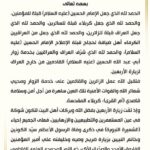
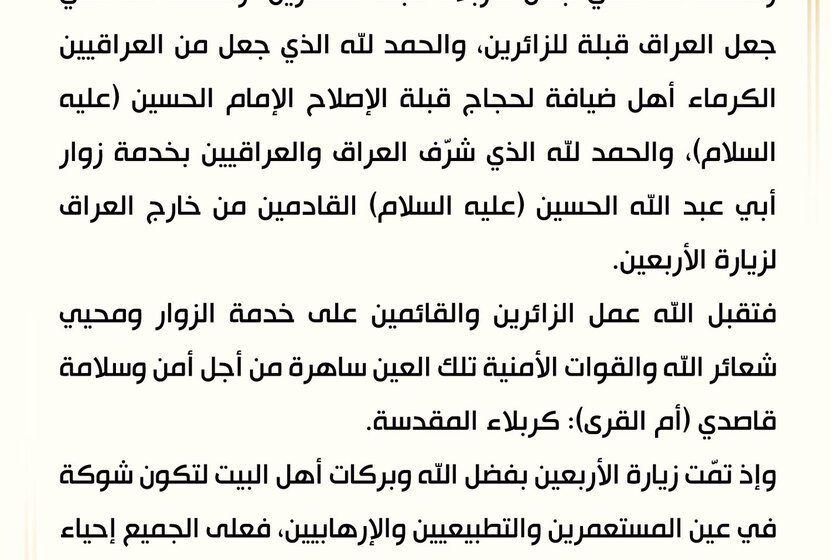
A highly influential post by Shiite cleric Muqtada al-Sadr presented a statement describing Imam Ali with titles historically associated with Sunni Caliphs. The post by Muqtada al-Sadr (Post Impact: 100%), which contained only an image of the text, gained massive traction. The statement was quoted by other users, such as Shaho Al-Qaradaghi (Post Impact: 12%), who highlighted the key phrase: “Imam Ali is the successor of the Prophet, the one and only Faruq, and the greatest Siddiq.” This re-appropriation of titles like “Al-Faruq” and “Al-Siddiq al-Akbar,” traditionally given to Caliphs Umar ibn al-Khattab and Abu Bakr respectively, has generated significant online discussion regarding its religious and political implications.
2. Accusations of Widespread Corruption and Misuse of State Funds
A detailed post from Rusly Al-Maliki (Post Impact: 11%) alleges that a massive portion of Iraq’s state revenue is systematically stolen by political parties. He claims that non-oil revenues, which he estimates at $35 billion annually, are not included in the budget and are instead divided among parties, and that oil revenues are also subject to theft, leaving only a third of the country’s wealth for its 45 million citizens. This sentiment was echoed in discussions about anti-corruption measures, with accounts like Abu Maryam (Post Impact: 5%) and Prof. Dr. Ghalib Al-Da’ami (Post Impact: 3%) highlighting a new initiative by the Minister of Electricity to open financial disclosure files for all senior ministry officials dating back to 2005, a move seen as a potential crackdown on long-standing corruption.
3. US Lifts Sanctions on Iran and Iraqi Airline Fly Baghdad
The U.S. Treasury Department’s decision to lift some Iran-related sanctions, as well as sanctions against the Iraqi airline Fly Baghdad, prompted varied reactions. Several accounts, including Haydar (Post Impact: 4%) and Dr. Zaid Abdulwahab Al-A’adhami (Post Impact: 4%), reported the removal of Fly Baghdad from the sanctions list. Simultaneously, the easing of Iran-related sanctions was met with criticism by users like Mahdi Majeed (Post Impact: 12%), who accused America of propping up the Iranian regime and stated, “Damn America, the biggest criminal country that destroyed the Arab region and the world.” Other commentators debated whether the move was part of a larger US-Iran deal or a result of Iraqi government diplomacy.
4. Iraq-Saudi Relations: Threats and Diplomatic Overtures
The complex relationship between Iraq and Saudi Arabia was a major topic, marked by both hostile rhetoric and high-level diplomacy. On one hand, figures like politician Aras Habib, quoted by Shaho Al-Qaradaghi (Post Impact: 5%), issued threats, stating, “If the Shiites get angry, we will take you on foot… we will not have mercy on you.” Similarly, Ali Fadlallah (Post Impact: 4%) condemned the Iraqi Foreign Minister’s meeting with his Saudi counterpart, calling Saudi Arabia an “aggressive terrorist state.” On the other hand, diplomatic efforts were highlighted by Ali Farhan (Post Impact: 4%), who reported that the two foreign ministers discussed ensuring that Iraqi territory is not used for aggression against its neighbors, signaling a move to de-escalate tensions.
5. Outrage Over Alleged Rape of Prisoner in Diwaniyah
Reports of a female inmate being raped inside a police center in the southern city of Diwaniyah sparked significant outrage and condemnation. Othman Al-Mukhtar (Post Impact: 9%) described the incident as part of a “very dirty swamp… unlike any in Iraq’s entire history,” and sharply criticized a media figure associated with militias for allegedly justifying the crime by claiming the victim consented. Yasser Eljuboori (Post Impact: 4%) also questioned the legitimacy of the same media personality investigating the case, pointing out the conflict of interest after having publicly defended the police officers involved.
6. Iran’s Regional Power and Symbolic Gestures Towards Iraq
Discussions surrounding Iran’s role in the region covered both its perceived strength and its relationship with Iraq. Najah Mohammed Ali (Post Impact: 9%) shared an image of Tehran’s Azadi Tower illuminated with the colors of the Iraqi flag, describing it as “a message of solidarity and love stemming from the depth of historical ties.” In a different vein, Issam Hussein (Post Impact: 7%) commented on Iran’s geopolitical stature, stating that it has become the “General of the Gulf despite the United States.” Meanwhile, a post from Shaho Al-Qaradaghi (Post Impact: 6%) quoted Iranian President Pezeshkian claiming that a plan had been made “to seize Iran within 48 hours, just as happened in Syria,” highlighting Iranian leadership’s perception of external threats.
7. Government Austerity Plan and Protests Over Salary Delays
Amid a worsening economic situation, news of a major government austerity plan and ongoing protests over delayed salaries were prominent topics. Haydar (Post Impact: 4%) shared a detailed report from the 964 Agency indicating that beginning August 10, Iraq will enter “the most extensive operational austerity plan since the Saddam Hussein embargoes,” requiring ministries to cut their monthly expenses in half. This news circulated as citizens were already taking to the streets. Posts from Raad Hashim (Post Impact: 4%) documented ongoing protests in Baghdad over the salary delays, while another post from the same account showed similar demonstrations taking place in Kirkuk.
8. Reports of Syrian Military and Militia Movements Near Iraq
Accounts on X reported significant military movements in Syria with potential implications for Iraq’s security. Rusly Al-Maliki (Post Impact: 8%) reported that a “huge military convoy of the Syrian army” was heading towards the headquarters of the 62nd Division, affiliated with Abu Amsha, in Hama. Adding to the reports of regional instability, Ali Fadlallah (Post Impact: 4%) claimed that 20,000 Syrian fighters under Al-Jolani were being redeployed, with 5,000 allegedly positioned on the Iraqi-Syrian border to prevent any intervention from Iraq and another 10,000 on the Lebanese border to attack Hezbollah.
9. High-Level Baghdad-Erbil Meeting to Address Challenges
A significant political meeting took place in Baghdad between Iraqi Prime Minister Ali Al-Zaidi and Kurdistan Region President Nechirvan Barzani to discuss national challenges and cooperation. In his post, Nechirvan Barzani (Post Impact: 6%) described the meeting as “fruitful” and affirmed the Kurdistan Region’s support for the federal government’s program to achieve stability and economic reform. The official account of the Prime Minister’s Media Office (Post Impact: 2%) also covered the meeting, stating that the Prime Minister emphasized the government’s commitment to resolving all outstanding issues with the region “in accordance with the constitution and the law.”
10. Commentary on Sectarianism in Iraqi Politics and Society
Sectarian rhetoric continues to feature in Iraqi political discourse, as highlighted by several X posts. The account Haydar (Post Impact: 7%) shared a clip of Kurdish judge Munir Haddad stating that unless a specific sect returns to rule Iraq, “the Arabs do not want Iraq.” In another example of sectarian language, Shaho Al-Qaradaghi (Post Impact: 5%) quoted politician Aras Habib making threats against Saudi Arabia framed in sectarian terms, declaring, “We are crazy with love for Hussein and Ali, and we will not have mercy on you.” These posts reflect the ongoing presence of sectarian narratives in public and political conversations.