2026-08-15: Sadrist Movement Launches “Seven Spikes” Campaign

An analysis of 340 X / Twitter posts trending in Iraq on August 15, 2026, by Miqrab AI reveals a media landscape dominated by the contentious issue of confining weapons to the state and the role of armed factions. This central theme branched into several related narratives, including a significant controversy over a promotional video by the state-run Al-Iraqiya channel, which was perceived as targeting resistance groups, and official clarifications that the government’s policy excludes the Popular Mobilization Forces. Tensions surrounding Iran’s influence were also prominent, fueled by reports of regional military incidents and viral videos stoking nationalistic sentiments. Other key topics included the ongoing plight of displaced persons from Jurf al-Sakhr, praise for the government’s anti-corruption efforts yielding record revenues at border crossings, and announcements of major investments in the electricity sector.
Table Of Content
- 1. Sadrist Movement Launches “Seven Spikes” Campaign
- 2. Iran’s Role and Regional Tensions Spark Debate
- 3. The Plight of Displaced People from Jurf al-Sakhr
- 4. Controversy over State TV’s “Handover Your Weapon” Ad
- 5. Debate on Confining Weapons to the State Heats Up
- 6. Government Praised for Record Border Revenues
- 7. Historical Video of Ahmed Al-Kubaisi Resurfaces
- 8. Government Announces Major Electricity Sector Plan
- 9. Political Leaders Meet to Discuss Government Support
- 10. Leaked Recording of Politician Muthanna al-Samarrai
Today’s Top 10 X (Twitter) Trends in Iraq:
1. Sadrist Movement Launches “Seven Spikes” Campaign
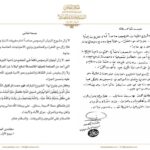
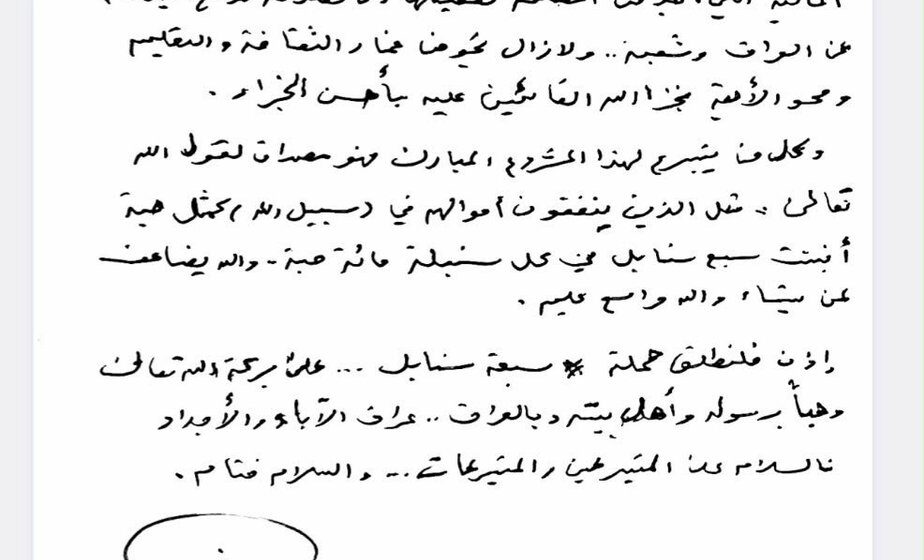
The highest-engagement post of the day came from Wazir al-Qaid – Salih Muhammad al-Iraqi (Post Impact: 100%), an account associated with Sadrist leader Muqtada al-Sadr, which shared a graphic announcing a new initiative. Other accounts, such as Al-Bunyan Al-Marsus Central (Post Impact: 4%) and Alaa Alabadi (Post Impact: 3%), identified the initiative as the “#Seven_Spikes” (#سبعة_سنابل) campaign. The posts specify that the project was founded and is continuously supported by Muqtada al-Sadr, indicating a new phase of social or political mobilization by the Sadrist movement.
2. Iran’s Role and Regional Tensions Spark Debate
Discussions surrounding Iran’s influence and regional actions were a significant theme. Rusly Al-Maliki (Post Impact: 22%) reported that Iran sent a message to the Red Cross complaining that Qatar had captured three of its pilots after downing their aircraft in the Gulf. Separately, Raad Hashim (Post Impact: 21%) shared a widely circulated video of an Iranian visitor claiming, “If it weren’t for us Iranians, Iraq would not have been liberated… they were dying of hunger without us.” In contrast, a defiant pro-Iran viewpoint was expressed by Dr. Hussein Al-Safi (Post Impact: 16%), who wrote, “The time is ours now, we will rule the region whether one likes it or not.”
3. The Plight of Displaced People from Jurf al-Sakhr
The unresolved situation of the displaced population of Jurf al-Sakhr remained a prominent topic of concern and anger. Othman Al-Mukhtar (Post Impact: 22%) posted a video showing their living conditions in desert camps, stating that they were “exiled by Iran’s militias that occupy their city and have prevented their return for 12 years.” Wasan Al-Shaikhli (Post Impact: 6%) also posted a video from the area, sarcastically noting that displaced people were waiting for politicians Khamis al-Khanjar and Adnan al-Janabi to arrive. The posts collectively highlight the ongoing humanitarian crisis and blame armed factions and political figures for the lack of a resolution.
4. Controversy over State TV’s “Handover Your Weapon” Ad
The state-owned Al-Iraqiya channel faced intense backlash for broadcasting a promotional video related to the government’s policy of disarming factions. Emad Al Musafir (Post Impact: 21%) accused the channel of insulting people from southern Iraq and attempting to “demonize the resistance factions and distort their image.” Similarly, Abbas Al-Ardawi (Post Impact: 8%) condemned the video as a deviation from professionalism and an “attack on resistance factions.” The controversy escalated to the political level, with Ali Farhan (Post Impact: 10%) reporting on parliamentary efforts to “interrogate the head of the Iraqi Media Network in preparation for his dismissal.”
5. Debate on Confining Weapons to the State Heats Up
The government’s deadline of September 30 for armed groups to hand over their weapons fueled widespread debate. Haidar (Post Impact: 13%) argued that with Shiites holding key positions in all state security institutions, there should be no fear of placing all weapons under state control. Sajad Salim (Post Impact: 12%) expressed skepticism about the government’s seriousness but emphasized that the issue is a “fateful matter and a battle of existence” for Iraq’s independence. In response to the growing tension, official clarifications emerged. Haidar (Post Impact: 7%) shared a statement from the Iraqi Armed Forces specifying that the Popular Mobilization Forces (PMF) are legally part of the state and not targeted by the decision, which is aimed at “entities outside the framework of security institutions.”
6. Government Praised for Record Border Revenues
Positive news about government performance centered on a significant increase in revenues from border crossings. Aayad Al Twfan (Post Impact: 14%) highlighted that, for the first time since 2003, border authorities delivered 500 billion Iraqi dinars to the state treasury in a single month. The post praised Prime Minister Ali Al-Zaydi and Border Crossings Director Major General Omar Al-Waeli for their anti-corruption efforts. Echoing this sentiment, Prof. Dr. Ghalib Al-Da’mi (Post Impact: 10%) remarked that this achievement reveals the massive scale of previous corruption and suggested that continued reform could lead to non-oil revenues covering the state’s salary obligations.
7. Historical Video of Ahmed Al-Kubaisi Resurfaces
A video from 2003 featuring cleric Ahmed Al-Kubaisi was recirculated, prompting discussions about historical political stances. Wasan Al-Shaikhli (Post Impact: 14%) shared the clip, alleging that just 16 days after the fall of the previous regime, Al-Kubaisi stood on the pulpit of the Abu Hanifa Al-Numan Mosque and called on Iraqis to cooperate with American forces, whom he described as “just rulers.” The resurfacing of such historical clips serves to question the past allegiances of public figures within the context of current political debates.
8. Government Announces Major Electricity Sector Plan
The Iraqi government’s new strategy to tackle the country’s chronic electricity shortages was a key topic of discussion. The Prime Minister’s Media Office (Post Impact: 5%) and Haidar (Post Impact: 11%) reported on Prime Minister Ali al-Zaydi’s visit to the Ministry of Electricity, where he declared that 2027 will be “the year of doubling electricity production.” The Prime Minister directed the ministry to purchase a total of 37,000 megawatts of new capacity from various sources, including 15,000 MW from General Electric (GE), 12,000 MW from solar power, and 10,000 MW from thermal plants, in addition to importing 10,000 MW from neighboring countries.
9. Political Leaders Meet to Discuss Government Support
High-level political meetings within the ruling Shiite coalition garnered attention as a sign of internal coordination. Ammar Al-Hakim (Post Impact: 10%), head of the National Wisdom Movement, posted about his meeting with Hadi al-Amiri, Secretary-General of the Badr Organization. He stated they emphasized supporting Prime Minister Ali Al-Zaydi’s government in its service and anti-corruption missions and stressed the importance of the “unity of the Coordination Framework.” Another account, Abu Maryam (Post Impact: 7%), interpreted the meeting as a reaction to recent political pressures, commenting that “it seems the message from last night achieved its goals.”
10. Leaked Recording of Politician Muthanna al-Samarrai
An alleged leaked audio recording of Muthanna al-Samarrai, the head of the Sunni Azm political bloc, circulated widely and caused a stir. Both Yasser Eljuboori (Post Impact: 11%) and MUNQITH DAGHER (Post Impact: 3%) shared the clip, describing it as a “leaked audio recording” and a “scandal.” While the content of the recording was not detailed in the posts, its dissemination generated significant speculation and discussion about potential political fallout for the prominent Sunni leader.