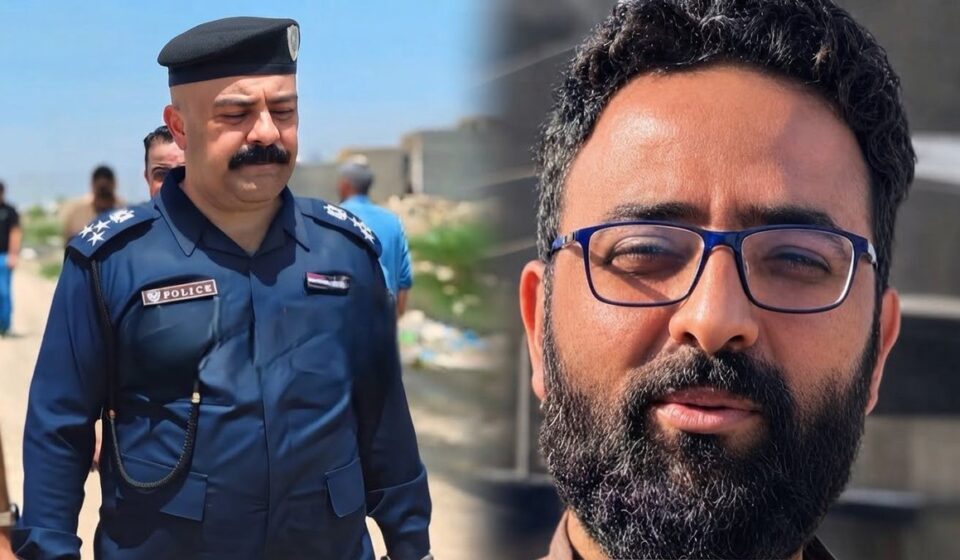
2026-08-27: Officer Killed in Clash Over Illegal Settlements in Dora

Based on an analysis of 473 X / Twitter posts on August 27, 2026, Miqrab AI identified several key narratives trending in Iraq. The most dominant conversation centered on a deadly clash in Baghdad’s Dora district, where the killing of a senior police officer during an operation to remove illegal settlements sparked widespread outrage over lawlessness and the state’s weakness. This incident also fueled discussions about sectarianism and political corruption. Another significant theme was strong anti-Iranian sentiment, fueled by allegations of Iran’s historical hypocrisy in collaborating with the United States, alongside reports of its current severe economic crisis and perceived hostility toward Iraqis. Broader critiques of the Iraqi government’s chronic failures in providing basic services and security were also prevalent, with many users expressing deep pessimism about the country’s future.
Table Of Content
- 1. Officer Killed in Clash Over Illegal Settlements in Dora
- 2. Iranian Official’s Admission of Aiding U.S. Sparks Outrage
- 3. Reports of Iranian Hostility Towards Iraqis
- 4. “Cycle of Failure” and State Incompetence Criticized
- 5. Reports Highlight Severe Economic Crisis in Iran
- 6. Dora Incident Sparks Accusations of Sectarian Blame-Shifting
- 7. Alarm Over Public Insults to Islamic Religious Figures
- 8. Suspects in Fatal Dora Attack Identified and Pursued
- 9. Politicians Implicated in Dora Land Dispute and Violence
- 10. U.S. Pressures Iraq Over Iran-Backed Militias
Today’s Top 10 X (Twitter) Trends in Iraq:
1. Officer Killed in Clash Over Illegal Settlements in Dora
A violent incident in the Al-Bu Aitha area of Dora, Baghdad, dominated conversations after security forces clashed with residents during a campaign to remove illegal housing. The confrontation resulted in the death of Brigadier General Hisham Mohammed, director of the Karkh side’s municipal police, and officer Khalid Abbas Lafteh, with several others injured. Accounts like Haider (Post Impact: 51%) lamented the tragedy of a high-ranking officer being killed by a “worthless, ignorant person” while performing his duty. Political figures such as Ammar Al-Hakim | عمار الحكيم (Post Impact: 36%) condemned the “shameful criminal act” and called for preserving the state’s authority. The incident prompted widespread outrage, with users like Yasser Eljuboori – ياسر الجبوري (Post Impact: 32%) calling on the Prime Minister to personally lead the response. Many commentators, including MUNQITH DAGHER (Post Impact: 29%), viewed the killing not just of an officer but of the state itself, stating, “The one killed is not of the rank of brigadier general, but rather of the rank of a state.”
2. Iranian Official’s Admission of Aiding U.S. Sparks Outrage
A video of Kamal Kharrazi, an advisor to Iran’s Supreme Leader Khamenei, circulated widely, prompting accusations of Iranian hypocrisy. In the clip, Kharrazi allegedly states that during the U.S. war in Afghanistan, Iran secretly placed Sistan and Baluchestan airport “entirely at the disposal of the United States” and even “provided blood for the wounded American soldiers.” Aayad Al Twfan – Aayad Al Twfan (Post Impact: 56%) labeled those who follow Iran as “traitors, agents, and tails,” highlighting the contrast between Iran’s public anti-American chants and its alleged covert cooperation with the “Great Satan” to occupy a Muslim country. Both Rusly Al-Maliki 🇮🇶 رسلي المالكي (Post Impact: 53%) and Al Twfan extended this accusation, claiming Iran later collaborated with the U.S. to invade and subsequently control Iraq.
3. Reports of Iranian Hostility Towards Iraqis
Strong anti-Iranian sentiment was evident in several high-engagement posts. Rusly Al-Maliki 🇮🇶 رسلي المالكي (Post Impact: 100%) sarcastically commented on a video purportedly showing Iranians beating Iraqis in Iran, saying, “We thank the Iranians who beat Iraqis in Iran, and we hope you continue… so that this jerboa… knows that no one respects him there… or here.” Another post by the same account shared a video claiming to show the “hatred and envy of Iranians towards Iraqis for owning luxury cars,” linking this resentment to the Iran-Iraq War (which the post refers to as the Qadisiyyah War). These posts depict a narrative of disrespect and deep-seated animosity from Iranians towards Iraqis.
4. “Cycle of Failure” and State Incompetence Criticized
Users expressed deep frustration with the Iraqi state’s perceived incompetence and mismanagement. Rusly Al-Maliki 🇮🇶 رسلي المالكي (Post Impact: 56%) penned a lengthy satire describing the “life cycle of failure in nature,” mocking a system where internet blackouts for exams lead to failure, which leads to protests demanding jobs, which leads to more government dysfunction. In a related critique, Sajad Al-Jubouri (Post Impact: 52%) argued that the government creates problems like the Dora clash by giving “outside the law” building permits to powerful contractors, only to later label the residents as trespassers and send security forces, leading to inevitable conflict. Both posts portray a state that is fundamentally broken and responsible for its own crises.
5. Reports Highlight Severe Economic Crisis in Iran
Multiple accounts shared content depicting a severe economic crisis in Iran. David Yassin (Post Impact: 54%) analyzed the situation, stating that the economic embargo is a “structural dismantling tool” intended to “dry up sovereign liquidity” and provoke a “socio-economic explosion.” Supporting this narrative, Mujtahid Iraq (Post Impact: 44%) posted a video allegedly showing a pharmacy in Iran closing its doors and refusing to sell medicine after the collapse of the currency. The same account also shared a video of what it called a “total halt in Iranian ports,” suggesting a widespread economic shutdown.
6. Dora Incident Sparks Accusations of Sectarian Blame-Shifting
The deadly clash in Dora quickly became entangled in sectarian narratives. Accounts like Haider (Post Impact: 46%) claimed that after it became clear the assailants “belong to a Sunni party,” some journalists and bloggers shifted their rhetoric from demanding law and order to questioning why the state was removing the settlements. Similarly, Issam Hussein (Post Impact: 27%) accused “Sunni media” of initially blaming armed factions before quieting down once the perpetrators’ identity was known. Conversely, Ali Farhan ali farhan (Post Impact: 29%) warned against malicious attempts to give the crime a sectarian label, insisting the perpetrator is a “criminal” regardless of his sect and that the focus should be on the security failures in the Baghdad belt region.
7. Alarm Over Public Insults to Islamic Religious Figures
A number of posts expressed grave concern about rising sectarian tensions and public insults against revered figures in Islam. Othman Al-Mukhtar (Post Impact: 41%) claimed that insults against the Prophet’s companions (Sahaba) are now more common in Iraq than in non-Muslim countries, blaming a “religious line” in control of the judiciary that does not see it as a crime. This sentiment was echoed by Dhafer Al-Ani (Post Impact: 23%). In a broader call to action, Ezzat Alshabandar | Ezzat Alshabandar (Post Impact: 37%) warned that sectarianism is a “dangerous disease” that is being revived and urged religious and state authorities to address the issue before it escalates into a destructive conflict where “the only winner is Israel.”
8. Suspects in Fatal Dora Attack Identified and Pursued
Following the deadly attack on security forces in Dora, several accounts shared information identifying the alleged perpetrators. Abu Maryam (Post Impact: 39%) posted a list of seven suspects who were allegedly arrested, and named Mohammed Abdulmajeed Hameed Khalaf al-Taie as a fugitive suspect who opened fire. Dr. Qusay Shafiq (Post Impact: 33%) also shared a photo claimed to be of the killer. Later, Issam Hussein (Post Impact: 28%) reported the arrest of Mohammed Abdul Majeed Al-Aithawi at the Al-Laj checkpoint, claiming he was attempting to flee to Erbil to become an “activist against militias.” The posts reflect a rapid effort to identify and apprehend those responsible for the officer’s death.
9. Politicians Implicated in Dora Land Dispute and Violence
The violence in Dora was linked by some accounts to the actions of specific politicians. Hiba Alnnayib HIBA Alnnayib (Post Impact: 33%) shared a video of the clash, claiming the attackers were the protection detail of MP Yahya al-Aithawi, whom she identified as being affiliated with Mohammed al-Halbousi. Another user, Abu Maryam (Post Impact: 15%), alleged that former MP Yahya al-Faraj al-Aithawi sold the contested lands to residents from Latifiya. This narrative suggests the conflict is rooted not just in illegal settlement but in political corruption and the use of influence by politicians to control land and protect their interests, ultimately leading to deadly violence.
10. U.S. Pressures Iraq Over Iran-Backed Militias
Discussion emerged around U.S. pressure on Iraq concerning Iran-backed armed groups. Citing Independent Arabia, Abu Maryam (Post Impact: 14%) reported that Washington had halted a $500 million cash shipment to Iraq and suspended some security cooperation to pressure Baghdad over these factions. In a related post, Raad Hashim (Post Impact: 12%), citing Rudaw network, claimed the U.S. rejected a proposal from five pro-Iran groups—including Kata’ib Hezbollah and Harakat al-Nujaba—to freeze their military activities for two years instead of fully disarming. The U.S. reportedly dismissed the offer as a “trick.” These posts highlight ongoing tensions between Baghdad and Washington over the influence and armament of factions aligned with Tehran.


