2026-09-10: Muqtada al-Sadr Calls for Hijab on Najaf Flights

Based on an analysis of 523 X / Twitter posts trending on September 10, 2026, Miqrab AI identified several dominant narratives circulating in Iraq. The most significant conversations centered on regional conflicts, particularly the rapid military advances by Houthi forces in Yemen, which were celebrated by some as a victory against Saudi-backed forces and condemned by others as an expansion of Iranian influence. Another major topic was the Israeli military’s destruction of Hezbollah positions in southern Lebanon. Domestically, discussions focused on cleric Muqtada al-Sadr’s directives for the city of Najaf, ongoing debates about the power of armed factions and their relationship with the state, and new US sanctions targeting Iraqi individuals. Social issues, such as public outrage over the sale of prohibited meat, also featured prominently.
Table Of Content
- 1. Muqtada al-Sadr Calls for Hijab on Najaf Flights
- 2. Pro-Houthi Accounts Celebrate Victories in Yemen
- 3. Israel Destroys Hezbollah Tunnels in Southern Lebanon
- 4. Qasim al-Araji Criticizes Ba’ath Party Fear-Mongering
- 5. Debate Over Double Standards for Armed Factions
- 6. US Sanctions Target Iraqis, Including Politician’s Brothers
- 7. Criticism Directed at Politician Khamis al-Khanjar
- 8. Outrage Over Sale of Pork and Other Prohibited Meats
- 9. Houthi Forces Praised for Humane Treatment of Prisoners
- 10. Strategic Concerns Over Houthi Control of Bab al-Mandab
Today’s Top 10 X (Twitter) Trends in Iraq:
1. Muqtada al-Sadr Calls for Hijab on Najaf Flights
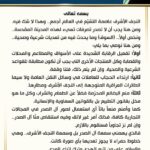
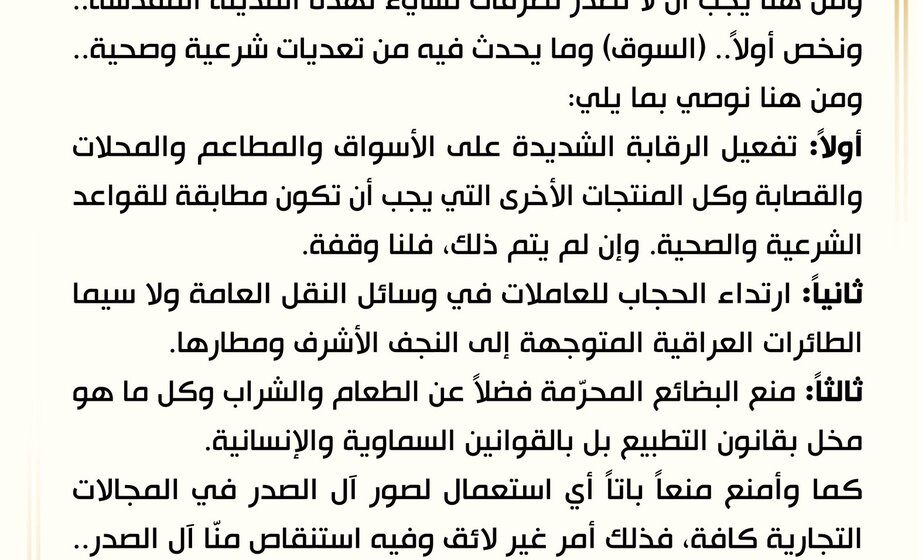
A statement from cleric Muqtada al-Sadr (Post Impact: 100%) outlining recommendations to preserve the religious sanctity of Najaf as the “capital of Shiism” gained the highest engagement. As detailed by accounts like Haider (Post Impact: 5%) and Abu Maryam (Post Impact: 3%), the directives call for female employees of Iraqi Airways on flights to Najaf to wear the hijab. The statement also demands strict oversight of markets and restaurants, a ban on prohibited goods, and forbids the use of the al-Sadr family name or images for commercial purposes, declaring that the reputation of Najaf and the al-Sadr family are “red lines that may not be crossed in any way.”
2. Pro-Houthi Accounts Celebrate Victories in Yemen
The military advances of Houthi forces in Yemen were a dominant topic, with many accounts celebrating their recent gains. Dr. Hussein Al-Safi (Post Impact: 17%) expressed joy over Sanaa’s forces capturing an entire province without advanced weaponry, attributing their success to divine support comparable to the Battle of Badr. Similarly, Ahmad Abdulsada (Post Impact: 3%) reported that Houthi fighters, whom he calls “the men of Abu Jibril,” had liberated the strategic port city of Mocha. In contrast, Ahmed Al-Alwani (Post Impact: 18%) claimed the takeover of areas like Hais, Khokha, and Mocha was due to “treachery,” alleging that forces under Tariq Saleh withdrew without a fight due to the intelligence role of an unnamed Arab state that does not want to see Yemen liberated.
3. Israel Destroys Hezbollah Tunnels in Southern Lebanon
Several accounts reported on Israeli military actions against Hezbollah in southern Lebanon. Rusly Al-Maliki (Post Impact: 16%) stated that after Hezbollah refused to hand over the Ali al-Tahir heights to the Lebanese army, Israel occupied the area and blew up all of the group’s tunnels. Salim Al-Jumaili (Post Impact: 4%) described the Ali al-Tahir position as a formerly “invincible fortress” built with Iranian expertise over two decades. Other accounts, such as Haider (Post Impact: 3%) and Abu Maryam (Post Impact: 2%), shared videos of the massive explosion, noting that over 1,100 tons of explosives were used in the demolition.
4. Qasim al-Araji Criticizes Ba’ath Party Fear-Mongering
Comments made by National Security Advisor Qasim al-Araji questioning the continued political use of the Ba’ath Party as a threat resonated online. Rusly Al-Maliki (Post Impact: 12%) shared a video of al-Araji’s remarks, quoting him as saying, “Enough of scaring people with the Ba’ath. Syria got rid of the Ba’ath a year and a half ago and didn’t talk like you do about ‘remnants of the regime’.” Maliki described the statement as “very sound.” Tamara Alkhazraji (Post Impact: 4%) also highlighted the comments, questioning why those in power in Iraq continue to use the “Ba’ath bogeyman” to frighten people.
5. Debate Over Double Standards for Armed Factions
The issue of armed factions operating outside of state control sparked a debate about double standards. Mashaan Al-Jabouri (Post Impact: 9%) drew a comparison, noting that armed factions openly declare loyalty to Iran’s Supreme Leader and refuse to surrender their weapons without consequence. He then asked what would happen if a Sunni group armed itself and declared its allegiance to Ahmed al-Sharaa, questioning, “Would the state treat it the same way, or would it be accused of terrorism?” Similarly, Abu Maryam (Post Impact: 4%) shared a post quoting commentator Hamed Al-Sayed, who asked what the fate of a Sunni would be if he declared his allegiance to the Mufti of Saudi Arabia against Iraq.
6. US Sanctions Target Iraqis, Including Politician’s Brothers
The US Treasury Department’s announcement of a new sanctions list targeting Iraqi individuals and companies was widely shared. Yasser Eljuboori (Post Impact: 4%) and Munqith Dagher (Post Impact: 3%) both published the full list of sanctioned names and companies. A key point highlighted by multiple accounts, including Eljuboori (Post Impact: 6%) and Mustafa Aldulaimi (Post Impact: 2%), was that two of the sanctioned individuals, Abd al-Hassan and Majid al-Mandalawi, are the brothers of politician Mohsen al-Mandalawi. The sanctions are reportedly for supporting Iranian allies in the region.
7. Criticism Directed at Politician Khamis al-Khanjar
Politician Khamis al-Khanjar was the subject of sharp criticism in several posts. Issam Hussein (Post Impact: 9%) posted a picture of an individual he claims works for al-Khanjar, warning him, “Do not betray your country, even if you are an employee of Khamis al-Khanjar.” Another post by Haider (Post Impact: 6%) mocked the same individual for allegedly using AI to generate a picture of himself in Yemeni attire. Following Houthi military gains, Zainab Al-Ghanim (Post Impact: 4%) sarcastically offered her “sincere condolences” to al-Khanjar and his followers, implying he had backed the losing side in the conflict.
8. Outrage Over Sale of Pork and Other Prohibited Meats
Multiple accounts expressed outrage over recent incidents involving the sale of prohibited meat to consumers. Othman Al-Mukhtar (Post Impact: 4%) listed several cases, including the arrest of a person in Najaf for slaughtering pigs and others in Hilla and Diwaniyah for selling donkey meat. He contrasted this with the period of economic sanctions in the 1990s, arguing the problem today is a moral one, not financial. Raad Hashim (Post Impact: 3%) shared a post about the Najaf butcher, who reportedly admitted to having contracts to supply pork to several restaurants for years. Yasser Eljuboori (Post Impact: 4%) commented sarcastically that the butcher used to slaughter donkeys before he moved on to pigs.
9. Houthi Forces Praised for Humane Treatment of Prisoners
A prominent sub-narrative within the Yemen conflict coverage focused on the alleged humane conduct of Houthi fighters, often contrasted with their opponents. Issam Hussein (Post Impact: 9%) shared a video of wounded fighters from the opposing side being cared for by Houthi soldiers, comparing their actions favorably to what he describes as massacres committed by al-Jolani’s factions in Syria. In another post, Hussein (Post Impact: 8%) lauded the “ethics of the sons of Ali” for not questioning the prisoners’ sect. Wasan Al-Shaikhli (Post Impact: 8%) called the release of prisoners and amnesty for fighters by the Sanaa government the “greatest and noblest step,” while Haider (Post Impact: 8%) reported that Yemeni forces had freed dozens from “prisons of Saudi mercenaries.”
10. Strategic Concerns Over Houthi Control of Bab al-Mandab
The strategic implications of Houthi advances toward the Bab al-Mandab strait were highlighted by several commentators. Omar Al-Janabi (Post Impact: 6%) stated that with Houthi control over Mocha, “Iran puts its hand on the Bab al-Mandab strait,” giving Tehran an important strategic card. Following these gains, Haider (Post Impact: 8%) shared a statement from Sanaa reassuring the world that they “will not pose a threat” and are ready to be part of a regional security system to protect maritime navigation. However, Rusly Al-Maliki (Post Impact: 7%) posted a cryptic message simply stating, “The trap of Bab al-Mandab…”, suggesting a more complex and perilous situation is unfolding.