2026-09-16: Outrage and Skepticism Over Alleged Mecca Drone Attack

Based on an analysis of 493 X / Twitter posts conducted by Miqrab AI on September 16, 2026, the dominant narrative on Iraqi social media revolves around the alleged Houthi drone attack on Mecca, which has sparked widespread condemnation, calls for Arab unity against Iran, and counter-narratives questioning the Saudi account of events. Other significant conversations include reports of US warnings to the Iraqi government regarding armed factions and potential sanctions, celebrations among some users over the downing of a Saudi F-15 fighter jet by Yemeni forces, and discussions on internal political matters, including an alleged multi-million dollar donation by Grand Ayatollah Sistani’s office to Iran. The discourse reflects deep regional polarization, with strong pro-Saudi and pro-Iranian/Houthi camps clashing over the escalating conflict.
Table Of Content
- 1. Outrage and Skepticism Over Alleged Mecca Drone Attack
- 2. US Warns Iraq Over Armed Factions and PM’s Future
- 3. Yemeni Forces Down Saudi F-15 Fighter Jet
- 4. Sistani Office Allegedly Donates $11M to Iran
- 5. Calls for Arab-Iranian Dialogue Amid Regional Tensions
- 6. Criticism of Former Security Official Abdul Karim Khalaf
- 7. Nuri al-Maliki Pledges to Protect Zaydi Government
- 8. Video of Iraqi Recruit in Russia-Ukraine War Circulates
- 9. Economic Woes: Discounted Oil Sales and Falling Dinar
- 10. Ministry of Defense Denies Intelligence on Saudi Threat
Today’s Top 10 X (Twitter) Trends in Iraq:
1. Outrage and Skepticism Over Alleged Mecca Drone Attack
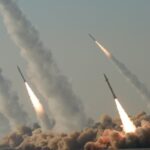
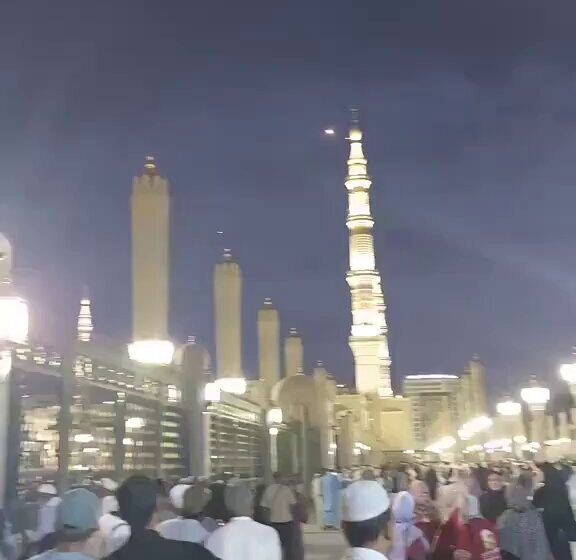
The most prominent story was the alleged Houthi drone attack targeting Mecca, which triggered a storm of reactions. Raghad Saddam Hussein (Post Impact: 100%) issued a strong condemnation, stating, “Mecca and its holy sites are an inviolable sanctuary, and any threat to its security… is a grave aggression against the sanctities of all Muslims.” She blamed Iran for “fueling sedition” and called on Arabs to unify. Similarly, Ali Farhan ali farhan (Post Impact: 30%) compared the attackers to Abrahah al-Ashram, who tried to destroy the Kaaba. Mulla Aboud al-Karkhi (Post Impact: 23%) announced his readiness to volunteer to defend Mecca. Conversely, other accounts expressed skepticism or outright denial. Najah Mohammed Ali (Post Impact: 7%) stated there was no neutral party confirming the Saudi narrative and suggested it was a tactic to “distort the opponent.” Ahmad Abdulsada (Post Impact: 5%) called it a “blatant lie” used by Saudi Arabia after its military and media failures.
2. US Warns Iraq Over Armed Factions and PM’s Future
A significant discussion emerged around two messages the United States allegedly sent to Iraq’s Coordination Framework regarding armed groups. Citing a source in the Framework who spoke to Al Jazeera, Rusly Al-Maliki (Post Impact: 22%) and a second post (Post Impact: 16%) detailed the warnings. The first message reportedly dismissed the Iraqi government’s measures to control weapons as “formalities,” demanding more concrete action. The second, more direct message, allegedly stated that failure to act would result in “many sanctions on Iraq and that al-Zaydi will not remain in his position.” Abu Maryam (Post Impact: 7%) echoed this, saying the message was clear: either disarm the factions or face the consequences, which could push the Coordination Framework “out of the upcoming game.”
3. Yemeni Forces Down Saudi F-15 Fighter Jet
Multiple accounts celebrated the news that Yemeni Armed Forces shot down a Saudi F-15 fighter jet over Ma’rib province. The account Haydar (Post Impact: 14%) shared a video of the wreckage, calling the event a “Saudi scandal” given that the F-15 is “one of the most powerful fighter jets.” In other posts, Haydar (Post Impact: 17%) contrasted Yemen’s success using “locally made defenses” with Iraq’s inability to counter enemy aircraft, and also posted images (Post Impact: 8%) of Yemeni soldiers praying beside the downed jet. Dr. Hussein al-Safi (Post Impact: 6%) commented on the achievement, stating, “Yes, barefoot, but today they shot down an F-15, the pride of American industry.”
4. Sistani Office Allegedly Donates $11M to Iran
A report claiming that Grand Ayatollah Ali al-Sistani’s office donated $11 million to Iran circulated widely. Rusly Al-Maliki (Post Impact: 23%), citing Iran’s Fars News Agency, detailed the alleged donation to support families of victims of Iran’s “Ramadan War.” The funds were reportedly allocated as follows: $6 million to the families of the deceased, $5 million to the Iranian armed forces and for reconstruction, and $1 million to support the activities of clerics and “jihadi groups.” Raad Hashim (Post Impact: 4%) shared the same information, quoting a member of the Najaf clerical office delegation to Iran who confirmed the details to the Iranian news agency.
5. Calls for Arab-Iranian Dialogue Amid Regional Tensions
The escalating regional conflict prompted calls for diplomacy and warnings about Iranian influence. Liqaa Maki (Post Impact: 20%) argued for a “new, regionally-focused meeting with Iran” attended by key Arab states to engage in a “comprehensive dialogue” and address all issues without preconditions, suggesting the Houthi attack on Mecca should be a “wake-up call for everyone.” In contrast, Dr. Hussein al-Muayyad (Post Impact: 12%) identified Iran’s clerical regime as “the real danger threatening the Arab and Islamic nation,” asserting that confronting it should be the top priority. He also reiterated his long-standing call to freeze Iran’s membership (Post Impact: 11%) in the Organization of Islamic Cooperation for its support of Houthi “terrorism.”
6. Criticism of Former Security Official Abdul Karim Khalaf
Several accounts shared a video of former military spokesman Abdul Karim Khalaf, criticizing his rhetoric. Shaho al-Qaradaghi (Post Impact: 14%) posted the clip with the comment, “Imagine these mentalities were drawing the security scene.” Rusly Al-Maliki (Post Impact: 13%) described Khalaf’s speech as “terrorist,” claiming it “calls for violence against the entire region” and seeks to “militarize the people.” He further accused Khalaf of having “entered the stage of senility.” Mustafa al-Dulaimi (Post Impact: 6%) also shared the video, lamenting the low level to which Iraq has fallen when such individuals are considered security experts.
7. Nuri al-Maliki Pledges to Protect Zaydi Government
Statements made by former Prime Minister Nuri al-Maliki attracted attention, with users analyzing his political positioning. Hiba Alnnayib (Post Impact: 8%) posted a graphic with his quote, “We will not allow the fall of the Zaydi government.” Separately, Shaho al-Qaradaghi (Post Impact: 4%) shared another of al-Maliki’s statements, in which he vowed that “any party proven to be involved in the attack on Saudi Arabia will be subject to legal accountability,” to which al-Qaradaghi commented, “I doubt that.” A second post (Post Impact: 4%) from the same account questioned whether al-Maliki presenting himself as the government’s primary protector helps or harms the current administration.
8. Video of Iraqi Recruit in Russia-Ukraine War Circulates
A video showing an Iraqi fighting alongside Russian forces in Ukraine sparked discussion online. Abu Maryam (Post Impact: 13%) posted the clip, which documented “an Iraqi recruit in the Russian army launching a drone towards Ukraine.” Steven Nabil (Post Impact: 5%) also shared the story, questioning the logic behind the decision: “An oil-rich country with opportunities, and you go to a war that is a meat grinder with a high probability of not returning. Why?”
9. Economic Woes: Discounted Oil Sales and Falling Dinar
Economic concerns were highlighted in several posts covering both national policy and market realities. Rusly Al-Maliki (Post Impact: 8%) reported that the Emirati company ADNOC purchased 72 million barrels of Iraqi crude oil with discounts up to $27 per barrel, attributing the low price to “shipping difficulties through the Strait of Hormuz caused by Iran.” Meanwhile, the domestic economy showed signs of strain as the value of the Iraqi Dinar fell. Abu Maryam (Post Impact: 4%) and Mazin al-Ashaiqer (Post Impact: 4%) both reported that the dollar was “burning the Iraqi market,” with exchange rates reaching as high as 158,000-160,000 dinars per $100.
10. Ministry of Defense Denies Intelligence on Saudi Threat
A security-related rumor and its official denial created a brief stir. The account Abu Maryam (Post Impact: 4%) shared a document purported to be from the Basra Operations Command, warning of “Saudi Arabia’s intention to target the headquarters of the Popular Mobilization Forces” and ordering the evacuation of several sites. However, the official account of the Iraqi Ministry of Defense (Post Impact: 5%) quickly issued a statement denying the memo. The ministry declared that the information in the circulated cable was “untrue and not based on any official document or source,” and called on media outlets to exercise caution and rely on official sources.