2026-09-22: PM Al-Zaydi Meets Syrian President Al-Sharaa in New York

Based on an analysis of 489 X / Twitter posts by Miqrab AI on September 22, 2026, the primary narratives in Iraq revolve around the country’s diplomatic activities and its position amidst escalating regional tensions. The most prominent story is Iraqi Prime Minister Ali Faleh al-Zaydi’s meeting with Syrian President Ahmed al-Sharaa in New York, which is widely interpreted as a significant diplomatic development. Discussions also heavily feature Iraq’s relationship with the United States, particularly the agreement to extend the deadline for disarming militias until mid-2027. This is coupled with news of Iraq’s compliance with US sanctions by halting services to Iranian aircraft. Other key themes include congratulatory messages to Saudi Arabia on its National Day from prominent Iraqi figures, analysis of US-Iran tensions, and internal political announcements from the office of Muqtada al-Sadr.
Table Of Content
- 1. PM Al-Zaydi Meets Syrian President Al-Sharaa in New York
- 2. US and Iraq Agree on New Deadline for Disarming Militias
- 3. Prominent Iraqis Celebrate Saudi National Day
- 4. Trump’s Behavior at New York Summit Sparks Commentary
- 5. Muqtada al-Sadr Appoints Delegates to Meet Followers
- 6. Iraq Complies with US Sanctions, Stops Iranian Flights
- 7. US Senator Blames Kata’ib Hezbollah for Saudi Pipeline Attack
- 8. Oil Minister Blames Saudi Arabia for Increased Shipping Costs
- 9. Houthis Criticize Syrian Militias and Mock Saudi Forces
- 10. Discrepancy in Iraqi Population Data and ID Cards Raises Questions
Today’s Top 10 X (Twitter) Trends in Iraq:
1. PM Al-Zaydi Meets Syrian President Al-Sharaa in New York
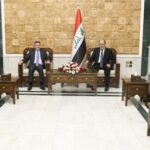
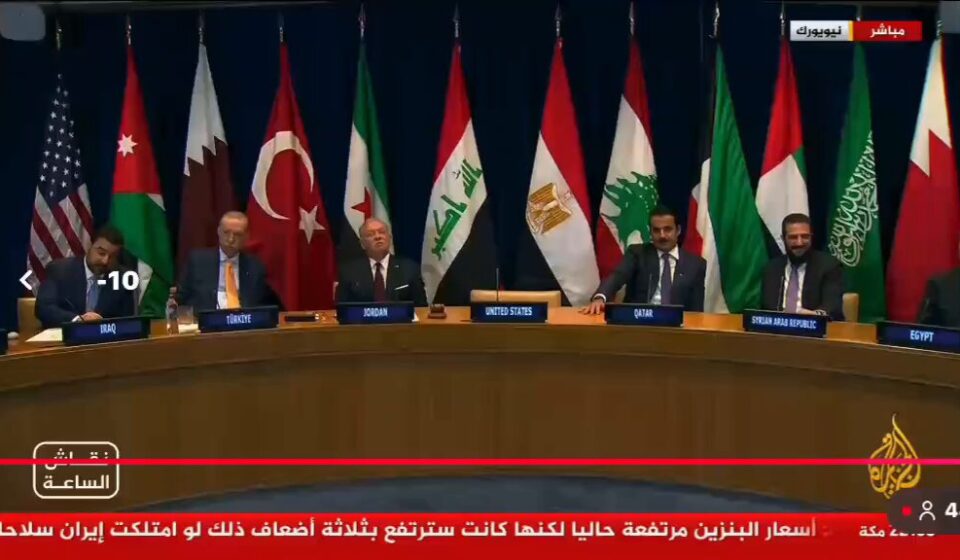
A “surprise handshake” between Iraqi Prime Minister Ali Faleh al-Zaydi and Syrian President Ahmed al-Sharaa during a meeting of regional leaders in New York garnered the most attention. Accounts like Rusly Al-Maliki (Post Impact: 100%) and Shaho Al-Qaradaghi (Post Impact: 6%) described the handshake as warm and unexpected. The official Prime Minister’s Media Office (Post Impact: 14%) stated the meeting, held on the sidelines of the UN General Assembly, covered bilateral relations and efforts to de-escalate regional tensions. Other pages, including Haider (Post Impact: 11%) and ali farhan (Post Impact: 10%), shared videos of the interaction, highlighting it as a significant diplomatic moment.
2. US and Iraq Agree on New Deadline for Disarming Militias
Multiple accounts reported on an agreement to extend the deadline for disarming militias in Iraq. ali farhan (Post Impact: 19%) and Haider (Post Impact: 6%) cited US envoy Tom Barak, stating an agreement was reached to ensure official Iraqi institutions would be the “sole entity possessing military power in the country” by the end of June 2027. However, some analysts expressed skepticism. MUNQITH DAGHER (Post Impact: 5%) noted that a new difficult US condition is the “dismantling” of factions, not just disarming them, which he believes the factions will not accept. Dr. Hussein Al-Muayyad (Post Impact: 4%) viewed the extension as a “game” by pro-Iran forces to evade commitments.
3. Prominent Iraqis Celebrate Saudi National Day
Several influential Iraqi personalities posted messages celebrating Saudi Arabia’s 96th National Day. Zina Al Saab (Post Impact: 44%), identifying herself as a “daughter of Anbar,” sent congratulations, praying for the kingdom’s security and prosperity and emphasizing the brotherhood between Iraq and Saudi Arabia. Similarly, Raghad Saddam Hussein (Post Impact: 43%) offered her “sincere congratulations and best wishes to the kingdom’s leadership and people.” Other accounts, like Aayad Al Twfan (Post Impact: 25%), echoed these sentiments, referring to Saudi Arabia as a “kingdom of pride and glory” and a protective “tent” for the region.
4. Trump’s Behavior at New York Summit Sparks Commentary
Donald Trump’s interactions with regional leaders at a summit in New York were a subject of intense commentary. Sufian Al-Samarrai (Post Impact: 54%) claimed Trump put leftists and others in “a state of shock and collapse” by appearing with Iranian President Pezeshkian and treating him with a “‘come behind me’ gesture,” arguing that Trump “shook him in front of the cameras.” Meanwhile, other accounts focused on Trump’s initial handshake with Iraqi PM al-Zaydi. ali farhan (Post Impact: 4%) and Haider (Post Impact: 9%) noted that Trump shook hands with al-Zaydi first, with Farhan interpreting the Iraqi flag’s placement behind Trump as a sign that “Iraq is no longer a marginal country.”
5. Muqtada al-Sadr Appoints Delegates to Meet Followers
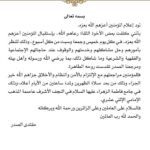
In a statement signed by Muqtada al-Sadr and published by his close aide Saleh Mohammed al-Iraqi (Post Impact: 85%), it was announced that trusted representatives have been assigned to receive believers every Thursday, Friday, and Saturday. The purpose of these meetings, to be held at the Fatima al-Zahra Mosque in Najaf for two hours after noon prayers, is to address the followers’ social, jurisprudential, and legal issues and to serve their needs. The statement called on followers to adhere to security, order, and morals when attending.
6. Iraq Complies with US Sanctions, Stops Iranian Flights
Several pages reported that Iraq has decided to comply with US sanctions against Iran by halting services to Iranian aircraft. According to Rusly Al-Maliki (Post Impact: 22%) and ali farhan (Post Impact: 11%), Iraqi authorities informed the country’s airports of new instructions to stop receiving Iranian planes or providing them with logistical services starting at midnight. Haider (Post Impact: 5%) attributed this information to Al Jazeera. In response, Abu Mzeal (Post Impact: 10%) warned of potential retaliation from Iran, such as cutting off gas supplies or closing borders, questioning whether the US would help then.
7. US Senator Blames Kata’ib Hezbollah for Saudi Pipeline Attack
A statement from US Senator Marco Rubio accusing an Iraqi militia of attacking Saudi infrastructure circulated widely, increasing regional tensions. Rusly Al-Maliki (Post Impact: 19%) and Shaho Al-Qaradaghi (Post Impact: 11%) both quoted Rubio as saying, “Kata’ib Hezbollah of Iraq is responsible for drone attacks that targeted the Saudi oil pipeline earlier this month.” Rubio also reportedly affirmed that the US has a defense agreement with Saudi Arabia and will honor its commitment. The posts also noted that the UK has made its aerial refueling aircraft available to the Saudi Air Force, with Mohamed Almaroof (Post Impact: 11%) framing it as Britain entering the confrontation in the Gulf.
8. Oil Minister Blames Saudi Arabia for Increased Shipping Costs
Comments made by the Iraqi Oil Minister accusing Saudi Arabia of driving up oil transport costs sparked a debate online. Najeh Abbas Al-Mizan (Post Impact: 21%) criticized the minister for claiming that transport fees for Iraqi oil rose from $26 to $37 because Saudi Arabia bought 27 oil tankers. In contrast, Sajad Al-Jubouri (Post Impact: 18%) quoted economic consultant Ziad al-Hashemi, who called the minister’s words “unrealistic” and stated the real reason for export disruptions was the “Iranian threat.” Following this, Shaho Al-Qaradaghi (Post Impact: 10%) shared a denial from the Saudi Ministry of Energy, which stated that the Kingdom did not purchase the tankers and that the claims were “incorrect.”
9. Houthis Criticize Syrian Militias and Mock Saudi Forces
Accounts shared videos and statements attributed to Yemen’s Houthi movement. In one post by Haider (Post Impact: 34%), a Yemeni fighter is shown mocking Saudi forces and their allies after allegedly finding alcoholic beverages in their camps, sarcastically suggesting they were made from “Zamzam water” with a Saudi fatwa. In other posts from Haider (Post Impact: 17%) and Ahmad Al-Thawaq (Post Impact: 18%), Houthi leader Abdul-Malik al-Houthi is reported to have attacked the “Jolani gangs” in Syria for failing to confront Israel while being so close to Damascus.
10. Discrepancy in Iraqi Population Data and ID Cards Raises Questions
A discrepancy between official census data and the number of issued national ID cards raised questions about demographic changes in Iraq. Bahaa khaleel (Post Impact: 17%) pointed out that while the Ministry of Planning announced a total population of 46.1 million, the Ministry of Interior has issued over 52 million national ID cards, questioning the identity of the extra 8 million people. This concern was echoed by Sheikh Thaer Al-Bayati (Post Impact: 4%), who framed it within a narrative of a “demographic change” plan, linking it to the displacement of Sunni Arabs, Christians, and Yazidis and questioning who has been granted citizenship.