2026-09-29: Arrest of “Resistance” Leader Haider al-Hathal

Based on 430 X / Twitter posts analyzed on September 29, 2026, by Miqrab AI, the primary narratives in Iraq revolve around escalating regional tensions and their domestic repercussions. A dominant theme is the impact of US sanctions on Iran, with extensive discussion on new, strict US Treasury licenses for flights between Iraq and Iran, the continued collapse of the Iranian currency, and Iranian threats to disrupt Gulf oil exports. Internally, the arrest of Haider al-Hathal, secretary-general of a self-proclaimed “Hezbollah Iraq,” sparked significant commentary on the disconnect between the proclaimed ideals of resistance figures and their alleged criminal activities. This is contrasted with criticism of pro-Iran demonstrations in Iraq, with users questioning why similar passion is not shown for Iraqi national interests. Other key topics include government actions, such as the ban of a media personality, and social issues, like the violent suppression of protests by graduates.
Table Of Content
- 1. Arrest of “Resistance” Leader Haider al-Hathal
- 2. Iranian Threats to Disrupt Gulf Oil Exports
- 3. US Treasury’s Strict License for Iraq-Iran Flights
- 4. Criticism of Pro-Iran Demonstrations in Iraq
- 5. Collapse of the Iranian Currency
- 6. Iraq Denied Exception for Oil Exports via Hormuz
- 7. Political Commentary on Reshaping Power in Iraq
- 8. Media Personality Imad Al-Musafir Banned for 15 Days
- 9. Seizure of Iranian Plane in Turkey Over Debts
- 10. Assault on Protesting Graduates by Security Forces
Today’s Top 10 X (Twitter) Trends in Iraq:
1. Arrest of “Resistance” Leader Haider al-Hathal
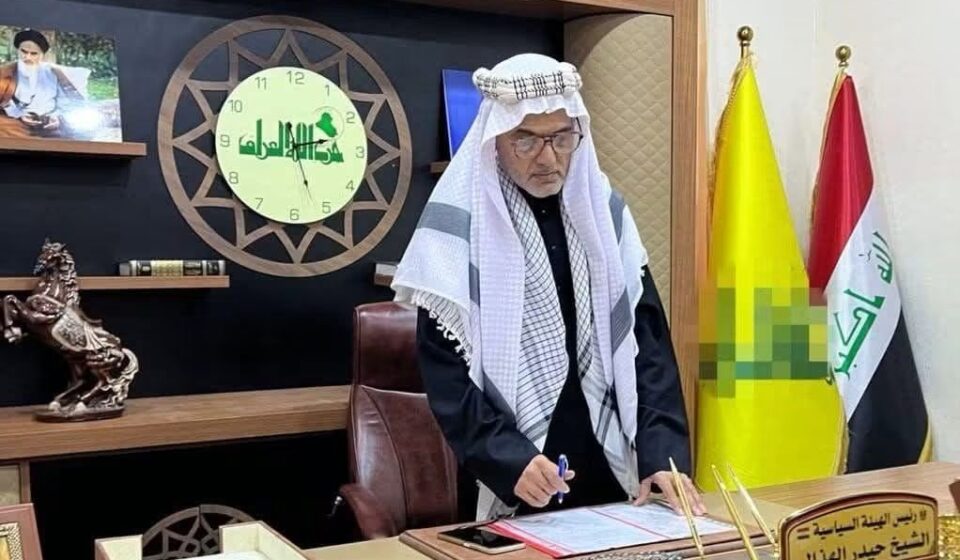
Iraqi security forces arrested Haider al-Hathal, who is identified as the secretary-general of the self-proclaimed “Hezbollah Iraq.” The arrest, reported by accounts like Haidar (Post Impact: 37%), was made in connection with accusations of kidnapping and extortion. Commentators such as Ali Farhan ali farhan (Post Impact: 56%) expressed cynicism, remarking, “I have never in my life seen mujahideen as thirsty for the bliss, adornment, and pleasures of this world as the group we have!!!” Dr. Haitham Almayahi (Post Impact: 18%) echoed this sentiment, stating that figures like al-Hathal “issue you death while they live their lives” and “spread sorrow while they dance,” accusing them of exploiting religious sentiment for personal gain. The posts highlight a perceived hypocrisy among some militia leaders who claim to represent resistance while allegedly engaging in criminal enterprises.
2. Iranian Threats to Disrupt Gulf Oil Exports
High-level Iranian officials issued threats to disrupt oil exports from the region if Iran is unable to sell its own oil. Liqaa Maki (Post Impact: 100%) reported that Iranian Parliament Speaker Mohammad Bagher Ghalibaf threatened to destroy the oil infrastructure of Gulf countries. Maki analyzes this as a strategy born of fear of the US, where Iran aims to pressure America by targeting its allies and the global economy, a strategy he notes has repeatedly failed. He attributes the recurring threats to “a pattern of inherent malevolence and blind hatred for its Arab neighbors.” Similarly, Shaho Al-Qaradaghi (Post Impact: 16%) and Dr. Zaid Abdul-Wahab Al-Azami (Post Impact: 7%) both shared Ghalibaf’s quote: “No one in the region will be able to sell their oil if Iran cannot sell its oil.” Al-Qaradaghi questions if this threat extends to Iraq, suggesting that claims of an Iraqi exemption are false.
3. US Treasury’s Strict License for Iraq-Iran Flights
The US Treasury Department issued a specific license allowing Iraqi Airways to operate flights to Iran under stringent conditions, a topic widely covered and detailed by several accounts. Haidar (Post Impact: 27%) and Rusly Al-Maliki (Post Impact: 17%) provided detailed summaries of the license. Key restrictions include that flights must operate exclusively from Najaf International Airport, transport only Iranian religious pilgrims, and are forbidden from carrying bulk cash or cargo for Iranian intelligence or military entities. The license, valid until October 28, 2026, requires Iraqi Airways to submit detailed reports to the US, including passenger names and passport numbers. Ali Farhan ali farhan (Post Impact: 21%) and Dr. Zaid Abdul-Wahab Al-Azami (Post Impact: 7%) also reported on the new license, emphasizing that the US reserves the right to revoke it if Iraq fails to restrict other Iranian flights from its airspace.
4. Criticism of Pro-Iran Demonstrations in Iraq
Several users criticized recent demonstrations in Iraq held in support of Iran, contrasting them with a perceived lack of public outcry for Iraqi national interests. Hiba Alnnayib (Post Impact: 36%) pointed to protests against Saudi Arabia in Diwaniyah, a province suffering from shortages of water, electricity, and services, questioning why residents don’t protest against their own government to demand their rights. Shaho Al-Qaradaghi (Post Impact: 31%) directly challenged those protesting for Iran, citing a government statement that Iraq has no exemption to export its oil via the Strait of Hormuz and asking them to “please also demonstrate for the interests of your country and say ‘No, no to the siege!'” Yasser Eljuboori (Post Impact: 19%) highlighted that Iraq has lost $60 billion due to Iran’s closure of the strait, impacting salaries and healthcare, and asked, “How many demonstrations did they hold in Iran for our sake?!”
5. Collapse of the Iranian Currency
The dramatic and unprecedented fall of the Iranian currency was a significant topic of discussion. Multiple accounts reported that the Iranian toman had reached a new record low against the US dollar. Rusly Al-Maliki (Post Impact: 23%), citing Iranian media, stated the currency hit 252,000 tomans per US dollar on the parallel market. Maan Habib (Post Impact: 11%) reported that $100 exceeded 25 million tomans. Other accounts, including Rusly Al-Maliki (Post Impact: 10%) and Abu Maryam (Post Impact: 8%), also shared news of the currency’s collapse, framing it as a direct consequence of ongoing US sanctions and regional policies.
6. Iraq Denied Exception for Oil Exports via Hormuz
Multiple commentators highlighted a statement from the Iraqi government spokesperson clarifying that Iraq does not have an exemption to export its oil through the Strait of Hormuz, which is under Iranian threat of closure. Shaho Al-Qaradaghi (Post Impact: 23%) shared the news and questioned whether pro-Iranian demonstrators would now demand that Iran allow Iraqi oil exports or if their “specialty is only demonstrating for the benefit of others and not their country.” The account Abu Maryam (Post Impact: 11%) also reported the spokesperson’s statement, adding that Iraq is looking for alternative routes such as the Ceyhan pipeline with Turkey and the Baniyas line with Syria. This news was framed as a contradiction to the claims of some pro-Iran factions in Iraq.
7. Political Commentary on Reshaping Power in Iraq
Users engaged in analysis and speculation about significant political and security shifts underway in Iraq. David Yassin (Post Impact: 33%) described a “closed path” and a “fixed operational schedule” for restructuring authority in the country. He asserted that the process is based on settling sovereign accounts and auditing the assets of influential powers, not just changing faces. He also noted that street protests would be classified as an “element of disruption” and that the operations aim to confine weapons and withdraw administrative and financial cover from factions. In a related vein, Adnan Al-Taie (Post Impact: 17%) commented that Kata’ib Hezbollah is preempting the upcoming “Sovereignty Day” with a threat to sovereignty, suggesting ongoing tensions between state authority and armed groups.
8. Media Personality Imad Al-Musafir Banned for 15 Days
Iraq’s Communications and Media Commission issued a 15-day ban preventing media personality Imad Al-Musafir from appearing in any media outlets. According to Shaho Al-Qaradaghi (Post Impact: 20%), the ban followed a “famous gesture” made by Al-Musafir. A more detailed post by Abu Maryam (Post Impact: 8%) specified that the decision was due to statements made on a program that violated media broadcasting rules related to accuracy, integrity, and transparency. The Commission also cited a previous directive regarding adherence to the etiquette of dialogue and avoiding verbal abuse and personal insults.
9. Seizure of Iranian Plane in Turkey Over Debts
Two accounts reported on the seizure of an Iranian Boeing 737 aircraft belonging to Caspian Airlines at an Istanbul airport. Mustafa Al-Dulaimi (Post Impact: 18%) stated that passengers were forcibly disembarked and the civilian plane was seized due to Iran’s accumulated debts. He interpreted the event as a sign that “Iran’s card has fallen and the countdown has begun,” with the phrase “(Iran is dying).” Ahmed Al-Alwani (Post Impact: 16%) provided more details, noting the seizure was over unpaid debts of more than $3.4 million to a Turkish aviation services company. He commented, “The Turks don’t have a groomed beard; as soon as America lifted its protection from Iran, they took the plane.”
10. Assault on Protesting Graduates by Security Forces
A video showing a security officer assaulting protesters sparked condemnation on X. The demonstrators were identified as top graduates and holders of higher degrees demanding employment. Bahaa khaleel (Post Impact: 13%) shared the video, exclaiming, “A brigadier general kicks a woman with a higher degree!! May God disgrace whoever gave you the rank.” Yasser Eljuboori (Post Impact: 10%) called on the acting Minister of Interior, Hussein Al-Awadi, to investigate the “flagrant assault on peaceful demonstrators,” arguing the incident highlights the need to appoint a permanent minister to control such “lawlessness.” Naji assall (Post Impact: 9%) also posted about the assault, describing it as an attack “with kicks.”