2026-10-10: Houthi Attacks on Saudi Airports Divide Iraqi Opinion

Based on an analysis of (387) X / Twitter posts on October 10, 2026, Miqrab AI identified several key themes dominating online conversations in Iraq. The most prominent narrative centered on Houthi attacks against airports in Saudi Arabia, which sharply divided opinions between condemnation and celebration. Pro-Houthi and pro-Iranian accounts lauded the strikes as a justified response to Saudi aggression, while others, including high-profile figures, denounced them as acts of terrorism orchestrated by Iran to destabilize the region. Domestically, discussions focused on the performance of Prime Minister Ali Falah Al-Zaydi’s government, with posts both promoting his new housing initiative and criticizing his economic policies and the persistent issues of corruption and sectarianism in political appointments. Broader geopolitical tensions involving Iraq, the United States, and Iran were also a significant topic, with users sharing reports of shifting US-Iraq military cooperation and speculating about potential escalations between the US, Israel, and Iran.
Table Of Content
- 1. Houthi Attacks on Saudi Airports Divide Iraqi Opinion
- 2. Debates on PM Al-Zaydi’s Performance and Government Challenges
- 3. Speculation on the Future of Arab Leadership
- 4. Criticism of Iraqi Governance and Infrastructure
- 5. Sectarianism Allegations in Minister of Defense Nomination
- 6. Legal Action Against Content Creator Imad Al-Musafir
- 7. Reports of Suspended US-Iraq Military Cooperation
- 8. Government Launches “Watan Initiative” Housing Project
- 9. Iran Blamed for Regional Destabilization
- 10. Skepticism Over Government Control of Dinar Exchange Rate
Today’s Top 10 X (Twitter) Trends in Iraq:
1. Houthi Attacks on Saudi Airports Divide Iraqi Opinion
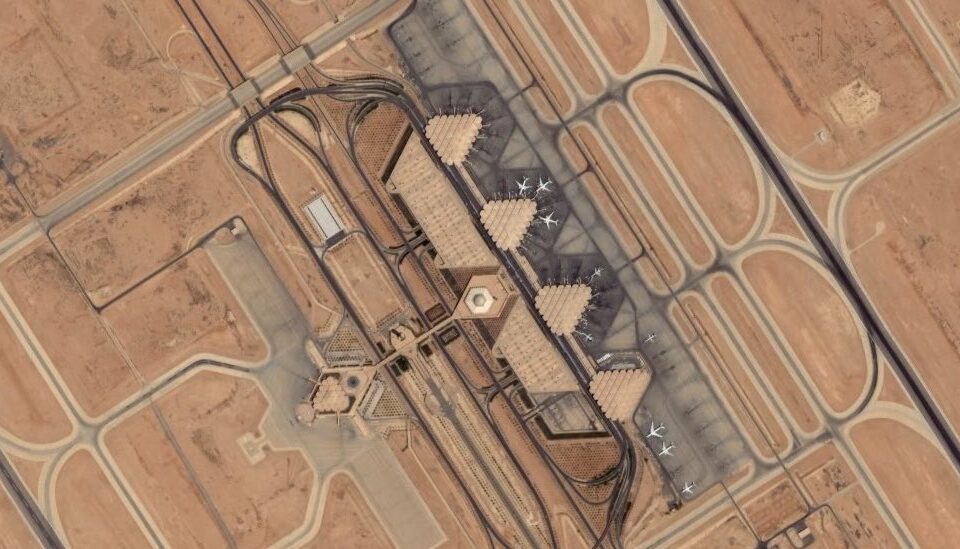
The most engaging story involved attacks on Saudi Arabia’s King Khalid International Airport in Riyadh and Abha International Airport, attributed to Houthi forces. The narrative was split between strong condemnation and celebratory support. Raghad Saddam Hussein (Post Impact: 100%) issued a statement strongly condemning the attacks, blaming “Iranian militias” for “fueling conflicts and destabilizing” the region. Conversely, many accounts celebrated the strikes. Haidar (Post Impact: 6%) and Ahmed Abdul Sada (Post Impact: 5%) shared videos claiming to show significant damage and casualties at the Riyadh airport, framing the attack as a justified response to Saudi actions in Yemen. Rusly Al-Maliki (Post Impact: 10%) cited Agence France-Presse, reporting on casualties and the suspension of flights by Kuwait Airways. Other accounts like Rafid Jaboori (Post Impact: 9%) and Mujtahid al-Iraq (Post Impact: 7%) discussed the strategic implications, suggesting the attacks represent a major test for Saudi Arabia and may push Riyadh to form new alliances.
2. Debates on PM Al-Zaydi’s Performance and Government Challenges
Prime Minister Ali Falah Al-Zaydi’s government was a central topic of discussion, with posts highlighting immense challenges and criticizing its policies. Rusly Al-Maliki (Post Impact: 12%) expressed appreciation for the Prime Minister’s efforts but noted the situation is “not easy at all,” citing a “catastrophic legacy” from the previous administration, pressure from the Coordination Framework, and armed factions. Ayad Al-Anbar (Post Impact: 8%) criticized Al-Zaydi’s rhetoric, stating, “Iraq does not need those who declare they are ready to sacrifice their lives for it… The stage needs courageous decisions, not resonant statements.” Meanwhile, the Prime Minister’s Media Office (Post Impact: 9%) promoted government initiatives, such as a housing project in Najaf. In a post from Shahou Al-Qaradaghi (Post Impact: 2%), Al-Zaydi is quoted pledging to follow the path of Imam Ali, a statement Al-Qaradaghi suggests is less important to citizens than concrete actions and decisions.
3. Speculation on the Future of Arab Leadership
Following the attacks on Saudi Arabia, some Iraqi social media accounts began to speculate about a potential shift in regional leadership. Dr. Hussein Al-Safi (Post Impact: 10%) claimed that “Saudi Arabia is finished” due to the destruction of its key infrastructure and suggested that either Yemen, as the “victorious party in the war,” or Iraq, as a “logical candidate,” could rise to lead the Arab world. In a different vein, Liqaa Maki (Post Impact: 10%) argued that the war in Yemen must end with a political settlement and a “binding social contract,” viewing warfare as merely a means to create battlefield conditions that force a compromise. Mujtahid al-Iraq (Post Impact: 7%) criticized Saudi Arabia’s strategic choices, suggesting it should have allied with the US, Israel, and the UAE to “end the Iranian regime” instead of suffering losses from Houthi attacks.
4. Criticism of Iraqi Governance and Infrastructure
Accounts on X shared posts highlighting severe deficiencies in Iraq’s infrastructure and governance, despite massive state budgets over the past two decades. Rusly Al-Maliki (Post Impact: 10%) posted a video of a dilapidated school, commenting sarcastically, “An Iraqi school after spending 2 trillion dollars over 22 years.” Similarly, Dr. Zaid Abdulwahab Al-Adhami (Post Impact: 2%) shared a video of a mud school and described Iraq as “plundered.” In another post, Rusly Al-Maliki (Post Impact: 6%) criticized the government for having a “65 trillion dinar deficit” while simultaneously making one million new employees permanent staff. Shahou Al-Qaradaghi (Post Impact: 2%) contrasted the government’s proposal for a Ministry of Artificial Intelligence with the reality of mud-brick schools, asking which should be the priority.
5. Sectarianism Allegations in Minister of Defense Nomination
The nomination of Ali Al-Araji for the post of Minister of Defense sparked a conversation about sectarianism in Iraqi politics. Haidar (Post Impact: 10%) shared a photo of Al-Araji allegedly praying in the Sunni manner, claiming it was an attempt to “prove his sectarian affiliation to win the position designated for Sunni parties” after rumors spread that he was Shia. The post concluded with the comment, “Sectarian quotas and what they do!!” Issam Hussein (Post Impact: 2%) also commented on the incident, stating that Al-Araji, a Sunni from Mosul, was forced to publish the photo to prove his sect after objections were raised due to his perceived closeness to Shia parties.
6. Legal Action Against Content Creator Imad Al-Musafir
The Ministry of Interior announced legal action against an individual named Imad Al-Musafir, generating discussion online. Ali Farhan (Post Impact: 17%) reported that the ministry is taking “necessary legal measures” against Al-Musafir following statements he made that were considered insulting to the Anbar police. Adding a layer of controversy, Hiba Al-Naib (Post Impact: 3%) pointed out that the Communications and Media Commission had recently honored Al-Musafir as the “best content creator,” highlighting a contradiction between the actions of different state bodies.
7. Reports of Suspended US-Iraq Military Cooperation
Several accounts shared news, attributed to American sources and Al Arabiya, that the United States has suspended some aspects of its military cooperation with Iraq. Rusly Al-Maliki (Post Impact: 5%) quoted an American official who told Al Arabiya that Washington had halted “some aspects of military cooperation and training with Baghdad.” The post added that a withdrawal from Iraq would “protect our forces from militias if tension with Iran escalates.” Similarly, Abu Maryam (Post Impact: 4%) cited US sources stating that military training and the provision of spare parts to the Iraqi army have been stopped, and that Washington now wishes for calm in Iraq to focus its attention on Iran.
8. Government Launches “Watan Initiative” Housing Project
The Iraqi government’s launch of a major housing project was covered by several pro-government and news-aggregator accounts. The Prime Minister’s Media Office (Post Impact: 9%) announced that PM Ali Falah Al-Zaydi had launched the “Watan Initiative,” a project to provide one million residential land plots, starting with 35,000 plots in Najaf province. According to the announcement, Al-Zaydi stressed that the government’s goal is for “no Iraqi to be left without a home he owns.” Ali Farhan (Post Impact: 3%) and Haidar (Post Impact: 2%) also reported on the project’s launch in Karbala and Najaf, highlighting the Prime Minister’s promise that every family without a home will receive a land title and government assistance for construction.
9. Iran Blamed for Regional Destabilization
Beyond the Houthi attacks, several users explicitly blamed Iran for broader regional instability and for manipulating conflicts in Arab countries. Raghad Saddam Hussein (Post Impact: 100%) directly blamed “Iranian militias” and called for unified Arab efforts to confront this “growing danger.” Zina Al-Saab (Post Impact: 7%) drew a distinction between Israel and Iran, arguing that while Israel is a clear adversary, “Iran penetrates deep within you, fights you with your own sons, and exploits your religion and sanctities to fragment your homeland with the hands of its people.” Iyad Al-Dulaimi (Post Impact: 3%) asserted that the attack on Riyadh’s airport was part of an “Iranian strategy” and not a “purely Houthi act.”
10. Skepticism Over Government Control of Dinar Exchange Rate
The Iraqi government’s attempts to control the price of goods following changes in the dinar-to-dollar exchange rate were met with widespread skepticism. While Haidar (Post Impact: 4%) shared an economist’s optimistic view that a lower dollar value could reduce prices, others were critical. Ziyad Al-Hashimi (Post Impact: 3%) called the government’s use of “harsh police methods” to control market prices a strategy “proven to fail repeatedly.” Similarly, Dr. Yahya Al-Kubaisi (Post Impact: 3%) described any talk of price controls as “cheap populist propaganda,” arguing that inflation is a “necessary result of lowering the exchange rate.” Adam (Post Impact: 4%) directly questioned the Prime Minister’s ability to enforce new prices, asking why he failed to do so when the exchange rate was different.