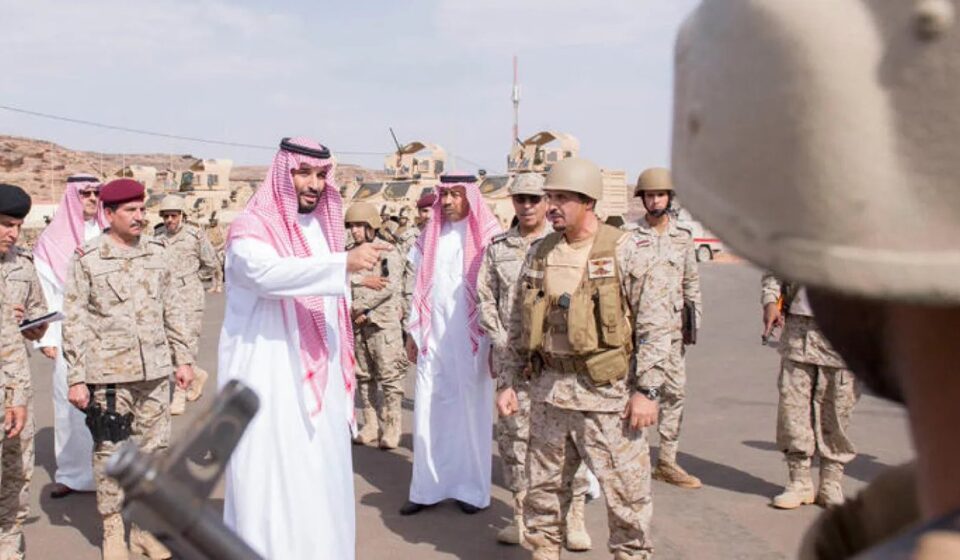
2026-10-18: Saudi-Yemen Conflict and Calls for Arab Intervention

Based on an analysis of 454 X / Twitter posts trending on October 18, 2026, Miqrab AI identified several key themes and narratives dominating online conversations in Iraq. The most prominent discussion revolves around the escalating conflict between Saudi Arabia and Houthi forces in Yemen, sparking a wide range of reactions from calls for pan-Arab support for the Kingdom to sharp critiques of its military strategy and warnings against further regional involvement, particularly by Egypt. Domestically, Iraq’s deteriorating economic situation is a major concern, with users focusing on the rising exchange rate of the U.S. dollar against the dinar and the government’s decision to seek a loan from the International Monetary Fund. Other significant topics include ongoing economic turmoil and protests in France, a statement by former U.S. President Donald Trump endorsing Israeli Prime Minister Benjamin Netanyahu while threatening Iran, and various domestic political developments involving Prime Minister Ali Al-Zaydi and other political figures like Muqtada al-Sadr and Qais Khazali.
Table Of Content
- 1. Saudi-Yemen Conflict and Calls for Arab Intervention
- 2. Iraq’s Worsening Economy: Dollar Rate & IMF Loan
- 3. Protests and Economic Crisis in France
- 4. Trump Endorses Netanyahu and Threatens Iran
- 5. Muqtada al-Sadr’s Cryptic High-Impact Post
- 6. Iraqi PM Al-Zaydi’s Recent Actions and Criticisms
- 7. Iraqi-Iranian Diplomatic and Financial Ties
- 8. Qais Khazali on Entering Politics and al-Sadr’s Legacy
- 9. Egypt Decides to Send Troops to Support Saudi Arabia
- 10. Pro-Palestine Protests in France Linked to Vandalism
Today’s Top 10 X (Twitter) Trends in Iraq:
1. Saudi-Yemen Conflict and Calls for Arab Intervention
The ongoing conflict between Saudi Arabia and Houthi militias in Yemen is a dominant topic, generating diverse and often conflicting viewpoints. Faiq Al-Sheikh Ali (Post Impact: 40%) issued a strong call for all Arab nations, including those in the Maghreb and Gulf, to forget their differences and stand united with Saudi Arabia against what he termed an “evil aggression by the Houthi militias,” arguing that “the fate of all is one.” In contrast, other accounts like Haidar (Post Impact: 7%) mocked Saudi Arabia’s military performance despite its massive defense budget, stating it is “a shame” that the Kingdom is seeking protection from multiple countries against what it described as a “quarter of a state.” Meanwhile, Dr. Hussein Al-Safi (Post Impact: 29%) warned that Yemen is capable of disrupting Egypt’s economy by targeting ships in the Suez Canal and tourist sites, suggesting that Egyptian President Sisi is wisely avoiding direct involvement.
2. Iraq’s Worsening Economy: Dollar Rate & IMF Loan
There is significant alarm and criticism regarding Iraq’s deteriorating economic situation, focusing on the rising exchange rate and the government’s decision to seek external loans. Rusly Al-Maliki (Post Impact: 8%) pointed out that the exchange rate has reached 100 USD for 171,000 IQD and added, “and on top of that, we will borrow from the World Bank.” This sentiment was echoed by Mashaan al-Jabouri (Post Impact: 4%), who criticized Prime Minister Ali Al-Zaydi for claiming his policies would affect speculators, not citizens, while in reality, citizens are paying the price through their purchasing power. Multiple users, including Zaidon Samir (Post Impact: 4%) and Shaho Al-Qaradaghi (Post Impact: 2%), questioned the government’s contradictory statements, noting that the prime minister had previously justified changing the exchange rate to avoid borrowing, yet is now seeking a loan from the IMF.
3. Protests and Economic Crisis in France
The severe economic crisis and widespread protests in France captured the attention of several Iraqi commentators, who presented it as a cautionary tale. Rusly Al-Maliki (Post Impact: 16%) provided a detailed analysis, noting France’s record debt of 3.6 trillion euros, the loss of its industrial base, and heavy public spending, which he believes is leading to harsh austerity and potentially continuous chaotic protests. Similarly, Dr. Luay al-Khatteeb (Post Impact: 5%) described the situation as a potential “economic collapse scenario,” warning that what is happening in a major European economy like France does not bode well for fragile, rentier states in the Middle East that lack serious economic reforms. Sufian Al-Samarrai (Post Impact: 7%) also commented on the protests, highlighting scenes of property destruction under the chant of “Free Palestine.”
4. Trump Endorses Netanyahu and Threatens Iran
A statement from former U.S. President Donald Trump strongly endorsing Israeli Prime Minister Benjamin “Bibi” Netanyahu was widely circulated and discussed. Mazin Al-Eshaiker (Post Impact: 11%) shared a lengthy translated quote from Trump, in which he praised Netanyahu as a “great warrior” and a partner in confronting Iran. Trump’s message included a direct threat, stating, “If Israel chooses a leader other than Bibi, America will be forced to do this mission itself, which is something I do not want to happen.” The post concludes with a full endorsement for Netanyahu’s re-election. Ali Farhan (Post Impact: 5%) summarized the key takeaway from Trump’s statement: “If Netanyahu does not win the election, we will have to carry out the mission against Iran ourselves, and I am not inclined to do that!”
5. Muqtada al-Sadr’s Cryptic High-Impact Post
Influential Shiite cleric Muqtada al-Sadr generated the day’s highest engagement with a single, unadorned post. The account Muqtada Sayyid Muhammad Al-Sadr (Post Impact: 100%) published only a URL link with no accompanying text, image preview, or explanation. Despite the lack of content in the post itself, its publication became a major event online, demonstrating the significant influence al-Sadr holds over social media conversations in Iraq. The cryptic nature of the post likely fueled speculation and discussion among his followers and observers across the political spectrum.
6. Iraqi PM Al-Zaydi’s Recent Actions and Criticisms
Prime Minister Ali Al-Zaydi was the subject of both praise and criticism for his recent actions. Ali Farhan (Post Impact: 3%) and Yasser Eljuboori (Post Impact: 2%) reported on the Prime Minister honoring and guaranteeing the protection of the individual who reported the corruption of the Undersecretary of the Ministry of Industry, quoting Al-Zaydi as saying, “I will stand against anyone who threatens you!” However, the government also faced ridicule for a visa waiver agreement with Bangladesh. Falah Al-Mashal (Post Impact: 4%) sarcastically questioned the benefit of such an agreement, suggesting the government should focus on visa waivers with countries like Turkey, Jordan, or Egypt instead.
7. Iraqi-Iranian Diplomatic and Financial Ties
The relationship between Iraq and Iran was highlighted through diplomatic meetings and media analysis. Ammar Al-Hakim (Post Impact: 8%), leader of the National Wisdom Movement, shared details of his meeting with the Iranian Foreign Minister, Abbas Araghchi, where they discussed regional stability, the need to de-escalate tensions, and the upcoming Organization of Islamic Cooperation summit in Baghdad. He also praised the “resilience of the Iranian people.” In a different context, Aayad Al Twfan (Post Impact: 8%) discussed his appearance on Al-Arabiya Al-Hadath, where he spoke about the role of armed militias and factions in financing Iran during its financial crisis, a topic he described as “worthy of attention.”
8. Qais Khazali on Entering Politics and al-Sadr’s Legacy
Statements by Qais Khazali, the leader of the Asa’ib Ahl al-Haq militia, were shared by several accounts, touching upon his movement’s political goals and its relationship with the Sadrist movement. Shaho Al-Qaradaghi (Post Impact: 2%) quoted Khazali as saying, “We entered the political process for the sake of our people and for the success of our state.” Another post by the same account highlighted a more controversial statement where Khazali claimed affiliation with Mohammed al-Sadr and suggested his achievements were earned through hard work, not “inheritance.” Haidar (Post Impact: 2%) also provided a longer summary of Khazali’s speech, in which he called for ending chaos and corruption and addressing the issue of unregulated weapons.
9. Egypt Decides to Send Troops to Support Saudi Arabia
A decision by Egypt’s National Defense Council to provide military support to Saudi Arabia was a significant regional development reported by Iraqi accounts. Haidar (Post Impact: 2%) shared a statement from the council announcing it would “provide all necessary and possible forms of support to the brotherly Kingdom of Saudi Arabia to defend its security and stability.” This move was noted by Hiba Al-Naiib (Post Impact: 3%) and analyzed by Adam (Post Impact: 2%), who interpreted President Sisi’s actions as being purely motivated by Egyptian interests, skillfully playing regional rivalries to Egypt’s advantage rather than taking a firm ideological stance with either Iran or Saudi Arabia.
10. Pro-Palestine Protests in France Linked to Vandalism
A series of posts focused on destructive acts and unrest during protests in France, linking them to pro-Palestinian activism. Sufian Al-Samarrai (Post Impact: 5%) shared a video with a quote from a French citizen lamenting, “You have destroyed the country through these jihadist gangs… under the banner of jihadist Palestine.” In other posts, Al-Samarrai described what he called “jihadist attacks on France and Europe,” alleging that protesters wearing keffiyehs were robbing and assaulting citizens, including the elderly, while chanting pro-Palestine slogans. Another post by Sufian Al-Samarrai (Post Impact: 6%) showed a woman in a hijab burning a French flag and claimed that pro-militia “cyber-jihadist cells” would dismiss such incidents as conspiracies.