2026-02-21: Sistani’s Alleged Warning to US Over Khamenei

Based on 387 X / Twitter posts analyzed by Miqrab AI on February 21, 2026, the primary narrative dominating social media in Iraq revolves around escalating regional tensions between the United States and Iran. The most prominent story involves a widely circulated but unverified claim that Grand Ayatollah Ali al-Sistani issued a warning to the U.S. against harming Iranian Supreme Leader Ali Khamenei, which has been met with both support and skepticism. This is complemented by numerous posts detailing a significant U.S. military buildup in the Middle East, particularly in Jordan and Europe, fueling speculation of an imminent military confrontation. Domestically, key topics include Iraq’s official submission of its maritime borders map to the United Nations, sparking a diplomatic protest from Kuwait, and the ongoing political debate surrounding the U.S. veto of Nouri al-Maliki’s potential premiership. Other notable conversations include controversy over a U.S. diplomat’s interaction with a sanctioned Iraqi official and celebratory messages from Kurdish leaders on International Mother Language Day.
Table Of Content
- 1. Sistani’s Alleged Warning to US Over Khamenei
- 2. US-Iran Tensions and Trump’s Stance
- 3. Reports of US Military Buildup in the Region
- 4. Kurdish Leaders Celebrate International Mother Language Day
- 5. Iraq Submits Maritime Borders Map to the UN, Angering Kuwait
- 6. Hezbollah’s Readiness and Reported Israeli Strikes
- 7. Debate Over US Veto on Nouri al-Maliki’s Premiership
- 8. Reactions to US Diplomat’s Remarks on Israeli Influence
- 9. US Embassy Clarifies Diplomat’s Meeting with Sanctioned Iraqi
- 10. Reports of Renewed Anti-Regime Protests in Iran
Today’s Top 10 X (Twitter) Trends in Iraq:
1. Sistani’s Alleged Warning to US Over Khamenei
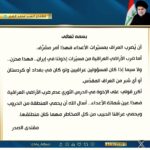
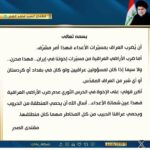
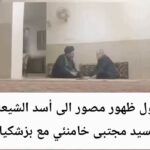
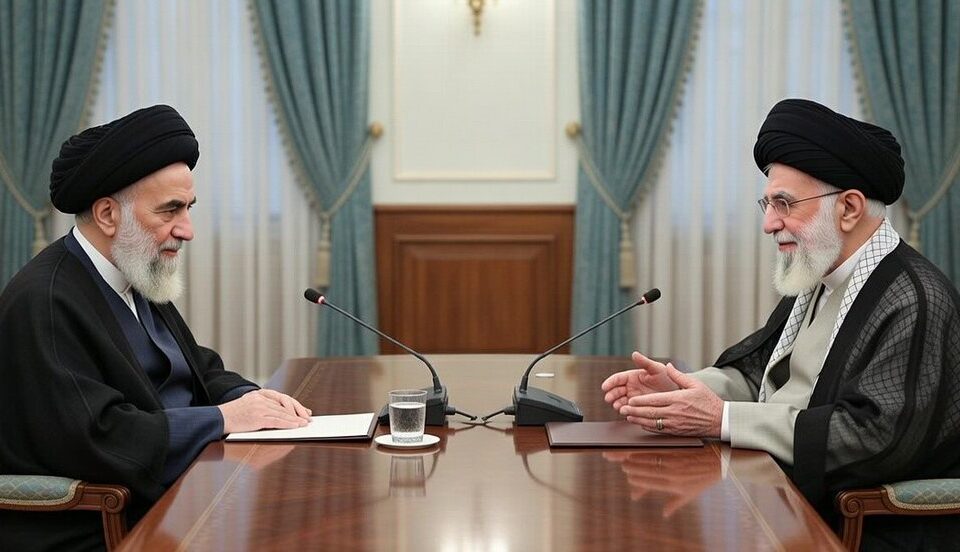
The most impactful story centers on a claim that Grand Ayatollah Ali al-Sistani sent a message to Tehran threatening to issue a fatwa for jihad against U.S. forces in the region if Iranian Supreme Leader Ali Khamenei’s life is endangered by any potential American attacks. This was reported in both Arabic and Persian by Najah Mohammed Ali (Post Impact: 88%) and Najah Mohammed Ali (Post Impact: 100%). The report drew significant reaction, including skepticism from Faiq Al-Sheikh Ali/Kalimati Lil Tarikh (Post Impact: 26%), who questioned why a jihad fatwa wasn’t issued during previous crises such as the U.S. occupation of Iraq or the destruction in Gaza and Lebanon. In a related post, Najah Mohammed Ali (Post Impact: 8%) further elaborated that targeting a religious authority like Khamenei is a “dangerous gamble” that could trigger decisive religious stances and that “playing with fire in this file may burn everyone.”
2. US-Iran Tensions and Trump’s Stance
General tensions between the United States and Iran are a major theme, underscored by a high-impact post from the U.S. Embassy Baghdad (Post Impact: 85%) which simply stated, “President Trump has been clear,” alongside a graphic implying a firm stance. In contrast, accounts supporting Iran highlighted its resilience. Abbas Al-Ardawi (Post Impact: 8%) shared a video of Supreme Leader Khamenei listening to Quranic verses amid the threats, calling it a message that “true strength comes from the Quran.” Observers like Salim Al-Jumaili (Post Impact: 8%) described the region as living its “most dangerous hours,” caught between U.S. military threats and nuclear negotiations. Meanwhile, Sheikh Thair Al-Bayati (Post Impact: 7%) predicted that if war erupts, the Iranian regime will fall quickly, stating, “If the head falls, the project will not be reproduced as it was.”
3. Reports of US Military Buildup in the Region
Multiple accounts are reporting on a significant buildup of U.S. military assets in and around the Middle East, fueling speculation of impending action against Iran. Sufian Al-Samarrai (Post Impact: 26%) reported that U.S. bombers are now positioned in Portugal, describing it as a military mobilization unseen since World War II. Rusly Al-Maliki (Post Impact: 17%) noted that Sofia Airport in Bulgaria will cancel civilian flights and operate for military aircraft only on February 23 and 24, coinciding with the arrival of the USS Ford aircraft carrier in the eastern Mediterranean. Citing Planet Labs satellite imagery, Steven Nabil (Post Impact: 13%) shared images showing at least 70 U.S. military aircraft, including F-35 stealth jets, at the Muwaffaq Salti Air Base in Jordan.
4. Kurdish Leaders Celebrate International Mother Language Day
Leaders of the Kurdistan Region of Iraq marked International Mother Language Day with messages celebrating linguistic diversity. President Nechirvan Barzani (Post Impact: 21%) stated that the Kurdistan Region is proud to be a “cradle of diversity and coexistence” and reaffirmed the commitment to developing mother tongues for all components, including Kurdish, Turkmen, Syriac, and Armenian. He added, “Protecting the mother tongue is protecting the identity, rich history, and future of Kurdistan.” Similarly, Prime Minister Masrour Barzani (Post Impact: 12%) congratulated the people of Kurdistan and emphasized that the region is enriched by its different languages and cultures, where all communities can freely speak and learn in their native languages.
5. Iraq Submits Maritime Borders Map to the UN, Angering Kuwait
A significant domestic and diplomatic development involves Iraq’s official submission of its maritime borders map to the United Nations. Haider (Post Impact: 12%) reported that the move aims to legally secure Iraq’s rights, including over Khor Abdullah and the Durra gas field. In a follow-up post, Haider (Post Impact: 8%) shared that Kuwait has formally protested the move, summoning the Iraqi Chargé d’Affaires and issuing a statement claiming the Iraqi coordinates infringe on Kuwaiti sovereignty. The Iraqi Ministry of Foreign Affairs (Post Impact: 4%) officially confirmed the submission. Providing analysis, Ziyad Al-Hashimi (Post Impact: 4%) clarified that this is a unilateral Iraqi declaration to the UN, not a new international recognition, and the borders are still ultimately governed by UN Security Council Resolution 833 from 1993.
6. Hezbollah’s Readiness and Reported Israeli Strikes
The status of Hezbollah amid rising regional tensions was a topic of discussion. David Yassin (Post Impact: 14%) claimed that Hezbollah military units prepared to support Iran in case of an attack were “completely destroyed” in recent days through precise operations by Israeli military intelligence. He asserted that the group’s “primary missile support structure is practically no longer in place.” In a complementary post, Rusly Al-Maliki (Post Impact: 14%) stated that Hezbollah has sustained 1,400 strikes in the past year, in addition to the assassination of its leaders and the “pager strike,” all without retaliating against Israel.
7. Debate Over US Veto on Nouri al-Maliki’s Premiership
The political deadlock in Iraq, particularly concerning the potential premiership of Nouri al-Maliki, continues to be debated. Emad Al-Musafir (Post Impact: 14%) clarified his long-held position against both Al-Sudani and Al-Maliki, stating he sees Al-Maliki as a “leader” but not fit to be a prime minister. Bahaa Al-Araji (Post Impact: 3%) commented that while Al-Sudani’s support for Al-Maliki was intended to break the stalemate, it now faces significant opposition from within the Coordination Framework and internationally, necessitating a re-evaluation. Adding another layer, MUNQITH DAGHER (Post Impact: 3%) claimed that the Coordination Framework has informed Washington that Al-Maliki’s nomination is no longer on the table and that they just need time for a “dignified” withdrawal, effectively ending his bid for a third term.
8. Reactions to US Diplomat’s Remarks on Israeli Influence
Remarks by a U.S. diplomat regarding Israel’s role in the Middle East sparked considerable discussion. Liqaa Maki (Post Impact: 14%) argued that condemnation of the statements is misplaced, as Israel’s goal of regional dominance is 80 years old and has been actively implemented since 2003 through political and ideological means, not necessarily direct control. In a critical post, Sufian Al-Samarrai (Post Impact: 7%) contrasted the outrage over the U.S. diplomat’s remarks with what he described as a lack of reaction when Turkish President Erdogan spoke of Turkey’s borders extending to Mosul and Aleppo. Shaho Al-Qaradaghi (Post Impact: 3%) reported that the Saudi Foreign Ministry issued a statement condemning the remarks (attributed to Huckabee) as a “violation of international laws and a dangerous precedent.”
9. US Embassy Clarifies Diplomat’s Meeting with Sanctioned Iraqi
A controversy erupted after U.S. Chargé d’Affaires Joshua Harris was photographed near Aqeel Muftan, an Iraqi official under U.S. sanctions, at a football match. Following initial speculation from accounts like Omar Al-Janabi (Post Impact: 4%) and Rafid Jaboori (Post Impact: 3%), the U.S. Embassy in Baghdad issued a clarification. As reported by Steven Nabil (Post Impact: 8%) and Ali Farhan (Post Impact: 7%), the embassy stated that Harris was a guest of the Iraqi Football Association and did not know Muftan, who allegedly “misrepresented himself to gain access.” The embassy added that upon learning his identity, Harris “strongly protested this uninvited appearance” and requested that the Football Association remove him from the venue.
10. Reports of Renewed Anti-Regime Protests in Iran
Amidst the heightened external pressures, some accounts shared videos purporting to show a resurgence of anti-regime protests within Iran. Dr. Zaid Abdulwahab Al-Adhami (Post Impact: 3%) posted a video described as a “huge student demonstration” at an Iranian university. Similarly, Hiba Al-Nnayib (Post Impact: 3%) shared footage showing what she called the “return of protest movements against the regime” on a street in the capital, Tehran. These posts suggest that internal dissent continues to be a factor within the country.