2026-05-01: Trump Endorses PM-designate Ali al-Zaydi

Based on an analysis of 448 X / Twitter posts trending in Iraq on May 1, 2026, Miqrab AI identified several key themes dominating online conversations. The most significant narrative revolves around the strong and explicit endorsement of Iraq’s Prime Minister-designate, Ali al-Zaydi, by U.S. President Donald Trump, a development that sparked widespread commentary on American influence in the new government’s formation. Another major story was the assassination of Shia cleric Sayyid Farhan al-Mansour in Damascus, prompting statements of condemnation. Concurrently, analysts debated the strategic implications of Trump’s announcement ending military operations against Iran, with many interpreting it as a maneuver to reset legal timelines for future conflict. Other prominent topics included official statements from Iraqi political leaders commemorating International Workers’ Day and a high-profile local dispute in Najaf between the powerful al-Hakim and Sharba families.
Table Of Content
- 1. Trump Endorses PM-designate Ali al-Zaydi
- 2. Shia Cleric Assassinated in Damascus
- 3. Analysts on Trump’s U.S.-Iran War Declaration
- 4. Iraqi Leaders Mark International Workers’ Day
- 5. Dispute Between al-Hakim and Sharba Families in Najaf
- 6. U.S. Resumes Dollar Shipments to Iraq
- 7. PM-designate al-Zaydi to Exclude Militias From Cabinet
- 8. New Basra-Haditha Oil Pipeline Project Launched
- 9. PM-designate al-Zaydi Begins Government Formation Talks
- 10. Iran Accuses Gulf States of Aiding U.S. Attack
Today’s Top 10 X (Twitter) Trends in Iraq:
1. Trump Endorses PM-designate Ali al-Zaydi
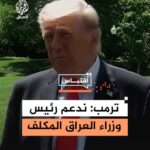
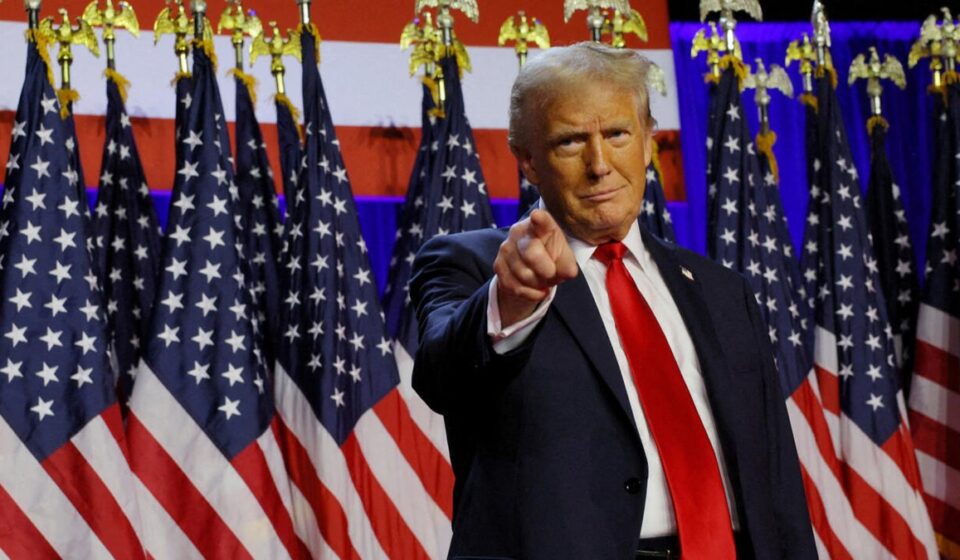
The most prominent story centered on U.S. President Donald Trump’s public endorsement of Prime Minister-designate Ali al-Zaydi. Multiple accounts shared Trump’s statement, in which he described Zaydi’s appointment as a “great victory” and confirmed that Zaydi “won with our help.” Hydikm (Post Impact: 9%) and Ali Farhan (Post Impact: 9%) posted clips and quotes of Trump saying, “I told him that the United States is with him all the way.” This direct support from a U.S. president for an Iraqi official was described as unprecedented by commentators like Ahmad Mulla Talal (Post Impact: 19%), who expressed “amazement and anticipation” about what this development means for Iraq. Mohammed Jabbar (Post Impact: 5%) questioned how Zaydi could be a “compromise candidate” if Trump claims he won with U.S. assistance, highlighting the perceived contradiction.
2. Shia Cleric Assassinated in Damascus
The assassination of Sayyid Farhan al-Mansour, the imam of the Sayyidah Zaynab shrine’s prayer hall in Damascus, generated significant discussion. Hydikm (Post Impact: 29%) shared a statement from the Zaynabiya Holy Shrine, which reported that al-Mansour was killed by a grenade that targeted his car after he left Friday prayers. The shrine’s statement declared, “The shedding of this blood will only increase our determination to stand with the truth against falsehood.” In a conflicting report also shared by Hydikm (Post Impact: 11%), a Syrian statement indicated an investigation into the possibility that al-Mansour died from an explosive device that was in his possession. Mujtahid Iraq (Post Impact: 10%) also reported on the killing, attributing it to a sticky bomb placed under his car.
3. Analysts on Trump’s U.S.-Iran War Declaration
President Trump’s announcement that military operations against Iran had ended was a major topic of analysis, with many commentators suggesting it was a strategic political maneuver rather than a true de-escalation. Mahdi Majeed (Post Impact: 20%) and Rusly Al-Maliki (Post Impact: 17%) argued that Trump was exploiting a “constitutional loophole.” They explained that by declaring the end of the initial 60-day period of military action—which a U.S. president can authorize without congressional approval—Trump effectively “resets the clock,” allowing him to launch another 60-day military operation in the future under a new pretext. Sufian Al-Samarrai (Post Impact: 10%) echoed this view, calling it a brilliant move by a “genius” against the “axis of beasts” who were prematurely celebrating a victory.
4. Iraqi Leaders Mark International Workers’ Day
Several high-profile Iraqi political figures posted messages to commemorate International Workers’ Day. Former Prime Minister Mustafa Al-Kadhimi (Post Impact: 21%) praised the workers of Iraq, stating that “the land is built with your hands” and calling for practical steps to protect their rights and create real job opportunities. Prime Minister Mohammed Shia’ al-Sudani (Post Impact: 20%) extended his congratulations, emphasizing his government’s commitment to supporting workers as central to development. Similarly, Ammar Al-Hakim (Post Impact: 12%) quoted a religious hadith comparing a worker providing for his family to a “mujahid in the cause of God” and called for fair laws to protect their rights and dignity.
5. Dispute Between al-Hakim and Sharba Families in Najaf
A sharp local dispute in Najaf captured significant attention following a high-impact post by politician Faig al-Sheikh Ali/My Word for History (Post Impact: 51%). Al-Sheikh Ali, identifying himself as a native of Najaf, addressed a conflict between the families of Ammar al-Hakim and Akram Sharba. He described Ammar al-Hakim’s alleged threat against Akram Sharba and the reported shooting at his family as a “crime.” He claimed that if the Albu Sharba family decided to retaliate against the al-Hakim family, they could “silence them within half an hour.” Al-Sheikh Ali called on the people of Najaf to support Akram Sharba in exposing the alleged “thefts of Ammar and his father.”
6. U.S. Resumes Dollar Shipments to Iraq
News of the United States resuming shipments of U.S. dollars to Iraq circulated on the platform, with users linking the decision to the new political landscape. Abu Maryam (Post Impact: 10%) reported that Washington had released a billion-dollar shipment that had previously been frozen as leverage against Mohammed Shia’ al-Sudani’s nomination. The post claims the U.S. had conditioned the release on the selection of a new government it found reassuring, and the arrival of the funds coincided with Ali al-Zaydi’s nomination. Hydikm (Post Impact: 7%) also shared the news, quoting a government advisor who confirmed the arrival of the first cash shipment.
7. PM-designate al-Zaydi to Exclude Militias From Cabinet
Reports emerged suggesting that PM-designate Ali al-Zaydi intends to exclude certain armed factions from participating in the next government, allegedly based on a message from the United States. Mustafa al-Dulaimi (Post Impact: 7%) claimed that factions such as Asa’ib Ahl al-Haq, the Badr Organization, and Kata’ib al-Imam Ali have been barred from the upcoming government. This information was reinforced by Abu Maryam (Post Impact: 6%), who cited a source from the State of Law Coalition confirming that an American message to al-Zaydi called for the prevention of five factions, including Asa’ib and Badr, from holding executive positions.
8. New Basra-Haditha Oil Pipeline Project Launched
The Iraqi Ministry of Oil’s announcement of a major new infrastructure project was shared by several accounts. Hydikm (Post Impact: 6%) and Dr. Zaid Abdulwahab Al-Adhami (Post Impact: 4%) reported on the launch of the Basra-Haditha pipeline project. According to the Ministry’s statement, the 700-kilometer pipeline will have a capacity of 2.5 million barrels per day and will be constructed using Iraqi-made pipes. The project is strategically important as it will enable oil exports through three different routes: Baniyas in Syria, Ceyhan in Turkey, and Aqaba in Jordan, in addition to supplying domestic refineries along its path.
9. PM-designate al-Zaydi Begins Government Formation Talks
Following his designation, Ali al-Zaydi began official meetings and diplomatic outreach related to forming the new government. The Prime Minister’s Media Office (Post Impact: 7%) reported that Zaydi held separate meetings with Rayan al-Kildani, head of the Babylon Movement, and Ahmed Abdullah al-Jubouri, Secretary-General of the National Masses Party. The meetings focused on unifying political positions to form a government capable of meeting the Iraqi people’s aspirations. On the diplomatic front, Hydikm (Post Impact: 4%) noted that Zaydi had extended an official invitation to the President of Pakistan to visit Iraq after the new government is formed.
10. Iran Accuses Gulf States of Aiding U.S. Attack
Tensions between Iran and its Gulf neighbors were highlighted after Iran’s Permanent Representative to the UN accused several Arab countries of complicity in the recent U.S. attack. Hydikm (Post Impact: 6%) reported that Ambassador Amir Saeid Iravani claimed that Bahrain, Saudi Arabia, the UAE, Jordan, Kuwait, and Qatar participated in the attack and must bear full compensation for the damages. In response, Sufian Al-Samarrai (Post Impact: 6%) dismissed the threats, predicting that the Iranian leaders making these accusations would be assassinated “in the first quarter-hour of the battle,” suggesting a massive intelligence penetration by the U.S. and Mossad.