2026-05-16: New PM Al-Zaydi’s First Speech Met with Scorn

Based on an analysis of 476 X / Twitter posts trending in Iraq on May 16, 2026, Miqrab AI identified several dominant narratives circulating online. The formation of a new government under Prime Minister Ali Faleh Al-Zaydi was a central theme, generating a mix of official announcements, public skepticism, and sharp criticism regarding the new leader’s capabilities. This political transition was accompanied by a palpable sense of disillusionment among some commentators, who expressed frustration with the entire political system. Concurrently, somber discussions revolved around Iraq’s violent past and present, with the discovery of new mass graves in Anbar and commemorations of past atrocities weighing heavily on the public discourse. Another major topic was the arrest of a prominent Kata’ib Hezbollah leader by the United States, which triggered debates about Iraqi sovereignty, the misuse of official documents, and the international reach of militia activities.
Table Of Content
- 1. New PM Al-Zaydi’s First Speech Met with Scorn
- 2. Prominent Activists Quit, Citing Disillusionment
- 3. Discovery of Anbar Mass Graves Renews Calls for Justice
- 4. Arrest of Kata’ib Hezbollah Leader Sparks Controversy
- 5. Official Iraqi Passports in the Hands of Militants
- 6. Anger Over Punishment of Journalist Adnan Al-Ta’i
- 7. PM Al-Zaydi Officially Takes Power, Issues First Pledges
- 8. Iraq Remembers Victims on National Day for Mass Graves
- 9. New PM Issues Directives on Government Appointments
- 10. Horrific Crimes Against Children Spark Outrage Online
Today’s Top 10 X (Twitter) Trends in Iraq:
1. New PM Al-Zaydi’s First Speech Met with Scorn
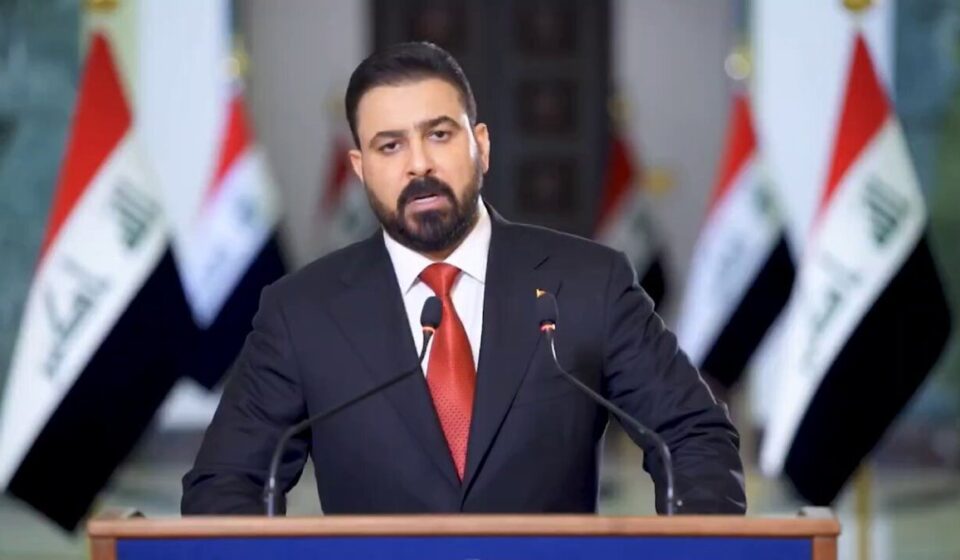
The first address by newly appointed Prime Minister Ali Faleh Al-Zaydi became a major point of discussion and criticism. Several accounts highlighted what they described as his poor command of the Arabic language. Omar Abd Al-Sattar Mahmud (Post Impact: 25%) expressed disbelief, stating, “It is one of fate’s ironies that Iraq is ruled by nobodies and strays. He does not know how to speak Arabic; so how will he govern?!” In another post (Post Impact: 10%), he reiterated this concern. Similarly, Rusly Al-Maliki (Post Impact: 21%) mocked the immediate praise for the new PM, noting that singer Nusrat al-Badr had released a song of praise just 48 hours after his appointment, questioning how history could bear witness to a man in his first political appearance. While the official Government of Iraq account (Post Impact: 25%) promoted the speech, highlighting promises that the government would be one of “state institutions, open to all,” the critical reception was a dominant theme.
2. Prominent Activists Quit, Citing Disillusionment
A sense of deep frustration and disillusionment with Iraq’s political trajectory and society was forcefully expressed by commentator Rusly Al-Maliki. In a widely shared post (Post Impact: 19%), he announced he was abandoning his activism, declaring, “There is nothing left in Iraq to fight for.” He lamented that after years of struggle, the people he defended now “demand our heads and side with their killers against us.” His lengthy message expressed disgust with sectarianism and political corruption, concluding that it is the “era of ‘Toz’ [a dismissive slang term].” This sentiment was noted by other users, such as Haidar (Post Impact: 12%), who framed it as a withdrawal from the opposition, questioning the timing just one day after the government’s formation.
3. Discovery of Anbar Mass Graves Renews Calls for Justice
There was significant online discussion surrounding the discovery of mass graves in the Anbar desert. Mustafa Al-Dulaimi (Post Impact: 13%) reported that a mass grave containing over 1,500 citizens from Anbar had been found, alleging they were executed by militias and calling on the new Prime Minister to ensure the perpetrators are brought to justice. Haidar (Post Impact: 8%) noted the “sadness and anger” in Anbar as the graves were opened, adding that locals are demanding accountability for so-called “tribal revolutionaries,” including Ali Hatem Suleiman, for their role in the “sedition.” In another post (Post Impact: 4%), Haidar reported that the Martyrs Foundation began opening 36 mass graves in the Saqlawiyah area, containing victims of ISIS from 2014.
4. Arrest of Kata’ib Hezbollah Leader Sparks Controversy
The arrest of Mohammed Baqer Al-Saadi, identified as a leader in Kata’ib Hezbollah, and his transfer to the United States by the FBI, generated widespread debate. Othman Al-Mukhtar (Post Impact: 8%) suggested the arrest happened with help from inside Iraq’s “deep state” as a “sacrificial offering to improve relations with Washington.” In contrast, accounts like Abbas Al-Ardawi (Post Impact: 7%) praised Al-Saadi as a resistance figure and a “high-value target” who stood against injustice. Others, such as Dr. Ali Al-Jabiri (Post Impact: 5%), took a mocking tone, suggesting his arrest was a direct consequence of his actions against the US embassy. Hiba Alnnayib (Post Impact: 4%) shared a rumor that Kata’ib Hezbollah was accusing Asa’ib Ahl al-Haq leader Qais Khazali of providing the information that led to the arrest.
5. Official Iraqi Passports in the Hands of Militants
The arrest of Mohammed Baqer Al-Saadi brought a related issue to the forefront: the issuance of official Iraqi passports to members of armed factions. Mustafa Al-Dulaimi (Post Impact: 11%) highlighted that Al-Saadi was carrying a “service passport,” a document between a regular and a diplomatic passport that grants special treatment and a semi-official government status. This prompted Yasser Eljuboori (Post Impact: 9%) to advise the Iraqi Foreign Ministry to “cancel all service passports and also withdraw all diplomatic passports immediately” to prevent further damage to Iraq’s reputation. Omar Al-Janabi (Post Impact: 4%) questioned how the Ministry of Interior could grant such a passport to an internationally wanted individual and asked how many other faction leaders held similar documents.
6. Anger Over Punishment of Journalist Adnan Al-Ta’i
The alleged punishment of TV presenter Adnan Al-Ta’i for an on-air comment sparked a debate about freedom of expression and the influence of powerful figures. Shaho Al-Qaradaghi (Post Impact: 8%) posted a clip of the incident, where Al-Ta’i, during a discussion about the requirement for state employees to have “good conduct,” spontaneously asked guest Judge Wael Abdel Latif if Abu Fadak (a senior PMF leader) met this criterion. Al-Qaradaghi questioned, “Is Al-Ta’i being punished for these spontaneous comments?!” Support for the presenter was also voiced by Bahaa Khaleel (Post Impact: 3%), who posted a message of solidarity with Al-Ta’i, stating that “the voice of truth is loud” and will be heard regardless of attempts to silence it.
7. PM Al-Zaydi Officially Takes Power, Issues First Pledges
The formal transition of power to the new government was covered by official state channels. The Prime Minister’s Media Office (Post Impact: 6%) and the Government of Iraq (Post Impact: 3%) account posted photos and announced that Prime Minister Ali Faleh Al-Zaydi had officially assumed his duties from former PM Mohammed Shia’ Al-Sudani. In his first speech, Al-Zaydi’s office outlined a broad platform, promising a “comprehensive economic and financial reform program,” job creation for youth, fighting corruption, and improving public services. The government also pledged to “strengthen Iraq’s Arab, regional, and international relations based on mutual respect and common interests,” as summarized by accounts like Haidar (Post Impact: 4%).
8. Iraq Remembers Victims on National Day for Mass Graves
May 16 marked Iraq’s National Day for Mass Graves, and several political figures issued statements to commemorate the occasion. Ammar Al-Hakim (Post Impact: 7%) described it as a “crime that does not expire with time” and called for continued searches for missing persons and the inclusion of these crimes in educational curricula and the official national memory. Former Prime Minister Mohammed Shia’ Al-Sudani (Post Impact: 3%) also posted a message, stating that the crimes are “a witness to a dark era that Iraqis will not forget” and that honoring the victims requires building a state that protects its citizens and their rights.
9. New PM Issues Directives on Government Appointments
One of the first directives from Prime Minister Ali Al-Zaydi’s new government focused on administrative appointments, a move that was met with some approval online. As reported by Abu Maryam (Post Impact: 3%), the Prime Minister instructed all ministers to select their office director exclusively from among the existing employees of the ministry itself. Fadhil Abu Ragheef (Post Impact: 6%) praised this decision as one of the “best decisions” to prevent nepotism and partisan appointments, seeing it as a positive sign that the new government is committed to reform. He stated that if the government continues at this pace, it “bodes well, especially if words and actions come together.”
10. Horrific Crimes Against Children Spark Outrage Online
Several accounts expressed horror and anger over recent violent crimes against children, linking them to broader societal and legal failures. Zina Al Saab (Post Impact: 4%) shared news of an uncle in Basra who reportedly raped and murdered his 7-year-old niece, blaming what she called the “filthy turban’s fatwas” for creating a culture where such acts occur. In a similar vein, Hiba Alnnayib (Post Impact: 3%) commented on another case of abuse by saying that generations have been raised with a justification for such crimes and that laws allowing abusers to marry their victims enable perpetrators to “exceed their limits.” These posts highlight a deep concern over child safety and the perceived cultural and legal frameworks that fail to protect them.